


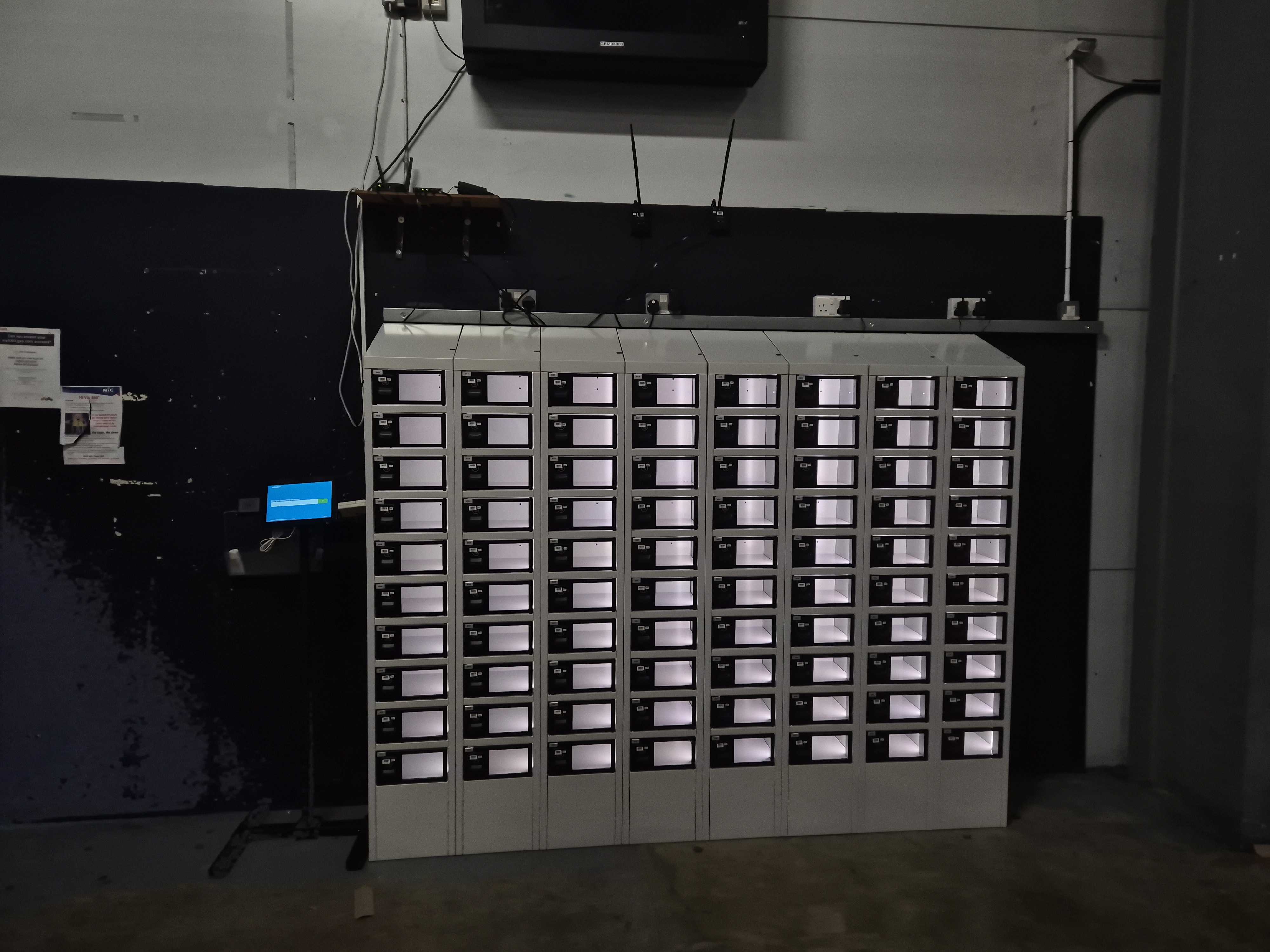
Scanner device charging lockers provide secure storage and charging for handheld barcode scanners, mobile computers and other operational devices. Discover how they work, why they matter in busy warehouses and how smart systems can improve equipment availability, accountability and shift readiness.
In warehouses and distribution centres, handheld scanners and mobile computers are essential to everyday operations. They support goods receiving, stock movements, order picking and dispatch, allowing employees to capture and exchange information as goods move through the supply chain.
Yet the availability of these devices can become an operational challenge. Scanners may be returned with depleted batteries, left in the wrong location or retained between shifts. Supervisors can spend valuable time distributing equipment, while operatives wait for a functioning device before beginning work.
A scanner device charging locker provides a more structured approach to storing and recharging shared equipment. Smart versions can also control access, record equipment transactions and support the issue-and-return process.
The objective is not simply to provide somewhere to plug in a scanner. It is to help ensure that equipment is securely stored, appropriately charged and available when the next employee needs it.
What is a scanner device charging locker?
A scanner device charging locker is a secure storage system designed to accommodate and recharge handheld barcode scanners, mobile computers and other portable data-capture devices when they are not in use.
Typically comprising multiple lockable compartments, the system incorporates suitable electrical connections or charging docks so equipment can be stored and powered between periods of use.
Traditional scanner charging lockers primarily provide physical security and charging facilities. Access may be controlled using mechanical keys or combination locks, with equipment allocation managed separately.
Smart scanner charging lockers extend this functionality by incorporating electronic access controls and management software. Employees can authenticate themselves before collecting or returning equipment, while the system records relevant transactions and manages access permissions.
Depending on the configuration, individual devices may be associated with particular compartments or users, allowing organisations to maintain a clearer record of equipment allocation.
This distinction matters because charging and equipment management are related but separate activities. A charging locker can provide power without recording who has collected a scanner. Conversely, a smart locker can record equipment transactions without necessarily monitoring the device's battery condition.
The most appropriate system depends on the operational requirements of the organisation and the level of control needed over its equipment.
How does a scanner charging locker work?
Scanner charging lockers combine secure compartments with an electrical charging arrangement suited to the devices being stored. The precise design varies according to the scanner models, charging requirements and whether the locker includes smart management functionality.
In a basic configuration, employees place their devices into individual compartments and connect them to the available charging equipment. This might involve a USB connection, a manufacturer-approved charging cradle or another compatible power arrangement.
The compartment is secured while the device charges, protecting the equipment from unauthorised access and providing a designated storage location.
Smart systems introduce an additional layer of control. Before collecting a device, an employee may authenticate using an identification card, PIN or another supported credential. The management software checks the user's permissions and releases an authorised compartment.
The transaction is recorded, potentially associating the employee with a particular scanner. When the device is returned, the system can record the return event and update the relevant equipment records.
In a warehouse operating across several shifts, this process can help establish a consistent routine. Employees collect equipment at the beginning of their shift and return it to a designated charging location when their work is complete.
However, an important technical distinction must be recognised. A scanner being connected to a charging point does not automatically mean it is fully charged or ready for use.
Charging performance depends on the device, battery condition, power supply and time available between uses. Unless the system includes appropriate monitoring capabilities, a locker may not independently verify battery health, charging status or device functionality.
Similarly, recording that a compartment has been opened does not necessarily confirm that the correct scanner has been removed or returned. Individual asset verification requires suitable identification technology or additional operational controls.
These considerations are important when assessing the capabilities of different scanner charging systems.
What devices can scanner charging lockers accommodate?
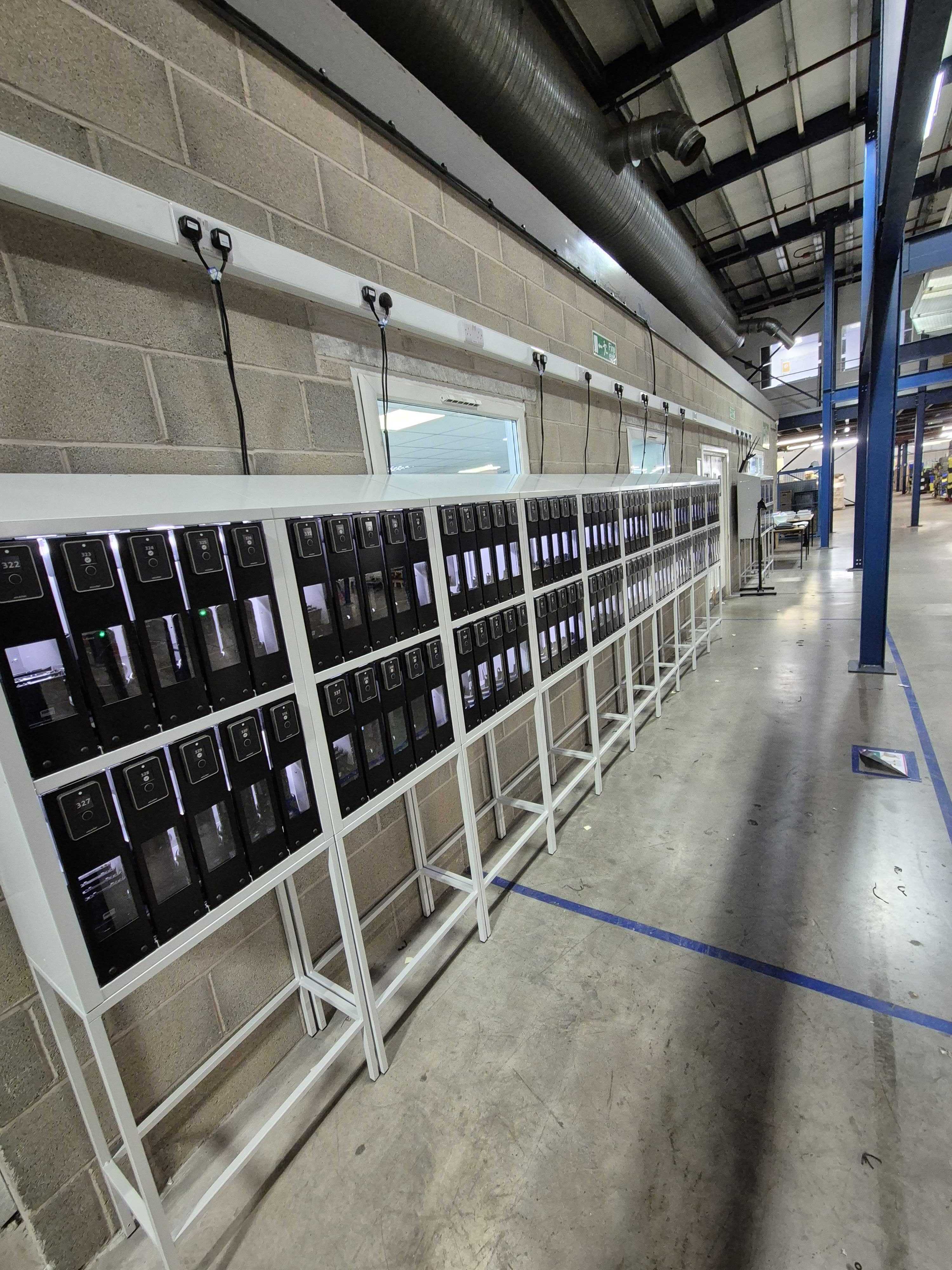
Scanner charging lockers are commonly associated with handheld barcode scanners, but the category covers a wider range of portable operational equipment.
In warehouses, this may include rugged mobile computers, radio-frequency terminals, handheld data collectors and scanners fitted with trigger handles or protective cases. Some configurations can also accommodate related equipment such as portable radios or spare batteries.
The physical characteristics of these devices vary considerably. A compact barcode scanner may fit into a relatively small compartment, whereas a rugged mobile computer with a pistol grip may require significantly more space.
Charging arrangements also differ. Some devices use USB connections, while others require proprietary charging cradles or dedicated power supplies. Certain equipment uses removable battery packs, introducing additional considerations around battery storage and charging.
Consequently, scanner charging lockers should be specified around the actual equipment being managed.
Organisations should assess compartment dimensions, cable access, charging compatibility and the space required to insert and remove devices without damaging connectors or accessories.
This is particularly important where several scanner models are used or equipment may be replaced during the expected life of the locker installation.
What is the difference between a standard and smart scanner charging locker?
Although both systems provide secure storage and charging, their management capabilities can differ substantially.
| Capability | Standard scanner charging locker | Smart scanner charging locker |
| Secure storage | Lockable compartments | Electronically controlled compartments |
| Device charging | Compatible charging connections or docks | Compatible charging connections or docks |
| User access | Typically keys or combinations | Digital authentication and configurable permissions |
| Equipment allocation | Usually managed separately | Can be associated with authorised users |
| Transaction records | Generally manual or unavailable | Digital access and transaction history |
| Outstanding returns | Requires manual checking | Can be monitored through recorded transactions |
| Asset identification | Usually separate from the locker | Available with suitable configuration |
| Management reporting | Limited | Access and usage information |
| Battery monitoring | Depends on charging equipment | Also depends on device and system capabilities |
A standard charging locker may be sufficient for a small equipment pool where access is infrequent and individual accountability is not a significant concern.
Smart functionality becomes more relevant when scanners are shared between numerous employees, equipment moves frequently between shifts or managers need greater visibility over outstanding devices.
The distinction is therefore not simply between a mechanical and electronic locking mechanism. It is whether the organisation needs to manage the equipment handover as a controlled operational process.
Why is scanner charging important in warehouse operations?
Reliable scanner availability is essential in environments where employees depend on mobile devices to perform their assigned tasks.
A warehouse may own enough scanners to support its workforce but still experience equipment shortages if devices are misplaced, insufficiently charged or unavailable at the beginning of a shift.
These problems can be particularly disruptive during shift changes, when large numbers of employees may need equipment within a relatively short period.
If operatives must queue for devices, locate suitable charging equipment or exchange scanners with depleted batteries, productive time can be lost before work begins.
A designated scanner charging locker can help establish a consistent storage and charging process. Instead of devices being left across different work areas, equipment is returned to an agreed location where it can be secured and connected to the appropriate charging infrastructure.
For operations running multiple shifts, the time available for recharging is particularly important. A device returned shortly before the next shift may not have sufficient time to reach the required charge level, even when the charging equipment is functioning correctly.
Organisations therefore need to consider battery capacity, expected device usage, charging duration and the number of devices available within the equipment pool.
The charging infrastructure must support the operational pattern rather than simply accommodate the total number of scanners owned.
This is where scanner charging lockers can contribute to better shift readiness. By combining designated storage with an organised return process, they help create the conditions for equipment to be available when required.

In a busy warehouse, scanner availability directly affects how quickly a shift becomes productive. When devices are missing, poorly charged or difficult to access, operatives lose valuable time. A structured charging and handover process helps eliminate unnecessary delays.
How do smart scanner charging lockers improve equipment accountability?
Charging is only one aspect of managing shared scanners. Organisations also need to understand who is using the equipment, whether devices have been returned and how exceptions are handled.
In a manual process, scanners may be distributed by supervisors or collected from shared storage areas. Responsibility can become unclear when equipment is passed between colleagues or returned without a reliable record.
Smart scanner charging lockers can introduce a more consistent approach by associating access transactions with identifiable users.
When an employee collects a scanner, the system can record the relevant transaction. Depending on its configuration, this may include the user's identity, the compartment accessed, the device assigned and the time of collection.
When equipment is returned, the corresponding transaction can be recorded, providing a history that supports investigations into missing or outstanding devices.
This does not eliminate equipment loss, nor does it guarantee that every recorded return represents the correct physical asset. However, it provides a stronger basis for accountability than informal handovers or manually maintained records.
The management information can also help organisations identify recurring problems, such as equipment being retained beyond expected periods or devices regularly becoming unavailable between shifts.
Importantly, the technology should support an agreed operational process. Organisations still need procedures for damaged scanners, failed charging equipment, device transfers and employees who cannot complete a normal return.
A smart charging locker can make routine transactions more consistent, allowing supervisors to concentrate on exceptions rather than overseeing every equipment handover.
Where are scanner charging lockers commonly used?
Warehouses and distribution centres are among the most relevant environments for scanner charging lockers because portable data-capture devices are frequently shared across shifts.
They can support equipment used in receiving, inventory management, picking, packing and dispatch, where reliable device availability contributes to operational continuity.
Similar requirements exist in manufacturing facilities, logistics operations and retail environments where handheld scanners support stock control, goods handling and inventory processes.
The scale of the requirement varies. A smaller operation may need secure charging for a limited number of devices, while a large distribution centre may require a more extensive system capable of supporting numerous employees and repeated daily transactions.
In each environment, the underlying purpose remains consistent: providing secure, organised charging while helping employees access the equipment required for their work.
What should organisations consider before installing scanner charging lockers?
Selecting a scanner charging locker should begin with an assessment of the equipment and the operational process it needs to support.
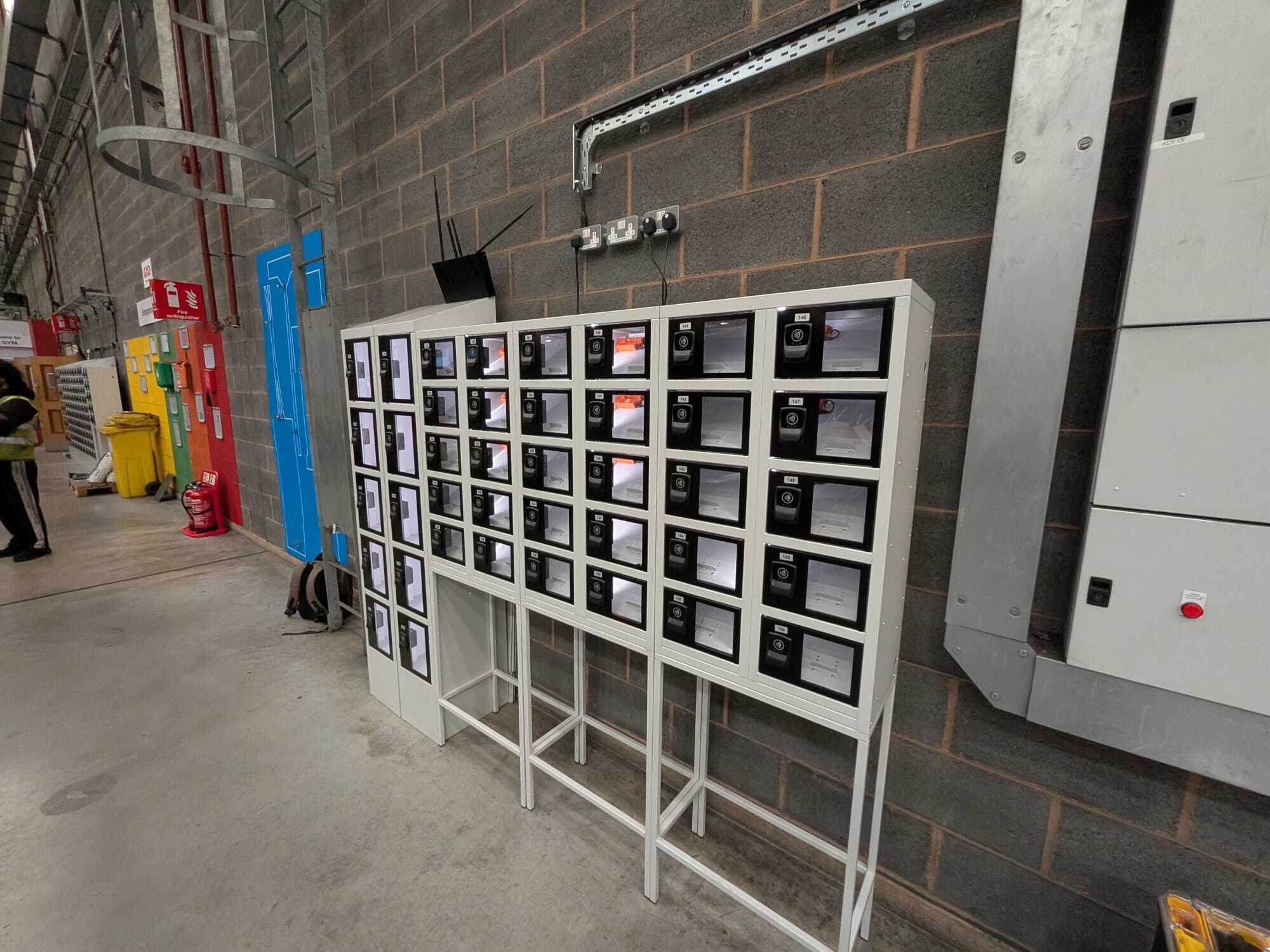
Device compatibility is an immediate consideration. Organisations should identify the scanner models in use, their physical dimensions, battery arrangements and approved charging methods. This helps determine whether the proposed compartments and electrical infrastructure are suitable.
Capacity should reflect how equipment is used, not simply how many scanners the business owns. Where employees collect devices at similar times, locker placement and access arrangements can influence whether the system reduces waiting or creates a new bottleneck.
Charging requirements deserve particular attention. The electrical installation must provide suitable power for the intended equipment, with appropriate consideration given to cable management, ventilation, manufacturer guidance and applicable electrical safety requirements.
Battery charging should follow the device manufacturer's recommendations, especially where lithium-ion batteries are involved. A secure locker does not remove the need for suitable charging equipment, maintenance and safe operating procedures.
Organisations should also consider whether individual charging compartments are necessary or whether another charging arrangement would meet their requirements more economically.
For smart installations, access permissions, device allocation and transaction reporting should reflect established working practices. Integration with other management systems may be useful, but only where it supports a defined operational requirement.
Finally, the installation must be practical for employees. The locker should be positioned where equipment is naturally collected and returned, with an interface that supports efficient transactions during busy periods.
A technically sophisticated system will deliver limited value if employees find it inconvenient or routinely bypass the intended process.

Not all scanners charge in the same way, so compatibility is critical. Organisations need to consider device dimensions, charging docks, battery requirements and power infrastructure. A properly configured locker should accommodate the equipment and support reliable charging between shifts.
Are scanner charging lockers worth the investment?
The commercial value of scanner charging lockers depends on the operational problems they are intended to address.
For some organisations, secure charging may be the primary requirement. Others may be seeking to reduce equipment loss, improve shift readiness or remove the administrative burden associated with manually distributing scanners.
A credible business case should consider the existing cost of equipment management, including replacement devices, time spent issuing and recovering scanners, and delays caused by unavailable or insufficiently charged equipment.
These costs should be compared with the investment required for the locker infrastructure, charging equipment, software, installation and ongoing support.
The objective should not be to automate every aspect of scanner management. It should be to establish whether a more controlled charging and handover process can deliver measurable operational benefits at a justifiable cost.

The true cost of scanner management goes beyond replacing lost or damaged devices. Businesses also need to consider time spent distributing equipment, investigating missing scanners and managing delays. These operational costs can be significant when repeated across multiple shifts.
Conclusion: Improving scanner availability through better equipment management
Scanner charging lockers provide a practical way to secure and recharge valuable handheld devices between periods of use.
Smart configurations extend this function by introducing controlled access, transaction records and more structured equipment handovers.
For warehouses and distribution centres, the greatest opportunity lies in bringing charging and equipment management together. Reliable storage, suitable charging infrastructure and consistent return procedures can help improve device availability while reducing avoidable administrative effort.
Ultimately, the effectiveness of a scanner charging locker should be judged not simply by how many devices it can store or power, but by how reliably it supports the people and operations that depend on those devices.