


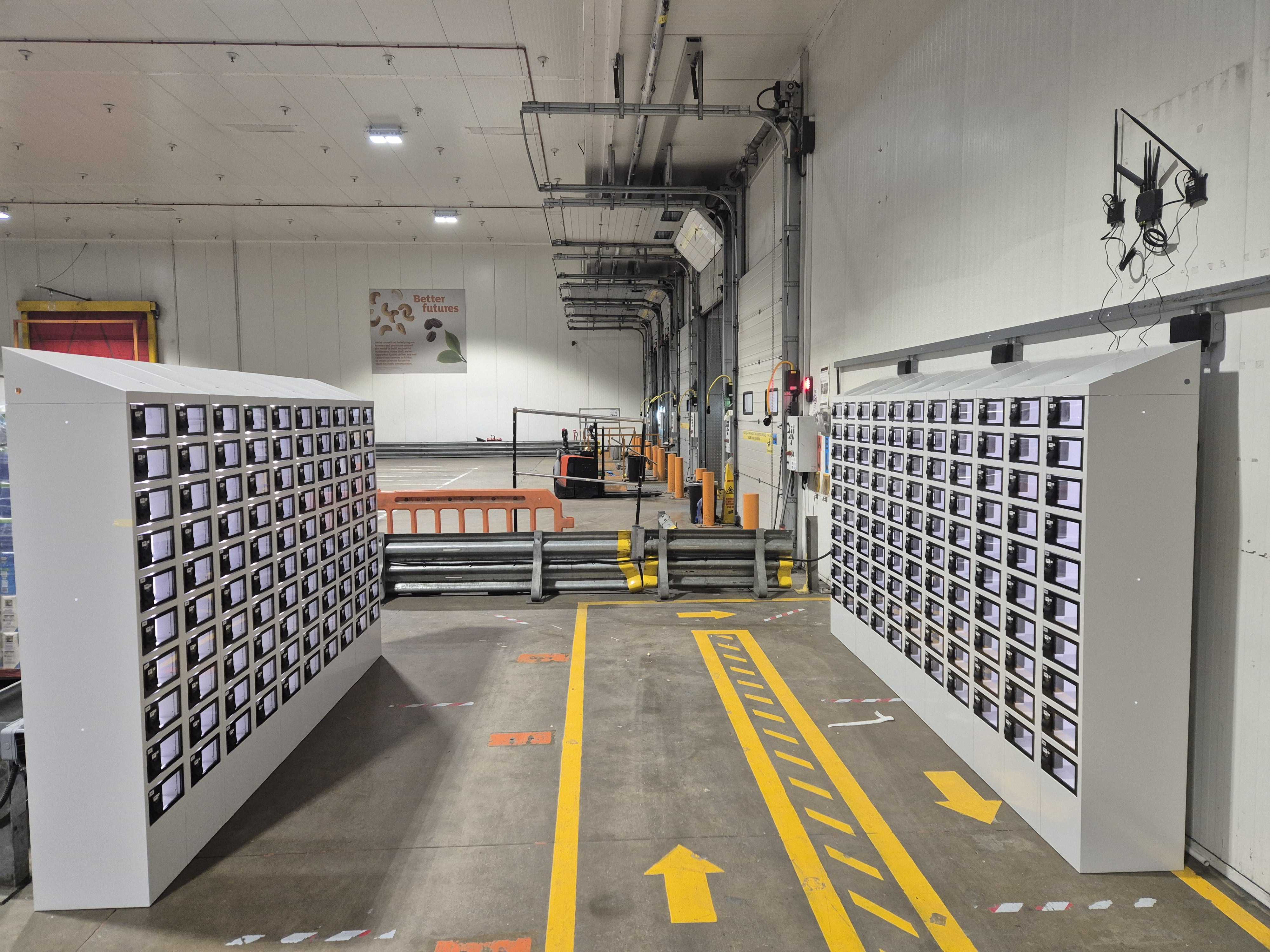
Asset lockers provide secure storage for valuable equipment, but modern smart asset lockers do considerably more. By combining controlled access with digital records and asset-management software, they help organisations manage the issue, return and accountability of equipment shared between employees.
In any organisation that relies on shared equipment, knowing where an asset is located is only part of the challenge. The more difficult question is often who last used it, whether it has been returned and whether it will be available when somebody else needs it.
Consider a distribution centre operating around the clock. Handheld scanners, mobile computers and two-way radios are issued to employees at the beginning of each shift and returned when their work is complete. These devices are essential to everyday operations, yet the process of distributing and recovering them can be surprisingly difficult to manage.
Equipment may be misplaced, retained between shifts or returned to the wrong location. Supervisors can spend valuable time searching for devices, while operatives wait for equipment before starting work. In larger operations, these seemingly minor inefficiencies can accumulate into a significant operational cost.
Asset lockers provide a way to manage this process more systematically. Rather than treating equipment storage as a separate administrative activity, smart asset lockers can make the issue and return of shared assets part of a controlled, measurable workflow.
What is an asset locker?
An asset locker is a secure storage system used to protect, issue and manage valuable physical equipment. Asset lockers may contain individual compartments or larger storage spaces, with access restricted to authorised users.
Traditional asset lockers generally rely on mechanical keys, combination locks or manually administered access arrangements. They provide a secure place to store equipment, but they do not necessarily establish who has taken an item, when it was collected or whether it has been returned.
A smart asset locker combines electronically controlled storage compartments with management software. Users authenticate themselves before accessing equipment, while the system manages permissions and records relevant transactions.
Depending on the configuration, the software can associate an individual user with a particular asset, maintain a record of outstanding equipment and provide information about how the locker system is being used.
This changes the function of the locker. Rather than simply protecting equipment while it is not in use, the system can help organisations manage the movement of assets between people.
The distinction becomes particularly important where equipment is shared rather than permanently assigned. A conventional locker may be sufficient for an employee who stores personal belongings or keeps the same equipment indefinitely. An organisation distributing hundreds of shared devices across several shifts has a different requirement. It needs a reliable process for issuing equipment, recovering it and maintaining accountability between transactions.
Smart asset lockers are designed to address that wider operational requirement.
How do smart asset lockers work?
Although individual systems vary, smart asset lockers typically combine electronically controlled compartments, user authentication, management software and a means of recording equipment transactions.
The process begins when an authorised user requests access to an asset. Depending on the system, the individual may authenticate using an employee identification card, PIN, RFID credential or another approved method. The software checks their permissions and determines which compartment they are entitled to access.
Once authorised, the relevant compartment opens and the user collects the equipment. The system records the transaction, creating a digital history of the access event and, where the asset has been identified or assigned, the equipment associated with it.
When the asset is returned, the process operates in reverse. The user accesses an authorised compartment, deposits the equipment and completes the return transaction. The software can then update the relevant records and, depending on its capabilities, make the asset available for another user.
The significance of this process is not simply that the locker opens electronically. It is that equipment distribution can take place without requiring a supervisor to physically oversee every transaction.
In a warehouse, for example, an operative collecting a handheld scanner may be able to authenticate, retrieve an assigned device and begin work without waiting at a staffed equipment counter. When the scanner is returned, the transaction can be recorded against the employee's identity.
This provides a more consistent basis for managing shared equipment, particularly where large numbers of devices move between employees throughout the working day.
However, an important distinction exists between recording access to a compartment and confirming the physical movement of an asset. A door-opening event establishes that somebody accessed a locker; it does not necessarily prove that the correct equipment was removed or returned. Systems requiring individual asset verification may use additional identification technologies or procedural controls.
For a fuller explanation of authentication, locker allocation and transaction workflows, see eLocker's separate guide to How Smart Lockers Work.

In a busy warehouse, the start of a shift is where equipment management really gets tested. If operatives are waiting for scanners, searching for devices or trying to find someone to issue equipment, that is productive time being lost before work has even started. A well-managed asset locker system creates a more consistent handover process, so people can get the equipment they need without relying on a supervisor to manage every transaction.
What types of equipment can asset lockers manage?
Asset lockers are used wherever valuable equipment needs to be shared, protected or made available to authorised individuals. Their suitability depends on the physical characteristics of the assets, the frequency with which they are accessed and the controls required to manage them.
In warehouses and distribution centres, common examples include handheld barcode scanners, mobile computers, two-way radios, headsets and other electronic devices used by operational teams. These assets are often relatively expensive, frequently handled and essential to maintaining productivity.
Engineering and maintenance environments present a related requirement. Power tools, specialist instruments, test meters and inspection equipment may need to be shared between technicians, while organisations require a reliable record of who has access to them.
Asset lockers are also used more broadly for equipment such as vehicle keys, selected medical devices and workplace technology. In each case, the underlying requirement is similar, although the appropriate security, identification and management processes may differ.
The physical design of the locker must reflect the equipment being stored. Large tools require different compartments from handheld electronics, while rechargeable devices may benefit from integrated power supplies.
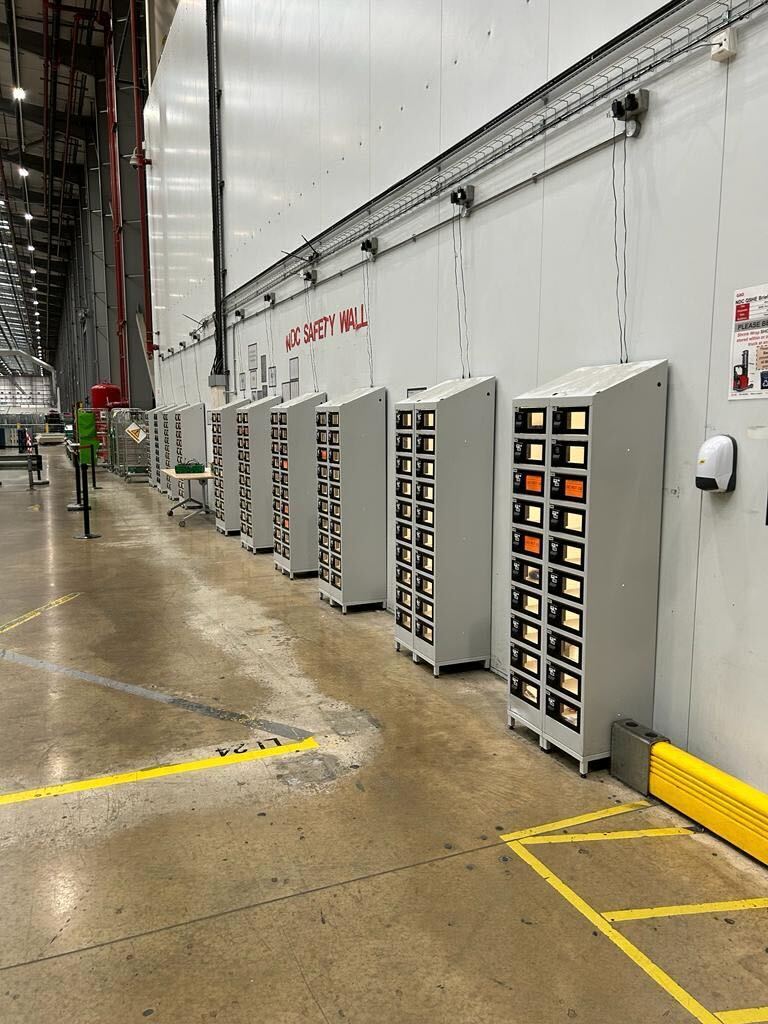
Some asset locker configurations include charging facilities that allow electronic equipment to recharge while securely stored. This can be particularly useful where devices are shared across successive shifts and need to be ready for the next user.
Nevertheless, charging capability should not be confused with device-condition monitoring. Providing power to a compartment does not automatically establish whether a device is functioning correctly, fully charged or ready for operational use. Those capabilities depend on the equipment and supporting technology.
What is the difference between an asset locker and a traditional locker?
Traditional lockers and smart asset lockers share the same basic purpose: protecting physical items from unauthorised access. The difference is the extent to which the system manages what happens before, during and after somebody accesses the equipment.
| Management capability | Traditional asset locker | Smart asset locker |
| Secure equipment storage | Physical security through a lock or key | Physical security with electronically controlled access |
| User access | Keys, combinations or manual permissions | Digital authentication and configurable permissions |
| Equipment issue and return | Usually managed manually | Can be recorded through software |
| User accountability | Dependent on separate records | Transactions can be associated with identified users |
| Outstanding equipment | Requires manual checking | Can be monitored through transaction records |
| Asset-level identification | Usually separate from the locker | Available through suitable configuration or identification technology |
| Management reporting | Limited without additional systems | Access, usage and transaction information |
| Integration | Typically independent of other systems | May connect with asset-management or operational software |
The choice between these approaches depends on the complexity of the equipment-management process.
Where a small number of assets are accessed infrequently by a limited group of people, conventional secure storage may be entirely adequate. Introducing software, electronic access controls and ongoing system administration would add cost without necessarily delivering a meaningful operational benefit.
The business case changes when assets circulate regularly between large numbers of users, particularly where manual records are unreliable or equipment availability affects operational performance.
In these circumstances, the value of a smart asset locker comes from improving the process surrounding the equipment, rather than simply providing a more sophisticated cabinet.
How do asset lockers improve equipment accountability?
One of the principal reasons organisations introduce smart asset lockers is to establish greater accountability for equipment that is shared between employees.
In a conventional equipment-management process, responsibility can become unclear as assets move between users. A scanner may be collected at the beginning of a shift, passed to another operative and eventually returned to a different location. If the device subsequently goes missing, establishing who last had responsibility for it may be difficult.
This problem is not necessarily caused by deliberate misuse. Equipment can be misplaced during routine operations, left in vehicles, stored in personal work areas or retained by employees who expect to use it again. In busy environments, particularly those employing temporary or rotating labour, informal equipment-management practices can become difficult to control.
Smart asset lockers introduce a more consistent approach by associating equipment transactions with identifiable users. Rather than relying entirely on handwritten registers or informal arrangements, managers can access a digital history of recorded issue and return events.
This creates a clearer starting point when investigating missing equipment. It can also encourage more consistent return practices because employees understand that the process is recorded and that responsibility for shared assets is more clearly defined.
However, accountability depends on more than the technology itself. The organisation must establish appropriate procedures for equipment allocation, transfers between users, damaged devices and outstanding returns. Employees also need to understand their responsibilities and how exceptions should be reported.
A locker system can provide the infrastructure for accountability, but the operating process determines how effectively that accountability is maintained.
How do smart asset lockers support asset tracking and management?
Asset lockers are sometimes described as asset-tracking systems, although the terminology requires some qualification.
Asset tracking is concerned with establishing the identity, location, assignment or status of equipment. Asset management is broader, encompassing the processes used to acquire, maintain, allocate, recover and eventually replace physical assets.
Smart asset lockers can support both activities, but their contribution depends on the technology deployed and the information exchanged with other systems.
At the simplest level, a locker management platform records who accessed a compartment and when. Where individual equipment records are associated with transactions, the organisation can also maintain a history of asset assignments and returns.
More advanced configurations may incorporate technologies such as RFID, barcode identification or other verification methods. These can help establish which physical assets are present or have been removed, depending on the system design.
RFID-enabled systems, for example, may use tagged equipment and compatible readers to identify individual items. This can provide a different level of asset visibility from a system that records only compartment access.
The distinction matters because organisations should not assume that every smart locker automatically detects the equipment stored inside it.
For businesses already using asset-management software, integration may provide an additional opportunity. Locker transactions can potentially contribute to existing equipment records, reducing the need for employees to update multiple systems manually.
The objective should be to establish a reliable record of asset movements without introducing unnecessary complexity. For some organisations, a controlled issue-and-return process may be sufficient. Others may require individual asset identification, integration with maintenance records or more sophisticated exception management.

There is an important distinction between knowing that somebody has opened a locker and knowing exactly which asset they have taken. Digital access records are useful, but asset-level accountability depends on how equipment is identified and transactions are verified. The right solution should reflect the level of control the organisation actually needs, rather than introducing technology and complexity that add little operational value.
Where are asset lockers commonly used?
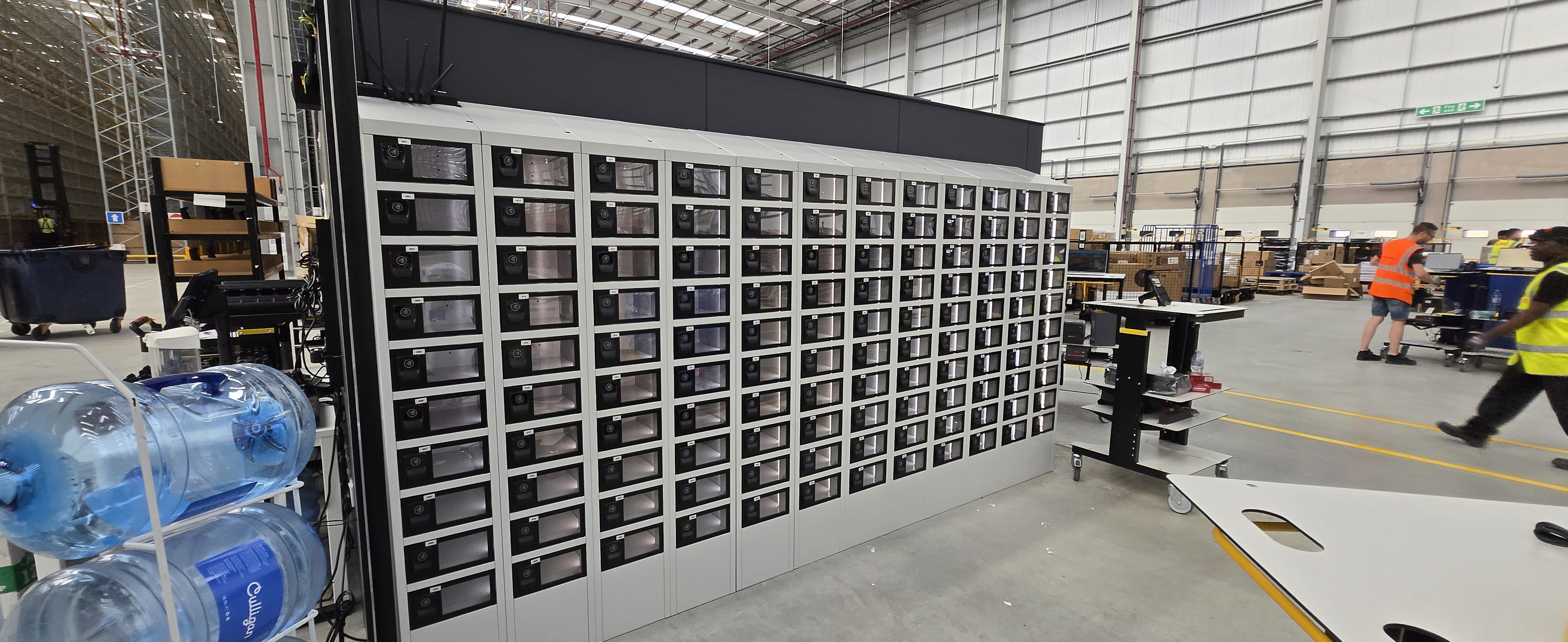
Although smart asset lockers can support several industries, their commercial value is particularly evident in environments where equipment is expensive, shared frequently and essential to operational performance.
Warehouses and distribution centres
Warehouses provide a useful illustration because equipment availability directly affects employees' ability to work.
Handheld scanners and mobile computers support activities such as receiving goods, picking orders, stock movements and dispatch. When devices are unavailable, damaged or difficult to locate, the consequences can extend beyond the cost of replacing the equipment.
An operative waiting for a scanner may be unable to begin an assigned task. A supervisor searching for missing devices is diverted from managing the operation. If shortages become routine, the organisation may purchase additional equipment to compensate for poor visibility rather than addressing the underlying management process.
Smart asset lockers can help by providing a controlled location for device issue and return, supported by records of user access and equipment assignment.
Where suitable charging arrangements are incorporated, the locker infrastructure can also support device storage between shifts.
The operational opportunity is therefore broader than reducing equipment loss. It includes improving shift readiness, reducing manual administration and making better use of the existing equipment pool.
For a more detailed examination of these applications, eLocker's guide to Smart Lockers for Warehouses explores the technology in the context of distribution centre operations.
Engineering and maintenance
Engineering teams frequently share specialist tools and instruments that may be costly to replace or difficult to substitute.
An asset locker can provide controlled access to this equipment while recording who has collected it. This is particularly relevant where tools move between technicians or where equipment availability needs to be managed across different work areas.
However, secure issue and return should not be confused with maintenance assurance. A locker record does not independently establish whether an instrument has been calibrated, inspected or is safe to use. Those requirements must remain part of the wider equipment-management process.
Other specialist environments
Asset lockers also have applications in healthcare, facilities management, public services and corporate equipment management.
These environments may use the technology to manage shared devices, keys, tools or other valuable assets. However, each application introduces different requirements relating to security, access, equipment condition and operational procedures.
The common principle is the controlled movement of physical assets between an organisation and authorised individuals, rather than any particular type of equipment.
What should organisations consider before installing asset lockers?
The decision to introduce smart asset lockers should begin with an assessment of the existing equipment-management process.
It can be tempting to focus immediately on compartment numbers, hardware specifications and software functionality. These are important considerations, but they should follow a clear understanding of the operational problem.
An organisation experiencing equipment shortages, for example, should first establish whether the problem is caused by insufficient assets, poor return practices, inadequate charging arrangements or unreliable records. Each issue may require a different response.
The volume and frequency of equipment transactions are also important. A warehouse issuing hundreds of devices across several shifts has different requirements from a maintenance department managing a small collection of specialist tools.
Locker capacity must accommodate the equipment being stored and the number of users expected to access it. Location also matters, particularly where large groups of employees collect equipment at the same time. Poor placement or insufficient capacity can simply transfer a queue from a staffed equipment counter to the locker area.
The software configuration should reflect the organisation's access and accountability requirements. This includes determining who can collect equipment, how assets are assigned, what happens when items are not returned and how damaged devices are handled.
Integration with existing systems may be valuable, but it should be justified by a clear operational requirement. A standalone system with reliable transaction records may be sufficient for some organisations, while others will benefit from connecting locker activity to established asset-management processes.
Security should be assessed at both physical and digital levels. Organisations need to consider compartment construction, authentication, permissions, software administration, information handling and the suitability of the system for the assets being managed.
Finally, employee adoption deserves careful attention. A technically capable system will deliver limited value if users find it difficult to operate or routinely bypass the intended process.
Successful implementation therefore depends on designing the operating workflow as carefully as the locker infrastructure.
Are smart asset lockers worth the investment?
The financial case for smart asset lockers depends on the costs associated with the existing process and the extent to which a controlled system can improve it.
The purchase price of the locker hardware is only one component. Organisations may also need to consider software, installation, configuration, connectivity, charging infrastructure, maintenance and support.
These costs should be evaluated against the operational benefits the organisation expects to achieve.
For a warehouse, the business case may include the replacement cost of missing devices, time spent distributing equipment, management effort associated with investigating losses and productive minutes lost while employees wait for available assets.
Consider a hypothetical operation in which 100 employees each lose five minutes collecting equipment at the beginning of a shift. That represents more than eight hours of cumulative employee time per shift.
Not all of that time will necessarily be recoverable, and the financial value depends on whether reducing the delay improves productive output or lowers actual operating costs. Nevertheless, the example illustrates why apparently small handover inefficiencies can become commercially significant when repeated at scale.
Equipment loss presents a related consideration. If poor accountability results in unnecessary replacement purchases, improving the issue-and-return process may reduce expenditure. However, any projected saving should be based on credible historical loss records rather than assuming that automation will eliminate losses entirely.
A sound investment assessment should therefore establish a baseline for equipment loss, transaction volumes, employee waiting time, administrative effort and asset availability. These measures can then be compared with the expected costs and benefits of the proposed system.
The strongest business case is not necessarily the one promising the greatest number of automated features. It is the one demonstrating how a defined operational problem can be addressed at a justifiable cost.

When businesses calculate the cost of managing shared equipment, they often focus on the replacement value of missing devices. But that is only part of the picture. You also need to consider the time supervisors spend distributing and recovering equipment, the delays at shift change and the cost of devices sitting unused because nobody knows where they are. Once those costs are understood, it becomes much easier to establish whether a more controlled asset management process will deliver a worthwhile return.
The future of asset management is about more than secure storage
Asset lockers have evolved from a straightforward method of protecting valuable equipment into a means of managing how that equipment moves between people.
Smart asset lockers combine controlled access with transaction records and, where appropriate, individual asset identification and integration with wider management systems.
Their value is most apparent where equipment is shared frequently, accountability is difficult to maintain and manual handovers create unnecessary operational work.
However, the technology should not be considered a substitute for effective asset-management processes. Organisations still need clear responsibilities, appropriate equipment controls and reliable procedures for handling exceptions.
The most effective applications begin with an understanding of how assets are currently issued, used and returned, before determining where digital control and automation can make those processes more reliable.
For warehouses and distribution centres, this creates an opportunity to move beyond simply securing equipment towards improving device availability, operational accountability and shift readiness.