
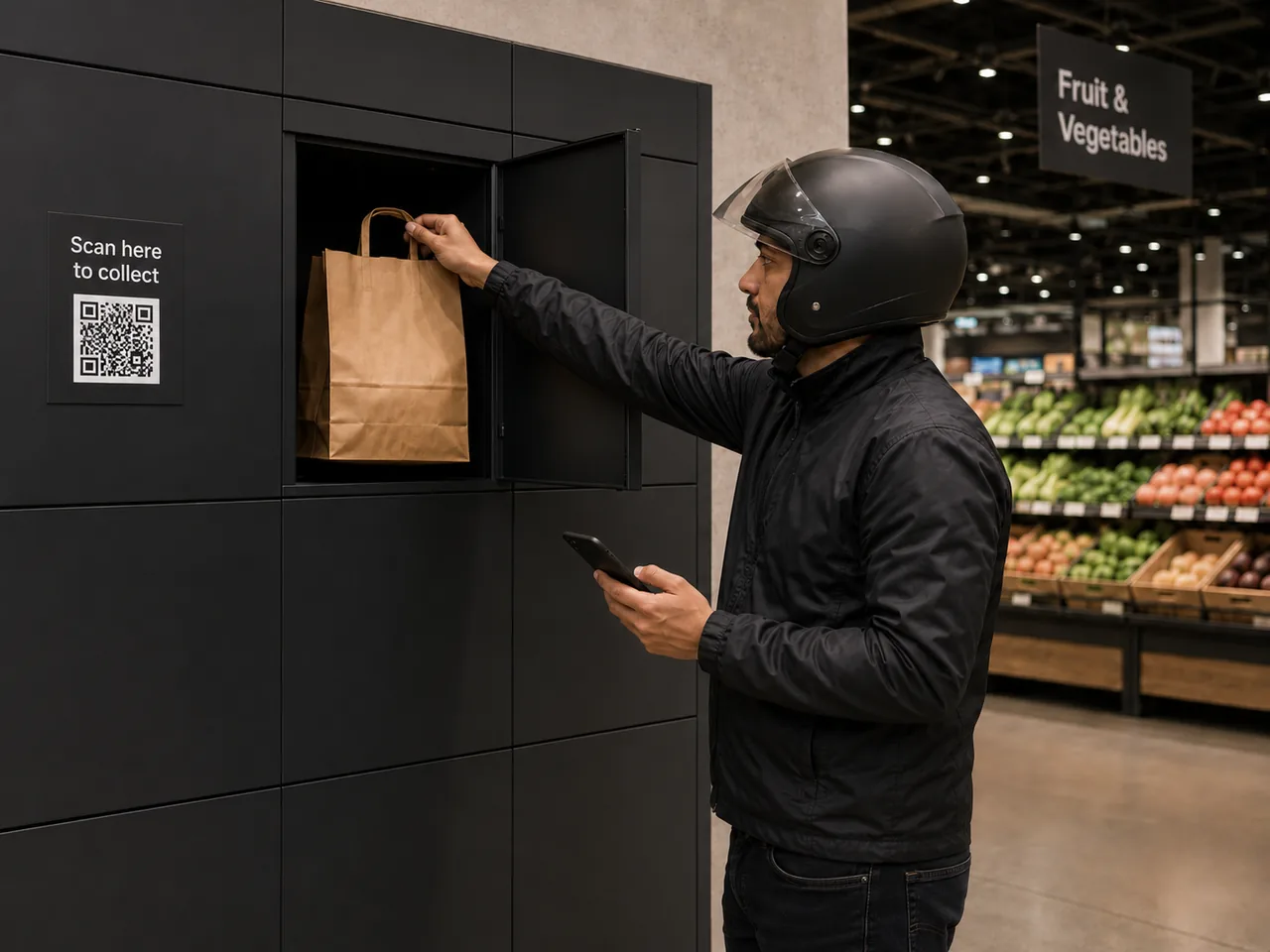
Retail collections
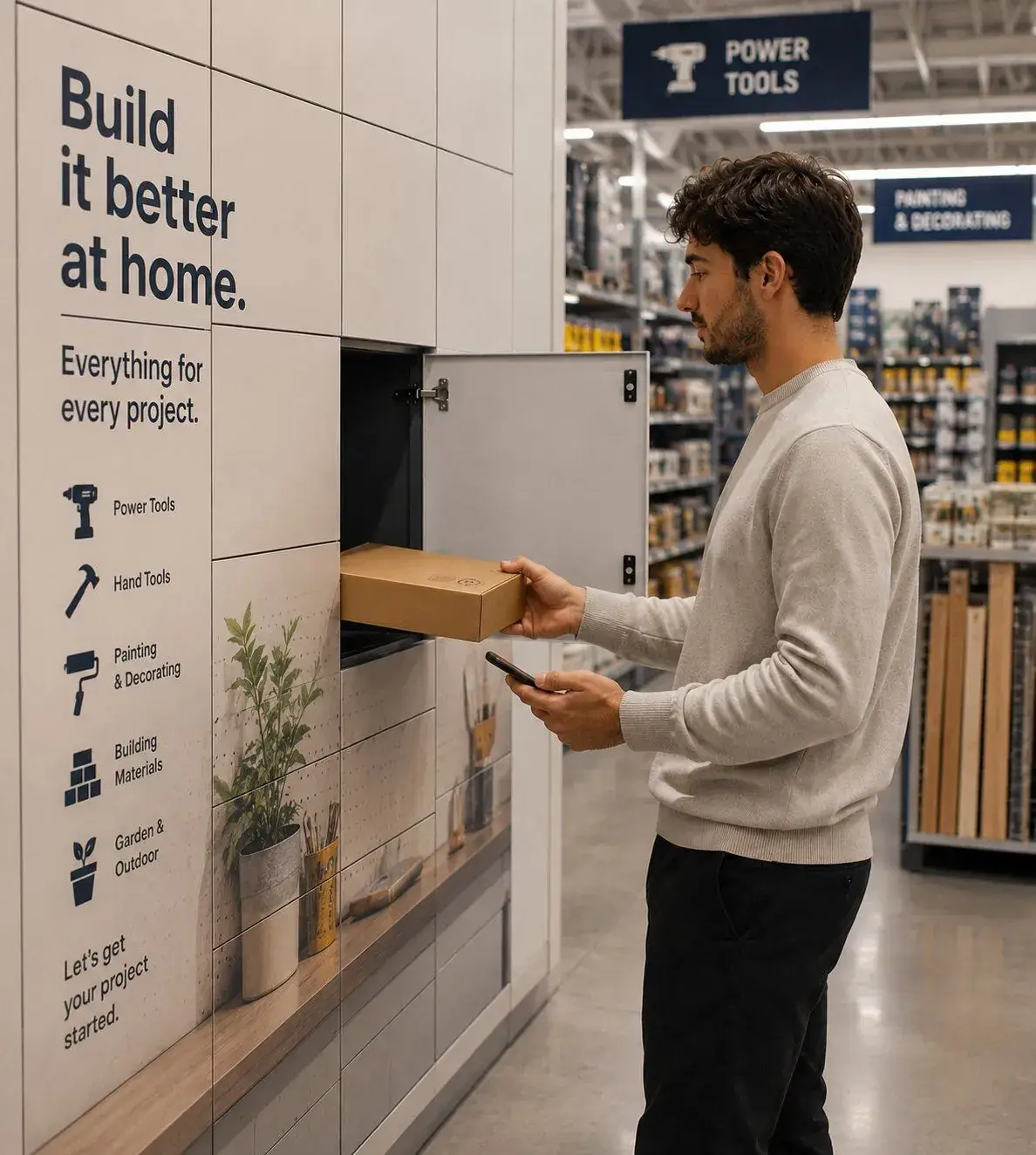
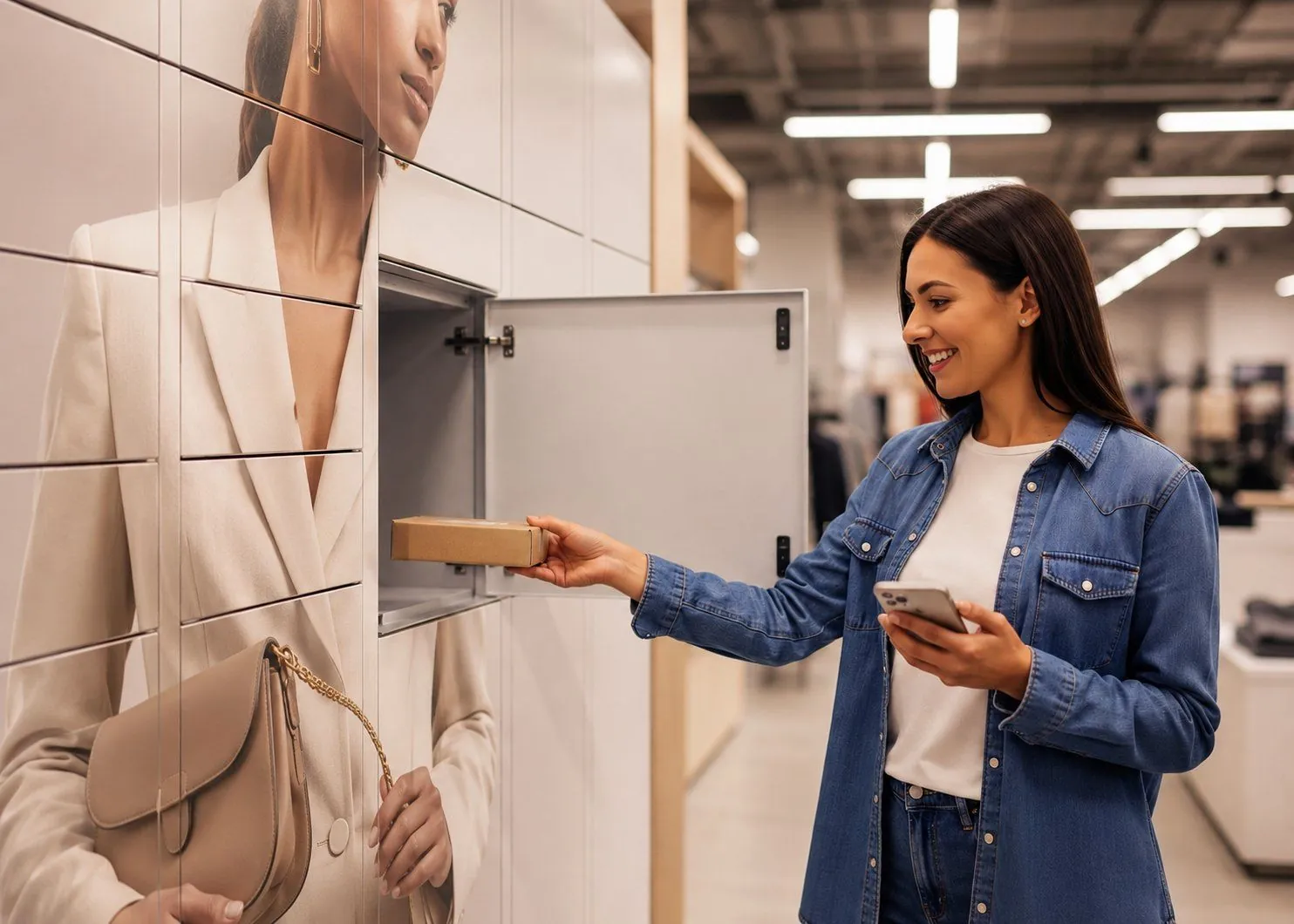
Click & collect
- Ready orders go straight into the locker
- Customers collect themselves, any open hour
- Every collection logged against the order
The same approach across retail, warehouse and workplace: we measure, model and prove the economics on one of your sites before any rollout.
See how we do it
See every workflow side by side and find the right fit.
Compare solutionsEnterprise-grade security and the integrations to slot eLocker into the systems you already run.
Security & integrations“What is a smart locker?” is a plain-English primer on how automated collections and returns actually work.
Read the guideeLocker is delivered as connected layers, not a box on a wall. The hardware is the handover point; everything around it does the work. Each layer below builds on the one before it, and together they run automated collections and returns across your estate.
Table of contents
The physical layer: a range of locks, lockers and containers that connect directly to the eLocker platform over their own cellular link, with no IT network or WiFi access to grant.
What the hardware layer covers

Parcel and asset lockers in a range of sizes, rated for indoor or outdoor sites.
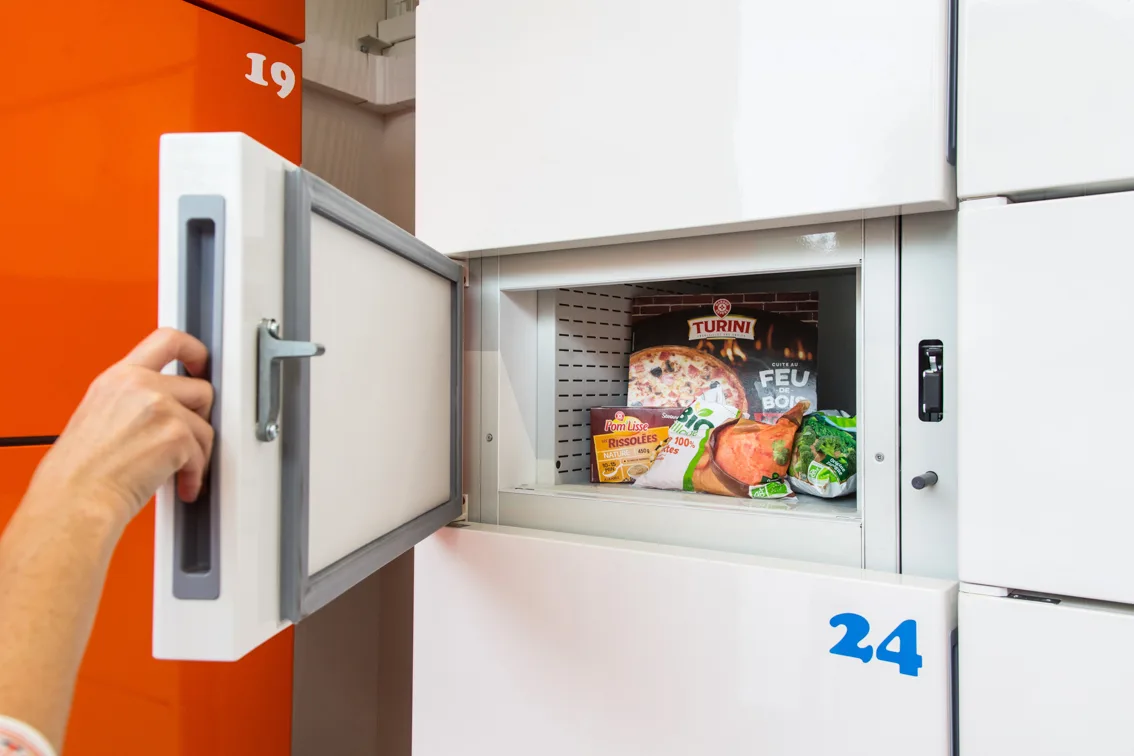
Temperature-controlled compartments for grocery and food-to-go.
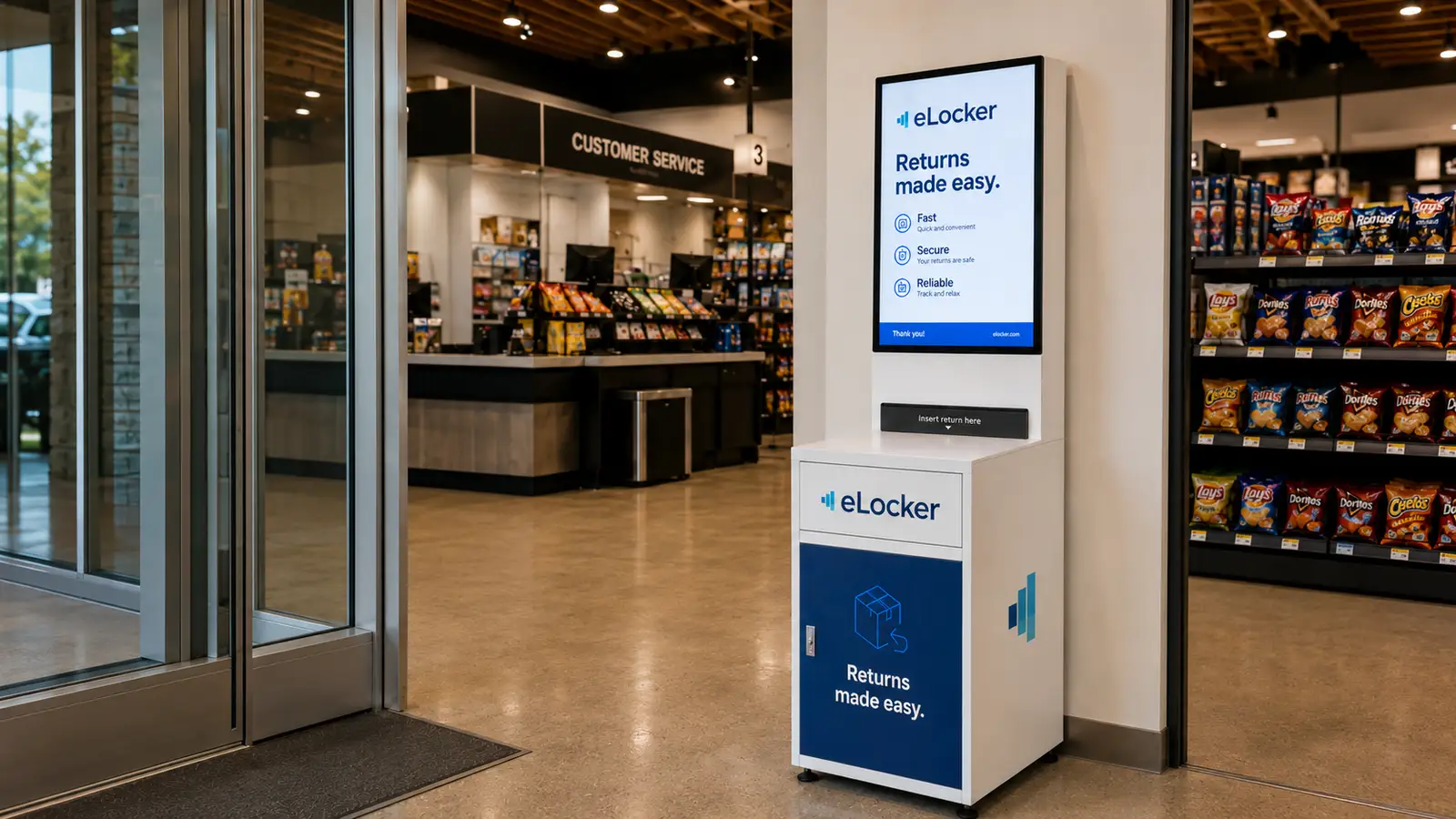
Single-deposit units that take a return or hand-back and log it in seconds.
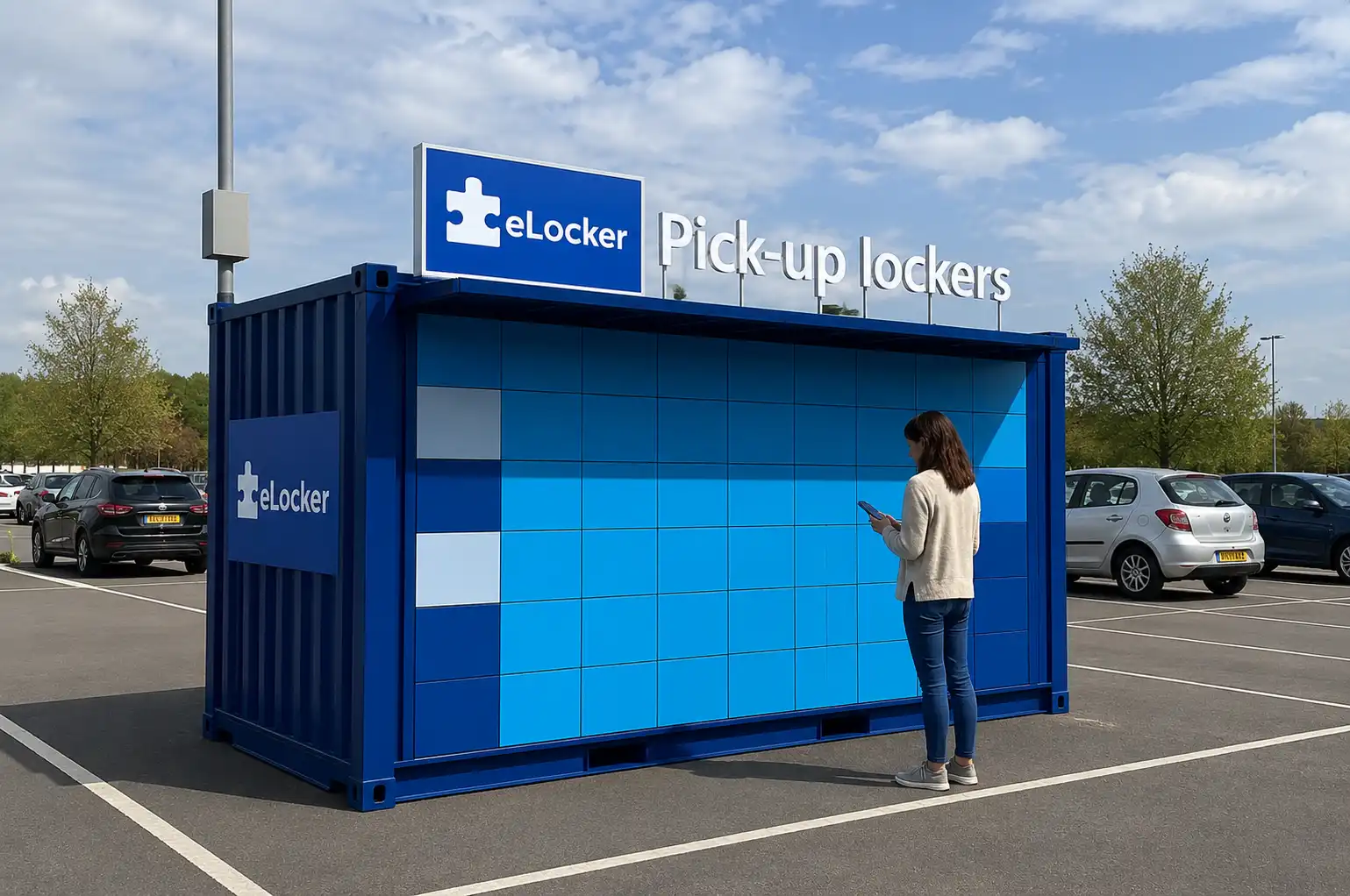
Self-contained locker banks for yards, depots and outdoor sites.
The locker management software is where the estate is managed. It sets up units, controls who can open what, and turns every event into a record. When someone asks who collected what, or why a return is missing, the answer is in front of you, not in a search through paperwork.
What a locker management system does
Every journey begins with a person, and runs on one of three credentials: their phone, an access badge or a one-time code. From there it's the same for every workflow, a notification then self-service collection or return. Five jobs, one system.
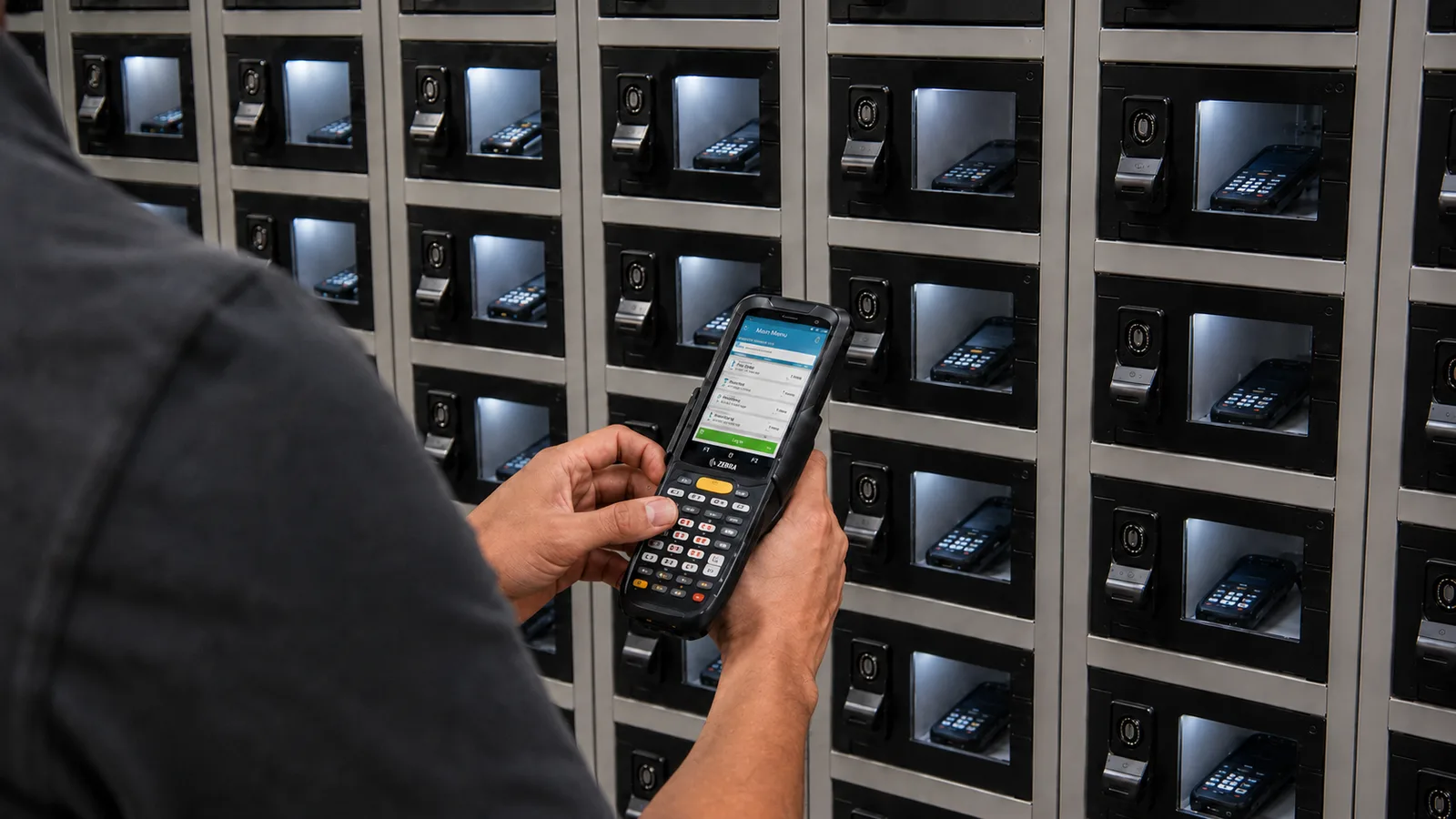
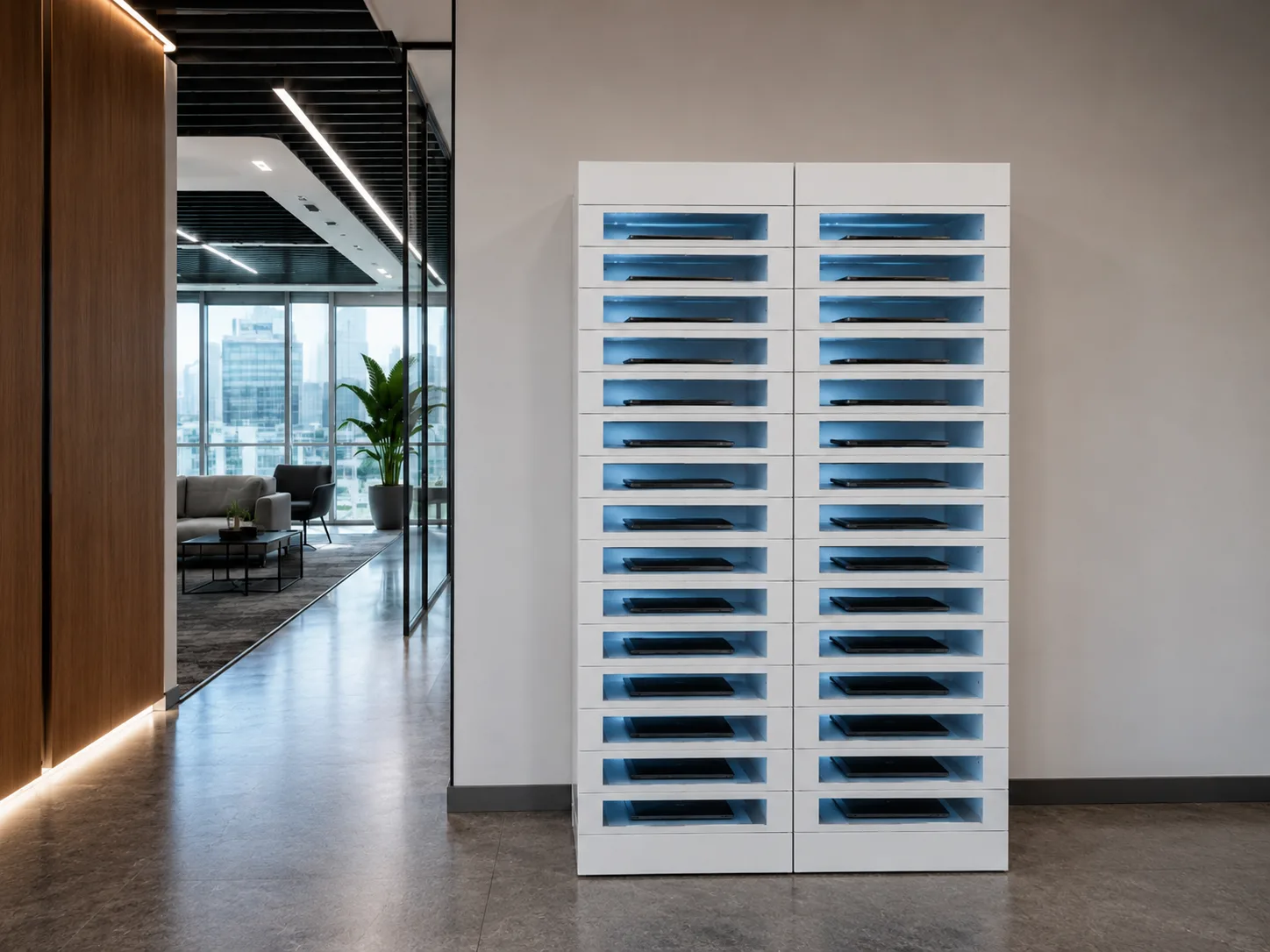
Every route feeds back into one platform: the operating system for all your collections, returns and handovers.
The layer under the platform
Under the platform sits a documented, open RESTful API, with webhooks alongside it. This is how eLocker connects into the systems you already run, so the platform reads from and writes back to your own stack rather than standing apart from it.
Tie locker events to warehouse stock and asset movements.
Push ready orders in and log each collection against the order.
Trigger collection journeys straight from the point of sale.
Sync people and permissions so access stays current.
eLocker is built to fit your stack, not replace it. Open APIs and webhooks let the platform send and receive events, so orders, stock, people and parcels stay in step with the systems that already hold them.
Push ready orders into a locker and log every collection back against the order.
Tie asset and parcel movements to your warehouse and logistics systems.
Sync people and permissions from your HR or directory so access stays current.
Trigger notifications and collection journeys straight from your online store.
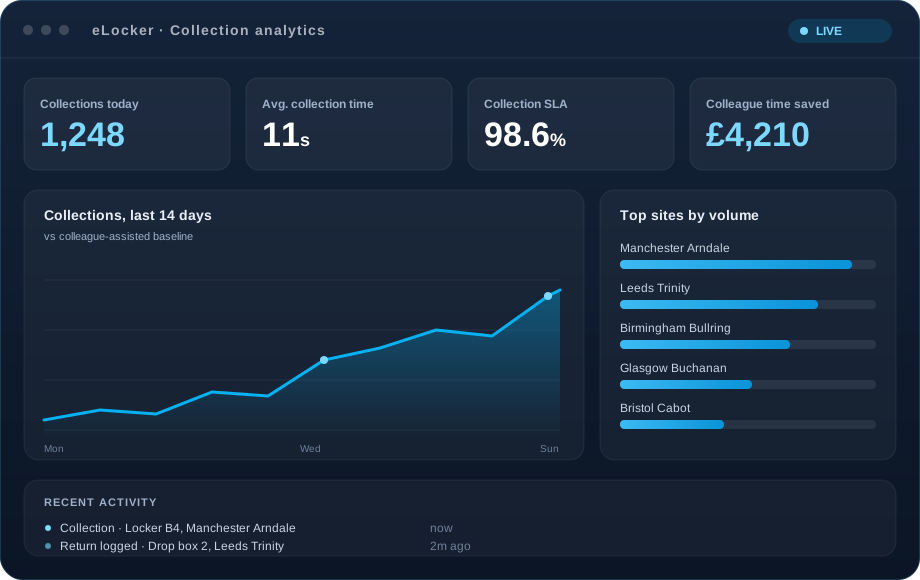
Every event the hardware logs and the software stores becomes reporting you can act on. Read one site on its own, compare every site across the estate, or build the report a specific question needs.
Everything happening at one location, for the team that runs it.
Every location side by side, so head office can see the whole estate.
The report a specific question needs, by team, period or workflow.
Three things make the security layer: who can open what, a record of everything that happens, and the standards the platform is held to.
Access control
eLocker connects over its own cellular link, so there's no access to your IT network or WiFi to grant.
Card or app access, matched to how your organisation already works.
Staff, managers and admins see exactly what their role needs, no more.
Audit trail
Every open, close, collection and return is logged with who, what and when.
Forced or out-of-policy opens are flagged in the log, so nothing happens unseen.
Overdue items, exceptions and unexpected access trigger notifications to the right people.
Certifications & standards
Data is encrypted in transit and at rest, handled in line with GDPR, with role-based access throughout.
Information security management aligned to the ISO 27001 standard.
Certified against the UK Cyber Essentials baseline for everyday threats.
All the layers below exist so the moment at the locker is quick and clear. eLocker focuses on that experience: a notification when an item is ready, a simple way in, and a collection or return done in seconds. People reach the locker two ways, and both are kept deliberately simple.
An existing access badge is the credential. Tap to open, with nothing to download and nothing new to carry, using the cards your people already hold.
The journey runs on the phone. A notification says an item is ready, a tap opens the unit, and the collection or return is logged automatically.
Branding applies to the mobile journey. Notifications, on-screen language, name, colours and tone all carry your brand, so it feels like part of your service. Card access stays the same simple tap.
See it in your brandIt runs every locker on the platform: who can open which door, what happens at each step of the workflow, who gets notified and what gets recorded. Every open, close, collection and return is logged with who, what and when.
Yes. Click & Collect, Retail Returns, Grocery Courier Handover, Warehouse Asset Management and IT equipment handovers all run on the same platform, so a multi-site estate is managed with one set of permissions and one reporting view.
No. eLocker connects over its own cellular link, so there's no access to your IT network or WiFi to grant.
Yes, through an open RESTful API. Typical connections are EPOS and order management in retail, WMS and logistics systems in warehouses, HR and identity systems, and ecommerce platforms.
Single-site reporting for the people running a site, multi-site reporting across the estate, and custom reports when the standard views don't answer the question you're asking.
Access is by card or app, and role-based permissions give staff, managers and admins only what their role needs. Data is encrypted in transit and at rest, eLocker is certified against Cyber Essentials, and information security management is aligned to ISO 27001.
Every layer, working together on your sites. Book a demo, or talk through a pilot to prove the value first.