
A retail pilot that proves the economics before you roll out

We run a measured click-and-collect pilot in your stores, grounded in your own numbers, so the rollout decision rests on evidence rather than a vendor's promise.

  • Built on a measured baseline of what collections cost you today
  • Modelled at your colleague hourly rate, your volumes, your mix
  • Validated against live transactions, with an ROI report to take to the board
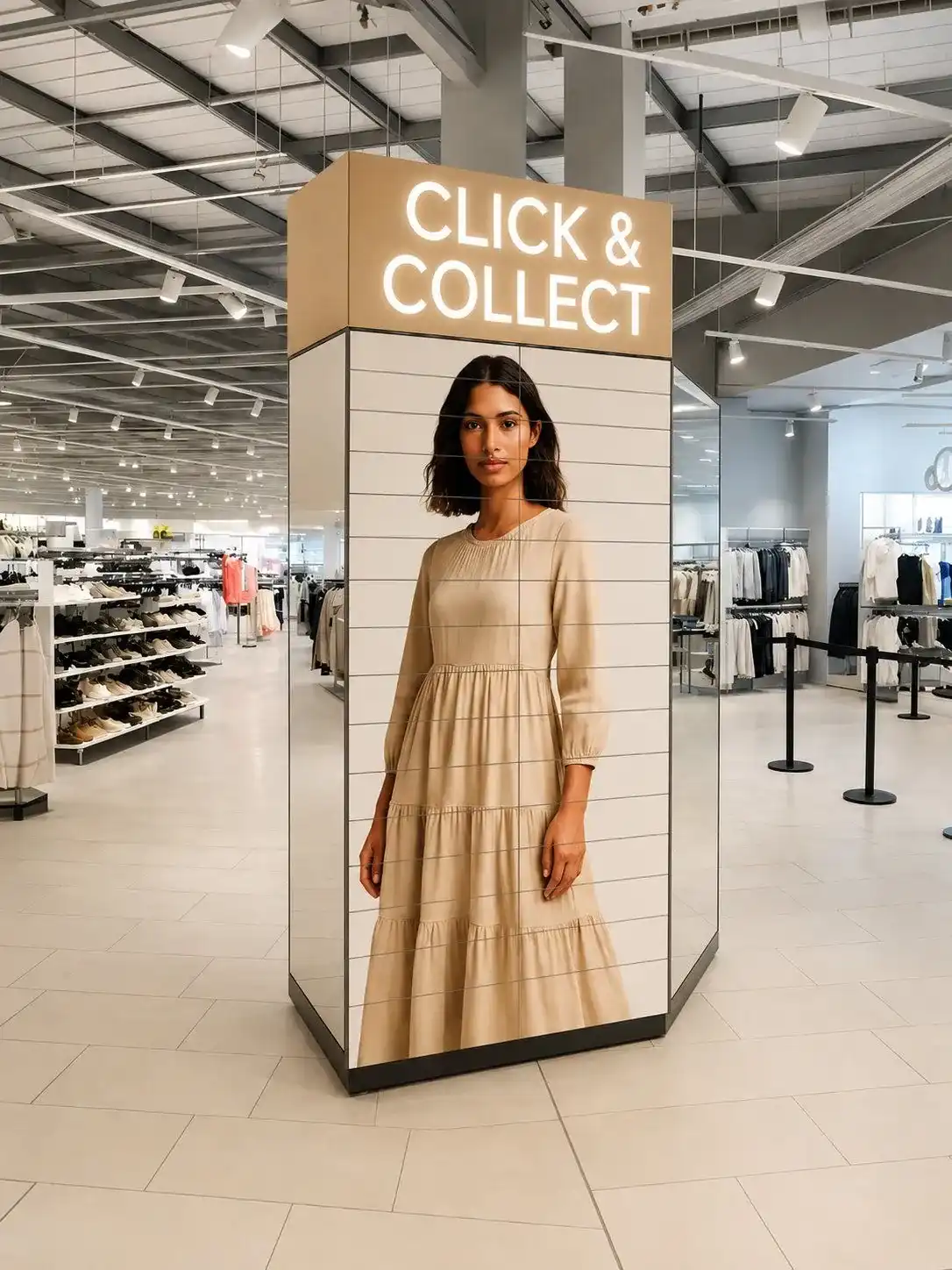
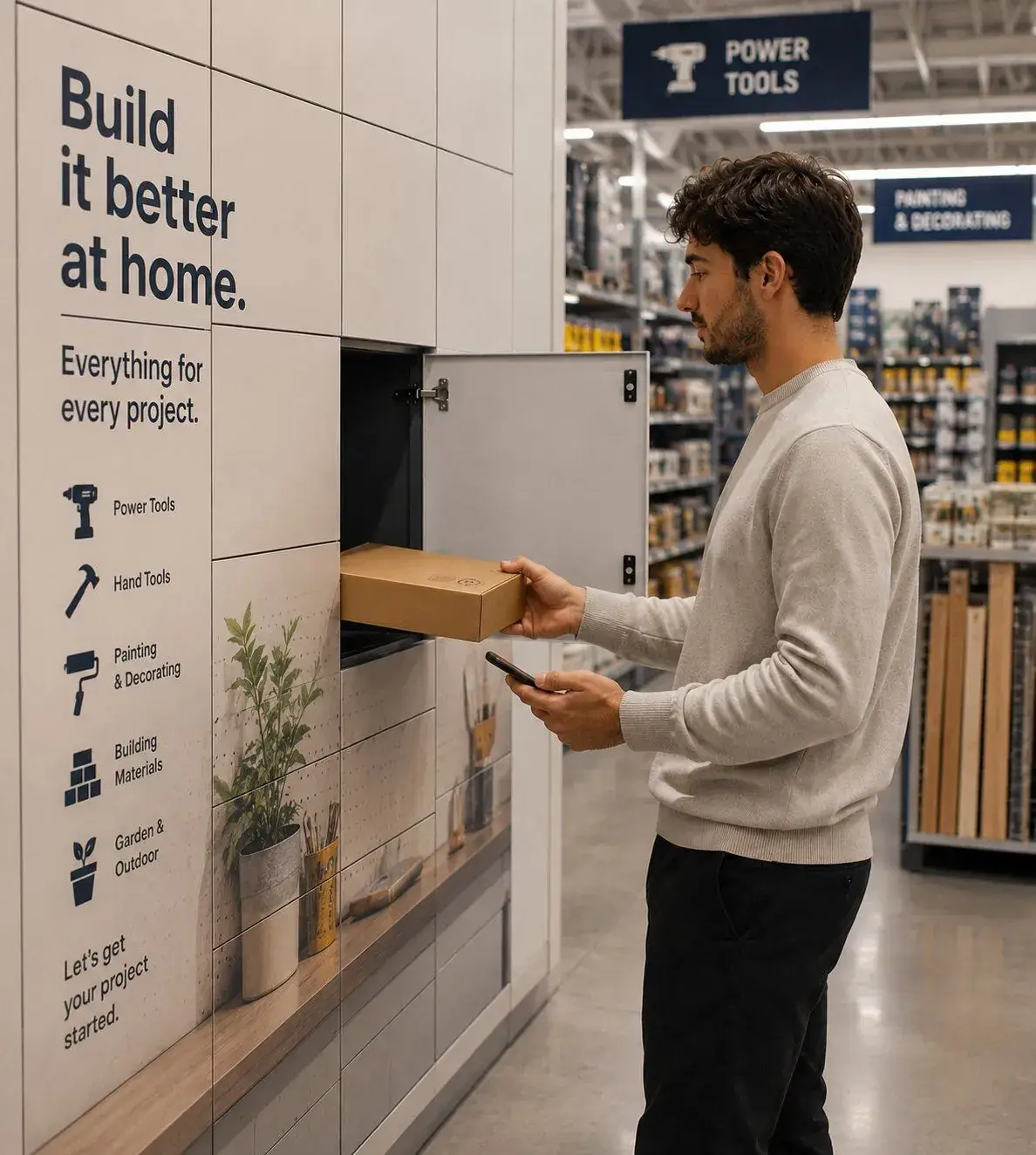
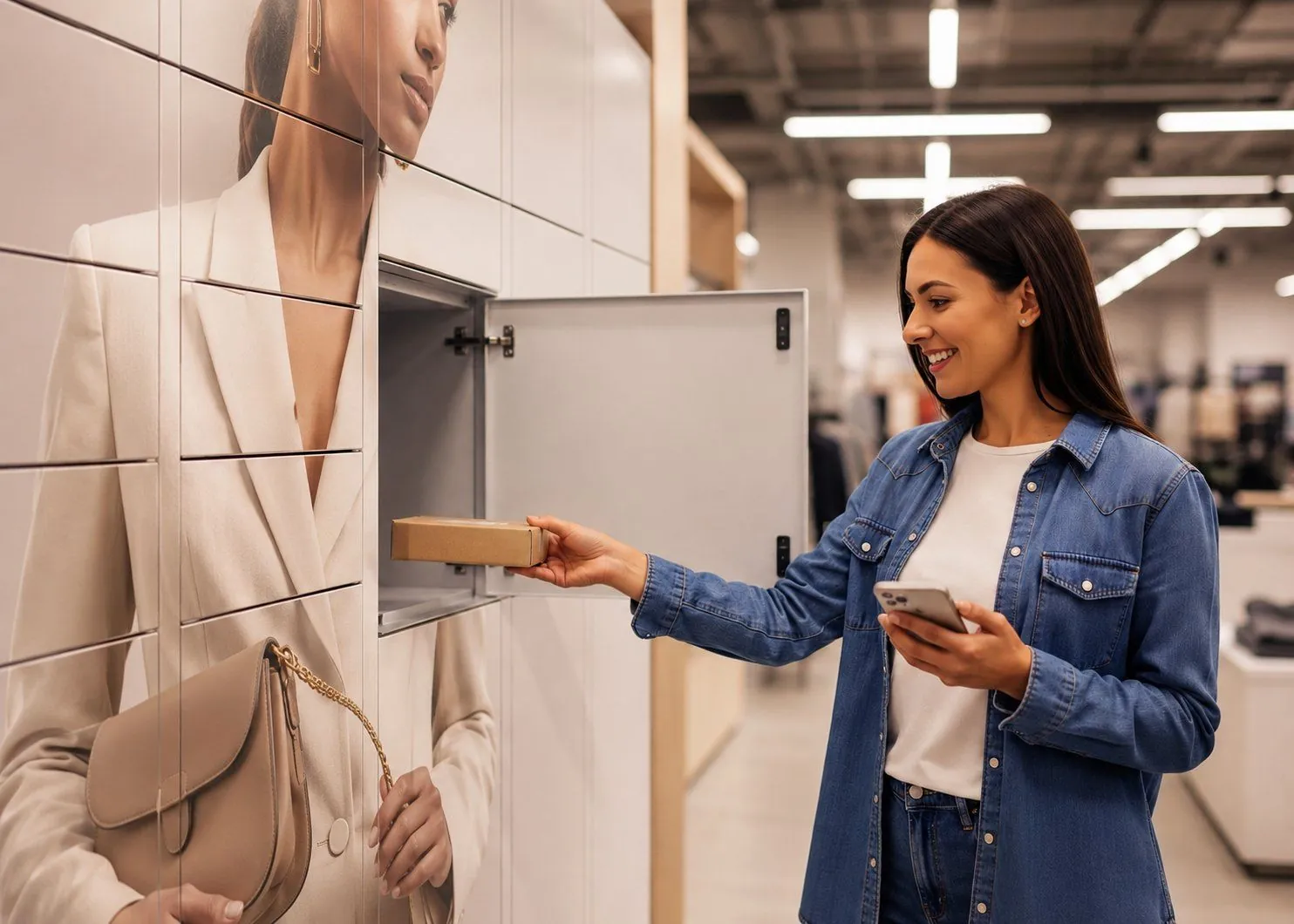
An eLocker click-and-collect locker bank in a retail store
Why a pilot

Manual collections are getting more expensive every year. We help you prove savings before you roll out.

As ecommerce volume grows, colleague time spent on manual handovers grows with it, and so does cost-to-serve. A rollout across multiple sites is a real commitment, so it should follow evidence, not a forecast on a slide. A pilot puts a number on what collections cost you now, models the automated workflow on your own figures, and then checks that model against live transactions. You decide on rollout knowing the saving is real.

£2.63£2.81£3.00£3.20£3.41£3.64£3.89£4.15£4.43£4.72 2026202720282029203020312032203320342035
Modelled cost per collection, manual handover, rising about 6.7% a year from a 2026 baseline of £2.63 (at £17/hr colleague cost). The longer you wait, the more a rollout saves.
The method

Four stages, one question: does it pay?

Every retail pilot we run follows the same path. Measure what collections cost today. Model the same workflow automated, on your numbers. Deploy with minimal disruption. Then validate the forecast against what actually happens.

1Measure

Capture what collections cost you today

Before we change anything, we establish the baseline. We run a time-and-motion study in-store, working with your team on the floor rather than from a spreadsheet, so the starting point is your real process, not an assumption.

  • Colleague time per collection, step by step, from order arrival to handover
  • Queue time and the handover steps customers actually go through
  • Labour cost per transaction, calculated at your colleague hourly rate

The output is a single, agreed baseline figure: what one collection costs you today. Everything in the next stage is modelled against it.

2Model

Model the automated workflow on your own numbers

Using the baseline, we model the same workflow with eLocker doing the handover. The model is grounded in the figures we measured, so the projection is yours, not an industry average. It splits into two parts.

Volume & parcel modelling

  • Order volumes and how they move across the week
  • Parcel and package size mix from your real orders
  • Peak-period throughput, so the busy hours are covered
  • A right-sized locker configuration matched to that demand

Cost & ROI modelling

  • New labour cost per transaction, at your colleague hourly rate
  • Cost per collection before versus after, side by side
  • A payback timeline based on your volumes
  • An ROI projection you can stress-test before committing
3Deploy

Configure, brand and go live with minimal disruption

We configure the collection platform and the lockers around the package sizes and order volumes from the model, not a generic template. Go-live is planned around your trading hours so the store keeps running.

  • Lockers and platform set up for your parcel mix and volumes
  • A branded customer journey that runs in the mobile browser, no app, no kiosk
  • A simple colleague handheld workflow for loading orders
  • A go-live plan designed to keep disruption to the store minimal
4Validate

Prove the forecast against real transactions

Once live, the pilot stops being a projection and becomes a record. We track real collections as they happen and hold them up against the model, so you can see how close the forecast was, in your stores, on your customers.

  • Live transaction times, measured on real collections
  • Forecast versus actual, compared openly
  • Confirmed labour savings against the measured baseline
  • An ROI report shared with your team, ready for the rollout decision

See what a pilot would look like for your stores

Bring your collection volumes and Bijoux will model the saving with you, then prove it on a measured pilot before any rollout decision.

Discuss a pilot
Bijoux M’Bayo, eLocker
“Tell me about your stores and I’ll model the saving with you. If a pilot is worth running, we’ll prove the numbers before you commit to a rollout.”
Bijoux M’BayoRetail collections & returns, eLocker
What we report on

The measures a pilot puts a number on

We agree the measures with you up front and report against them throughout, so every stakeholder is looking at the same evidence.

Colleague time saved

Minutes taken out of every handover, totalled against the baseline.

Cost per collection

Measured before, measured after, at your own colleague rate.

Queue reduction

Wait and congestion at the collection point, before and after.

Customer feedback

Captured at the end of the collection journey, on the customer's phone.

Store adoption rate

The share of eligible orders collected through the lockers.

Exception rate

How often a collection needs colleague help, so you can see where to tune.

Out-of-hours collection

Collections completed outside staffed hours, where you choose to enable it.

Locker utilisation

How hard the configuration works, to confirm it is right-sized for rollout.

Proof

Measured, then deployed

We take the same evidence-led approach to every deployment. See how it worked at a national retailer.

FAQs

Retail pilot FAQs

How long does a retail pilot take?

It depends on your trading calendar, but a single-store pilot is designed to be quick to stand up and to run long enough to cover a representative trading period, including at least one peak. We agree the window with you before we start so the validation stage has real volume to measure against.

How disruptive is it to the store?

The pilot is built to be low-integration to begin with, and go-live is planned around your trading hours. Colleagues load orders through a simple handheld workflow, and customers collect from their own phones, so the store keeps running through the change.

Whose numbers does the business case use?

Yours. The baseline is measured in your store during the time-and-motion study, and the cost model uses your colleague hourly rate, your order volumes and your parcel mix. We do not substitute industry averages for figures we can measure with you.

What happens if the pilot does not hit the forecast?

That is exactly what the validate stage is for. We compare forecast against actual openly and share the report either way. A pilot that surfaces a smaller saving than hoped is still doing its job: giving you real evidence before a wider commitment.

How do we know the pilot store is representative?

You choose the store, or stores, with us. The point is to reflect your estate, so it makes sense to pick a typical site, or a small set of formats, rather than the easiest one. The baseline measurement also makes the conditions explicit, so the rollout case is transparent about where the numbers came from.

What is the commitment to run a pilot?

A pilot is deliberately self-contained: a defined store, window and set of measures, with a low-integration setup to begin with. It is structured to give you a clear before-and-after on cost and customer experience without committing to a wider rollout. We will set out the scope and what it involves before you decide to proceed.

Can we pilot more than one store?

Yes. A single store is enough to prove the method, but multi-site retailers often run a small number of formats together so the rollout case reflects the variety across the estate. We size the pilot with you.

Can we pilot returns alongside collections?

Yes. Returns are the other direction of the same workflow and run on the same estate and mobile journey. Many retailers measure both in one pilot.

Get started

Design a pilot that proves it on your numbers

Tell us a store and your volumes, and we will scope the measure, model, deploy and validate stages with you.