

A practical guide to how RFID locker systems work, including RFID readers, cards and badges, access permissions, management software and the advantages of replacing keys and combinations with digitally controlled access.
Keys have been used to control access to lockers for generations. They are simple, familiar and inexpensive, but they also create an administrative problem that becomes increasingly noticeable as the number of lockers and users grows.
Keys get lost, need replacing and have to be physically distributed. Combination codes can be forgotten or shared. When somebody leaves an organisation or no longer requires access, recovering a key or changing a combination creates another task for somebody to manage.
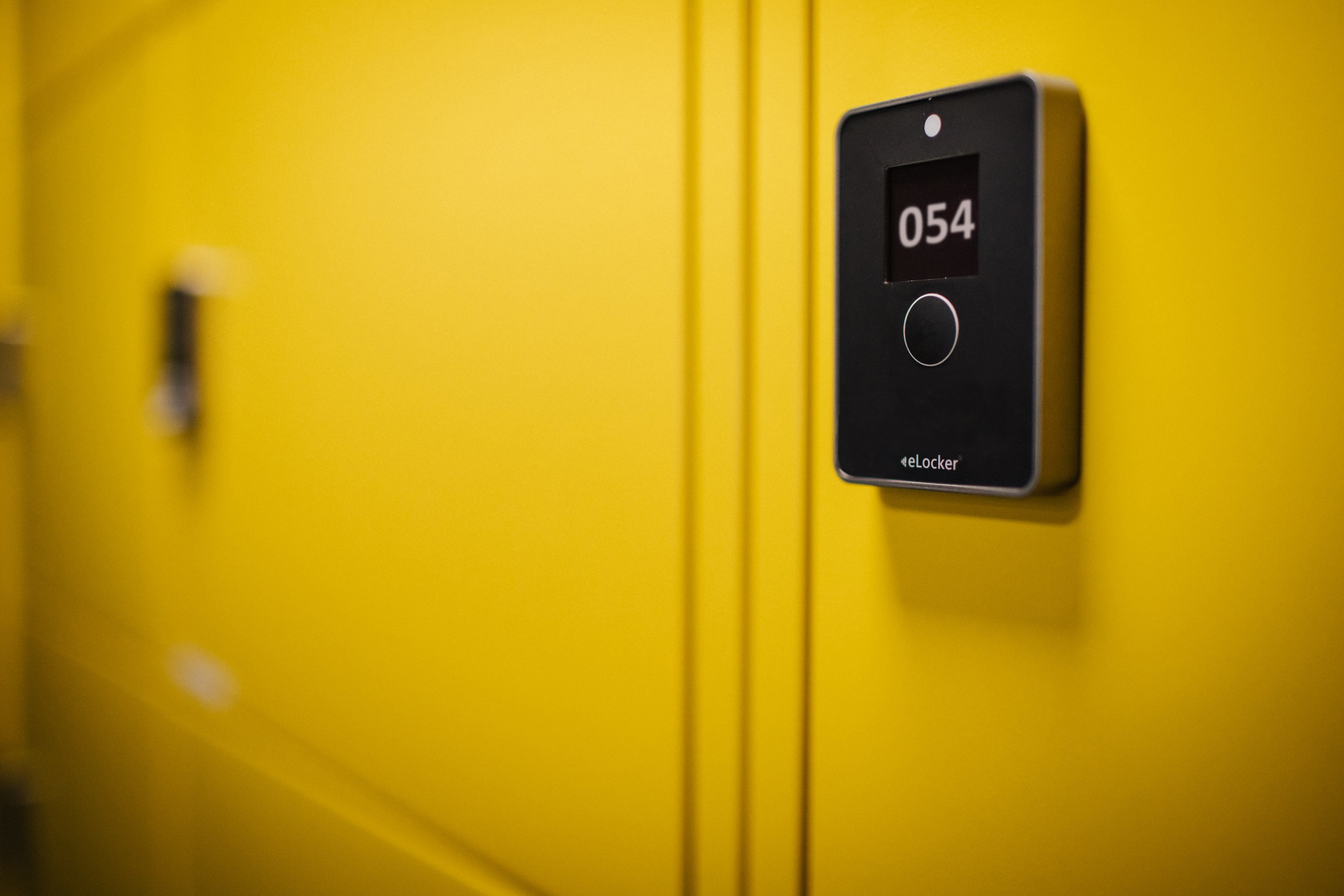
RFID locker systems provide an alternative by replacing the conventional key with an electronic credential. Instead of inserting a key into a lock, the user presents an RFID card, badge or fob to a reader. The system identifies the credential, checks whether it has permission to access the locker and releases the electronic lock when access is authorised.
For organisations whose employees already carry RFID credentials for building access or identification, the experience can be particularly straightforward. The same familiar action of presenting a badge can be used to access a locker, while permissions and locker activity can be managed through software rather than through physical keys.
What is an RFID locker system?
RFID stands for Radio-Frequency Identification, a technology that uses radio waves to identify and communicate with tags containing electronically stored information.
In a locker environment, RFID is used primarily to identify the person requesting access. The user presents an RFID card, badge or fob and the system reads the unique identifier associated with that credential. If the user has permission to access the locker, the electronic lock can then be released.
At its simplest, an RFID locker system therefore consists of three essential elements: the RFID credential carried by the user, a reader capable of detecting it and an electronically controlled locking mechanism.
In a connected smart locker environment, there is usually a fourth element: management software. This allows organisations to determine which users can access which lockers, change those permissions and maintain information about locker activity.
The RFID technology identifies the credential. The wider locker system determines what should happen once that credential has been identified.
How does an RFID locker work?
The interaction itself is deliberately quick.
When an RFID card or badge is brought close to the reader, the reader uses radio-frequency communication to detect the credential and obtain its identifying information. The locker system then checks that identity against the access permissions associated with the locker.
If access is authorised, the electronic locking mechanism releases and the user can open the door.
The process can happen in a fraction of the time required to find a key or enter a combination, which is one reason RFID works particularly well in environments where lockers are accessed frequently.
The underlying sequence is relatively simple:
| Stage | What happens |
| Identify | The user presents an RFID card, badge or fob |
| Read | The RFID reader detects the credential and reads its identifier |
| Verify | The system checks whether that credential has permission to access the locker |
| Release | If authorised, the electronic lock releases |
| Record | In a connected system, the access event can be logged |
The user experiences little more than presenting a badge and opening a door. Behind that interaction, however, the system is establishing whether the credential is recognised and whether it should be permitted to open that particular locker.
What is the difference between the RFID card, reader and lock?
These components perform different roles, which can sometimes become blurred when RFID lockers are described.
The RFID card, badge or fob carries the electronic identifier used to recognise the user. In many workplace and warehouse environments, employees may already carry compatible credentials for other purposes.
The RFID reader detects and reads the credential when it is brought within the appropriate range. It provides the connection between the physical action of presenting a badge and the electronic access-control process.
The electronic lock physically secures the locker door. It only releases when the system determines that access should be permitted.
The management software sits behind these components and controls the relationship between users and lockers. This is what allows access permissions to be changed without physically changing the lock itself.
RFID should therefore not be confused with the locking mechanism. RFID provides the identification technology used to initiate an access request; the electronic lock is what physically secures and releases the door.
Do RFID lockers need a specific card or fob?
Not necessarily. One of the practical advantages of RFID technology is that organisations may already use compatible credentials for building access, identification or other workplace systems.
Where compatibility allows, an existing employee badge can potentially become the locker credential as well. This avoids issuing another key, card or token that employees need to carry and the organisation needs to administer.
Compatibility should not be assumed, however. RFID is a broad technology family and different cards, frequencies, protocols and access systems exist. An organisation considering using its existing credentials should therefore establish whether the proposed locker system can work with the particular RFID technology already deployed.
This is especially important for larger organisations where identity and access infrastructure may already be standardised across multiple sites.
RFID identification and access permissions are different things
Presenting a recognised RFID card does not necessarily mean that every locker should open.
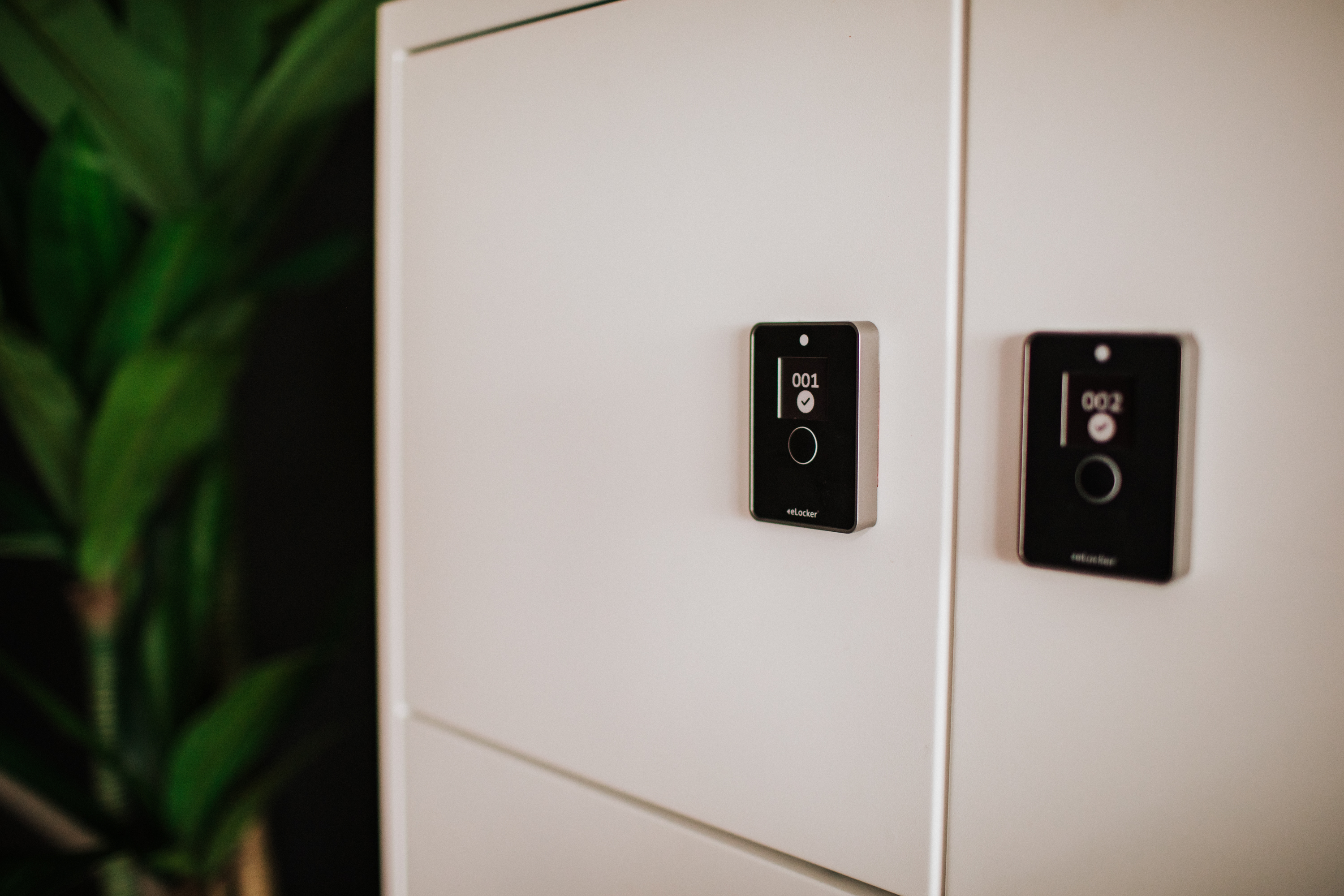
The credential identifies the user, while the locker system determines what that person is authorised to access. This distinction allows RFID lockers to support much more controlled access than a conventional shared key or combination.
An employee may be authorised to access their personal locker but nobody else's. A warehouse operative may be permitted to collect a particular handheld device. An IT employee may have wider administrative permissions than the employee collecting a replacement laptop.
The same credential can therefore produce different outcomes depending on the permissions configured behind it. This becomes particularly useful when access requirements change frequently. Instead of replacing locks or redistributing keys, permissions can be amended through the management software.
How are RFID locker systems managed?
A standalone RFID lock can provide keyless access, but connecting RFID-controlled lockers to management software creates considerably more operational capability.
At eLocker, for example, we combine RFID-controlled access with an online management platform through which managers can allocate and deallocate lockers and view information about their use.
This changes the administrative model.
With conventional keyed lockers, assigning a locker often means physically issuing a key. Reassigning it requires recovering that key, and a missing key may mean replacing or changing the lock.
With a connected RFID system, the physical locker can remain exactly where it is while the access permission changes digitally.
A manager can remove one user's permission and allocate the locker to somebody else without walking the floor or issuing a new physical key. Where lockers are distributed across large sites or multiple locations, this can remove a significant amount of routine administration.
What happens if somebody loses their RFID card?
A lost credential illustrates one of the main differences between RFID and traditional keys.
If a physical locker key is lost, the organisation has to consider the possibility that whoever finds it may be able to use it. Depending on the risk, that may require the lock to be changed or the missing key to be replaced and carefully managed.
An RFID credential can be treated differently because the authority to open the locker does not reside solely in possession of the physical card.
If a card or fob is lost, its access permission can be removed from the system. A replacement credential can then be issued and authorised.
This does not make a lost card irrelevant. Organisations still need appropriate procedures for reporting and disabling lost credentials. The advantage is that the access rights associated with the credential can be changed without replacing the physical locker lock.
Are RFID lockers more secure than keys?
The answer depends on the quality of the systems being compared and the way they are managed.
A well-controlled key can provide effective physical access control. The limitation is that possession of the key normally determines whether somebody can open the locker, while providing little information about who actually used it.
RFID provides an opportunity to connect access with an identifiable credential and, in a connected locker system, maintain a digital record of the resulting transaction.
This creates practical differences:
| Keyed locker | Connected RFID locker |
| User needs a physical key | User presents an electronic credential |
| Lost keys may require physical intervention | Lost credentials can be deauthorised |
| Access changes may require key redistribution | Permissions can be changed digitally |
| Shared keys make attribution difficult | Access can be associated with an individual credential |
| Little or no access history | Locker activity can be recorded |
| Administration is predominantly physical | Administration can be managed through software |
The security advantage therefore comes less from RFID being inherently “unbreakable” and more from the additional control available around identity, permissions and auditability.
Can RFID locker access be recorded?
When RFID access forms part of a connected smart locker platform, the system can create a digital record of locker activity.
Depending on the configuration and workflow, this can include which credential accessed the locker, when access occurred and which locker or compartment was involved.
This is particularly useful when lockers contain shared business assets.
If a device goes missing from a conventional storage cupboard, the organisation may know that several people could have accessed it without knowing who actually did. When an identified RFID credential is used to collect the device, there is a clearer transaction history.
The same principle can support locker management more generally. Usage data can help organisations understand which lockers are being used, identify underutilised capacity and investigate exceptions when activity does not follow the expected pattern.
Where are RFID locker systems used?
RFID access can be useful anywhere organisations need frequent, controlled access without the administrative burden of physical keys.
In workplace environments, RFID lockers can provide employees with secure personal or temporary storage using credentials they may already carry. This can be particularly useful in hybrid offices where lockers are dynamically allocated rather than permanently assigned.
In warehouses and distribution centres, RFID credentials can be used as part of workflows for issuing and returning handheld computers, scanners, radios and other shared equipment. Here, the ability to associate access with an individual employee can improve accountability as assets move between shifts.
RFID can also support workplace IT asset management, allowing employees to access lockers containing replacement laptops, loan equipment or other technology through their existing workplace credentials.
The underlying RFID technology remains broadly the same across these applications. What changes is the workflow around the locker and what the organisation needs the access event to achieve.
RFID lockers in hybrid workplaces
Hybrid working has changed the way many organisations think about workplace storage.
When employees attended the same desk every day, permanently assigned lockers were relatively straightforward. In workplaces where attendance varies throughout the week, dedicating a locker permanently to every employee can leave substantial capacity unused.
A connected RFID system allows a more flexible approach.
Lockers can be allocated according to workplace policy and accessed using an employee's existing credential. Because allocation is managed digitally, the organisation can change who has access without physically redistributing keys.
This can reduce locker administration while allowing the available storage estate to be used more efficiently.
The benefit is not simply keyless access. It is the ability to make the physical locker estate respond more dynamically to how the workplace is actually being used.
RFID lockers for warehouse equipment
Warehouse environments provide a different reason for using RFID.
Handheld scanners, mobile computers, radios and other devices may be shared between large numbers of operatives across multiple shifts. The operational challenge is not simply keeping the equipment secure; it is controlling who takes which device and establishing responsibility for its return.
An employee badge provides a convenient identification method because operatives may already use it as part of their normal working day.
When that credential is connected to a smart locker workflow, equipment can be issued through a controlled transaction rather than an open cabinet or manual sign-out process.
The resulting record can provide greater visibility over who accessed the equipment and when. This is particularly valuable where loss, damage and missing devices create disruption at shift changes.
Again, RFID is only one component of that workflow. The badge identifies the user; the smart locker platform manages the allocation, access and transaction around the asset.
RFID lockers for IT asset management
The same principle can be applied to workplace technology.
An employee who needs a replacement laptop, charger or other IT equipment can be authorised to access a specific locker using their existing workplace credential. The IT team can prepare the equipment in advance, place it into the compartment and make it available without needing to be physically present for the handover.
RFID can therefore provide the authentication step within a broader IT asset-management workflow.
For organisations already using employee badges, this can make the collection experience particularly straightforward. The employee does not necessarily need another key, PIN or application purely to access the locker.
The operational value comes from combining that familiar access method with software-controlled permissions and a recorded handover.
Does RFID require the card to touch the reader?
RFID is a contactless technology, so the card or badge does not generally need to make physical contact with the reader.
The credential needs to be within the appropriate reading range for the system being used. In a locker application, this will typically involve presenting or holding the badge close to the reader.
The short interaction is useful in environments where lockers are accessed frequently because there is no key to insert or combination to enter.
Can existing lockers be converted to RFID?
Potentially. An organisation considering RFID does not necessarily need to replace every existing locker cabinet.
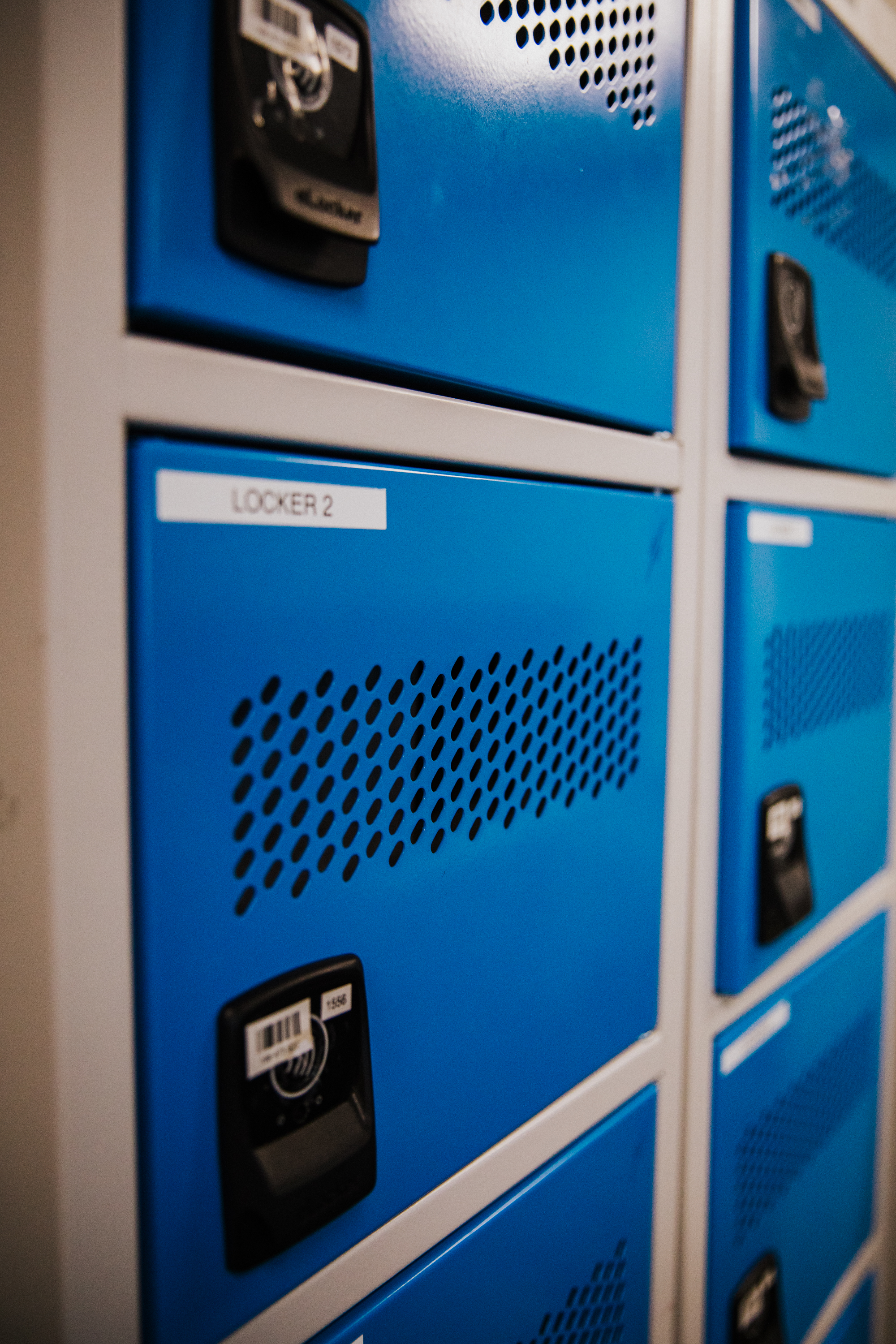
Where the physical lockers are suitable, electronic locking technology may be retrofitted to existing infrastructure and connected to management software. The feasibility depends on the locker construction, door design, existing locks and the requirements of the intended system.
This can materially change the economics of an RFID project. If the existing cabinets remain fit for purpose, the organisation may be able to retain much of its physical locker estate while replacing the access and management layer.
The important assessment is therefore not simply whether the existing lockers have mechanical locks today, but whether they can accommodate the electronic hardware and connectivity required for the new system.
Does RFID work if the internet goes down?
RFID itself does not inherently depend on an internet connection. The credential and reader communicate using radio-frequency technology.
However, the behaviour of a connected RFID locker during a network interruption depends on the architecture and configuration of the wider locker system.
Organisations where locker availability is operationally important should therefore establish how permissions and access behave if connectivity is temporarily unavailable, how transactions are recorded during an interruption and how the system synchronises once connectivity is restored.
This is particularly important in warehouse or IT applications where an employee may need access to equipment before they can begin or resume productive work.
The question is less about whether RFID works offline and more about how the complete connected locker system manages an interruption.
What should organisations consider before choosing RFID lockers?
The starting point should be how people currently access lockers and what problems the organisation is trying to remove.
If the primary issue is lost keys, RFID may provide a straightforward alternative. If the organisation also wants central allocation, usage information and transaction records, the capabilities of the management platform become equally important.
Existing credentials should also be assessed. Organisations hoping to use employee badges need to establish whether their current RFID technology is compatible with the proposed locker system rather than assuming that all RFID cards operate in the same way.
The operating environment matters too. A hybrid workplace, warehouse and corporate IT department may all use RFID, but the access permissions, workflows and audit requirements can be very different.
The strongest specification therefore begins with the required user, access and management workflow, then determines which RFID and locker configuration supports it.
Frequently asked questions about RFID locker systems
What does RFID mean?
RFID stands for Radio-Frequency Identification. It uses radio waves to identify a tag, card or fob containing electronically stored information.
How does an RFID locker work?
The user presents an RFID credential to a reader. The system identifies the credential and checks whether it is authorised to access the locker. If access is permitted, the electronic lock releases.
Do RFID lockers need keys?
Not for normal user access. RFID cards, badges or fobs can replace physical locker keys, although the precise system may include separate procedures for maintenance or emergency access.
Can employees use their existing access cards?
Potentially. This depends on the RFID technology used by the existing credential and its compatibility with the locker system. Compatibility should be established before deployment.
What happens if an RFID card is lost?
The credential's access rights can be removed from the system so the lost card no longer provides authorised access. A replacement credential can then be issued and authorised.
Are RFID lockers secure?
RFID lockers can provide controlled electronic access and, when connected to management software, individual permissions and transaction records. Overall security depends on the technology, configuration and wider security controls surrounding the deployment.
Can RFID locker access be tracked?
In a connected smart locker system, access activity can be recorded against the relevant credential, locker and time depending on the platform and workflow.
Can RFID lockers be centrally managed?
Yes. Connected RFID locker systems can allow managers to allocate and remove access, view locker status and manage the locker estate through software rather than administering physical keys individually.
Can existing lockers be upgraded to RFID?
In some cases. Suitable existing lockers may be retrofitted with electronic locking technology rather than being completely replaced. Compatibility needs to be assessed.
Where are RFID lockers typically used?
RFID lockers can be used in workplaces, warehouses and other environments where organisations need controlled, frequent access without relying on physical keys. They can also provide the authentication layer within IT asset and shared-equipment workflows.
RFID changes how locker access is managed
The immediate appeal of an RFID locker is easy to understand. A user presents a card or badge rather than finding a key or remembering a combination, making access quick and familiar.
The more significant change happens behind that interaction.
When RFID is connected to management software, locker access no longer has to be governed by physical possession of a key. Permissions can be assigned digitally, removed when they are no longer required and associated with individual users. Access events can also form part of a transaction record, giving organisations greater visibility over how their lockers are being used.
That distinction becomes increasingly valuable as locker estates grow or the contents become more operationally important. Managing hundreds of keys across a workplace or controlling access to shared warehouse equipment creates a very different administrative problem from managing a handful of personal lockers.
RFID provides the identification technology that helps remove that dependency on physical keys. Combined with electronic locks and appropriate management software, it can turn locker access from a largely mechanical process into one that is centrally controlled, easier to administer and more accountable.