

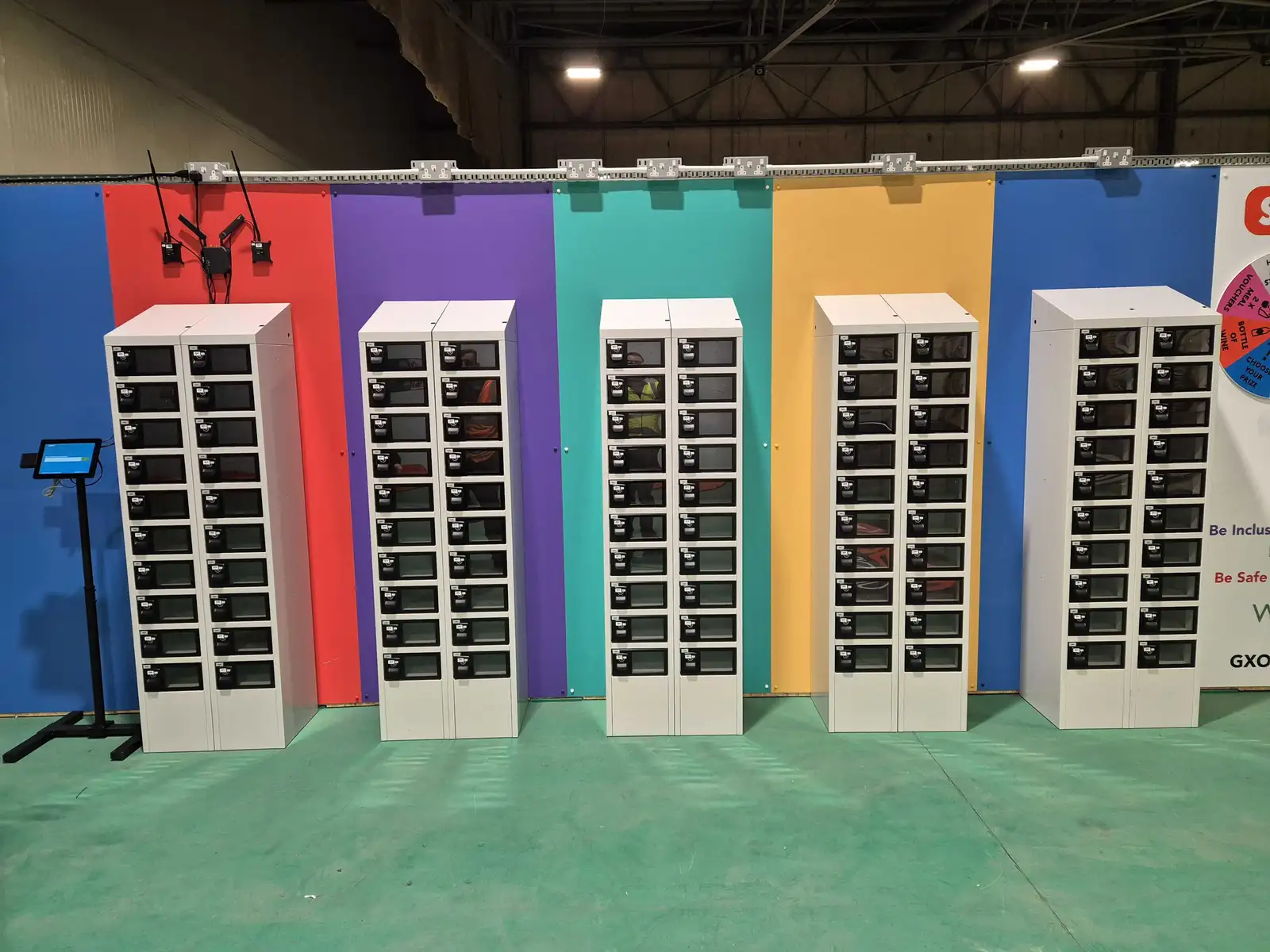
Devices issued, returned and charged, all on the record
The same approach across retail, warehouse and workplace: we measure, model and prove the economics on one of your sites before any rollout.
See how we do it
See every workflow side by side and find the right fit.
Compare solutionsEnterprise-grade security and the integrations to slot eLocker into the systems you already run.
Security & integrations“What is a smart locker?” is a plain-English primer on how automated collections and returns actually work.
Read the guideeLocker helps warehouse teams manage shared devices through secure, self-service lockers. Workers collect and return without waiting for a supervisor, managers see who took what and whether it came back, and assets stay protected, traceable and ready for the next shift.








Warehouse teams rely on handheld devices, scanners, radios and printers to keep shifts moving. Managed manually, problems build quickly: devices go missing, equipment gets damaged, supervisors spend time chasing assets, and managers lose visibility of who has what.
Lost, damaged or unreturned devices create replacement and repair costs that never stop.
Manual handovers make it hard to prove who had which device and when.
Workers lose time waiting for devices or starting shifts late.
Supervisors spend too much time issuing, tracking and chasing equipment.
Lost and damaged devices, manual handout time and slow shift starts add up across large teams and multiple shifts.
eLocker replaces manual device handouts with a smart locker system that runs collection and return as one automated workflow, creating accountability for your devices.
*Indicative figure based on customer modelling. We validate yours in the audit.
On the left, how it goes missing today. On the right, why it can’t with eLocker.
Named accountability changes behaviour. Devices come back, damage gets reported, and the replacement budget stops absorbing the difference.
A major 3PL replaced a paper sign-out sheet and a single shared key with connected lockers, so every shift collects its own devices and every movement is logged automatically.
Secure lockers, user access, device assignment, return control, audit trails and reporting. Workers get the equipment they need faster, managers get visibility without sign-out sheets or manual handovers.
See which worker used which device and whether it was returned. Responsibility is always clear.
Workers collect assigned devices from secure lockers without waiting for a supervisor.
Devices stay protected, charged and ready for the next shift.
Spot missing, late, damaged or unreturned assets quickly, before they become losses.
Track usage, returns, availability and exceptions across the site, and across sites.
Every operative starts a shift by collecting a handheld scanner. How they collect it sets the pace of the whole shift.
Each ping of light is one collection
Operatives reach the floor in minutes, not stuck in a queue at the cage. Across three shifts a day, those late starts stop being a line item.
Secure storage and named accountability reduce misuse and missing equipment, and make what remains investigable.
Supervisors stop issuing, collecting and chasing devices, and put those hours back into running the shift.
Returned and charged assets are easier to keep ready, so nobody starts the day hunting for working kit.
Know who collected what, when it was taken and when it came back, without reconciling paper.
Workers collect simultaneously, reducing queues and late starts across every shift, every day.
Usage, return and exception data quantifies the saving, so the project proves itself.
Poor asset control creates costs across replacements, repairs, supervisor time, lost productivity and admin. eLocker brings each one into view so you can measure it.
Named accountability means fewer replacements bought and fewer repairs paid for.
Supervisors stop preparing, distributing, collecting and chasing devices by hand.
Small delays multiplied across large teams and multiple shifts become a real number.
The audit trail replaces investigating, reconciling and chasing missing kit.
From secure storage to site-level reporting, the whole workflow runs itself. Scroll through a shift collection.
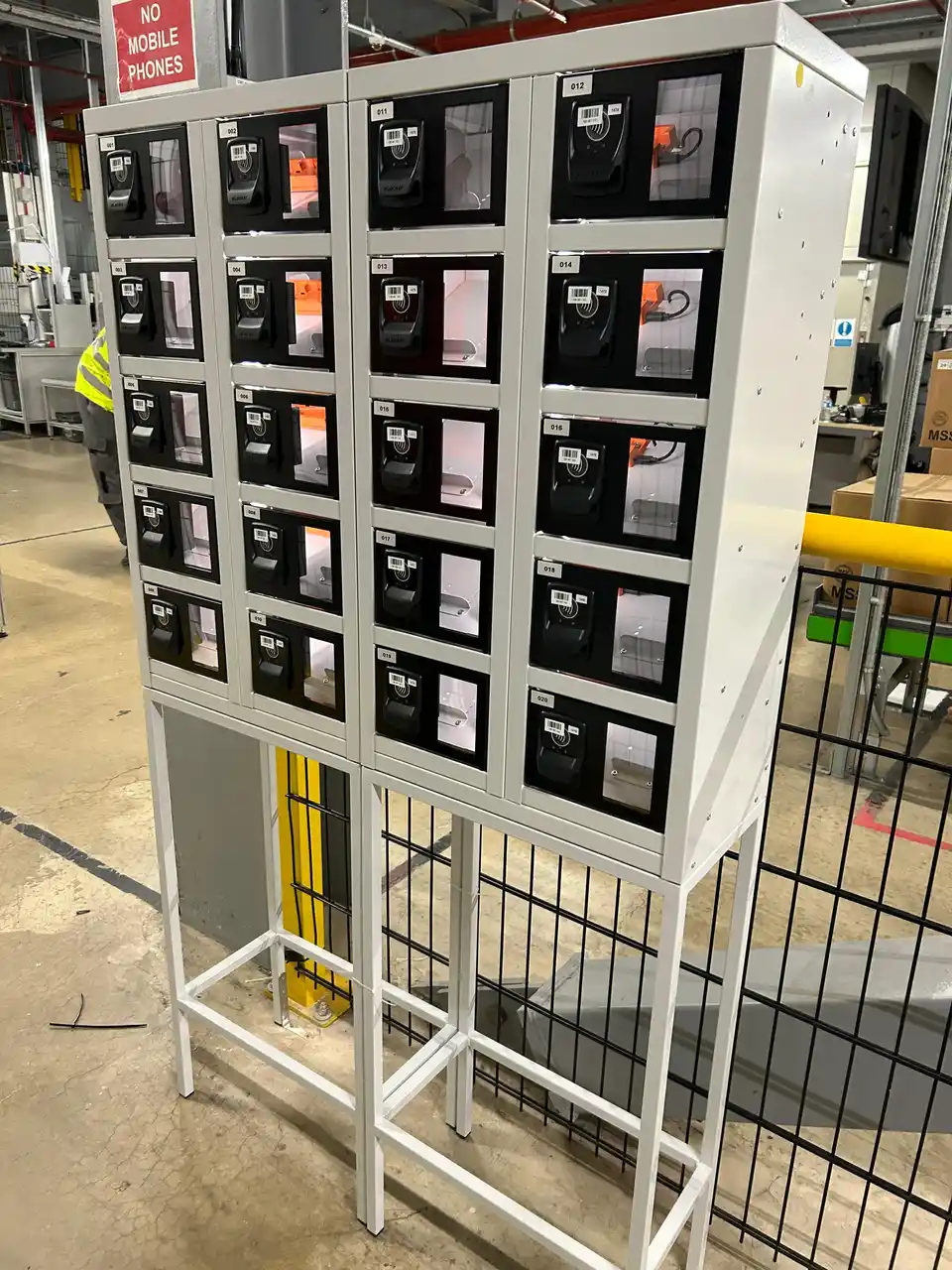 Stored & chargingDevices loaded, assigned and charging, ready for the shift
 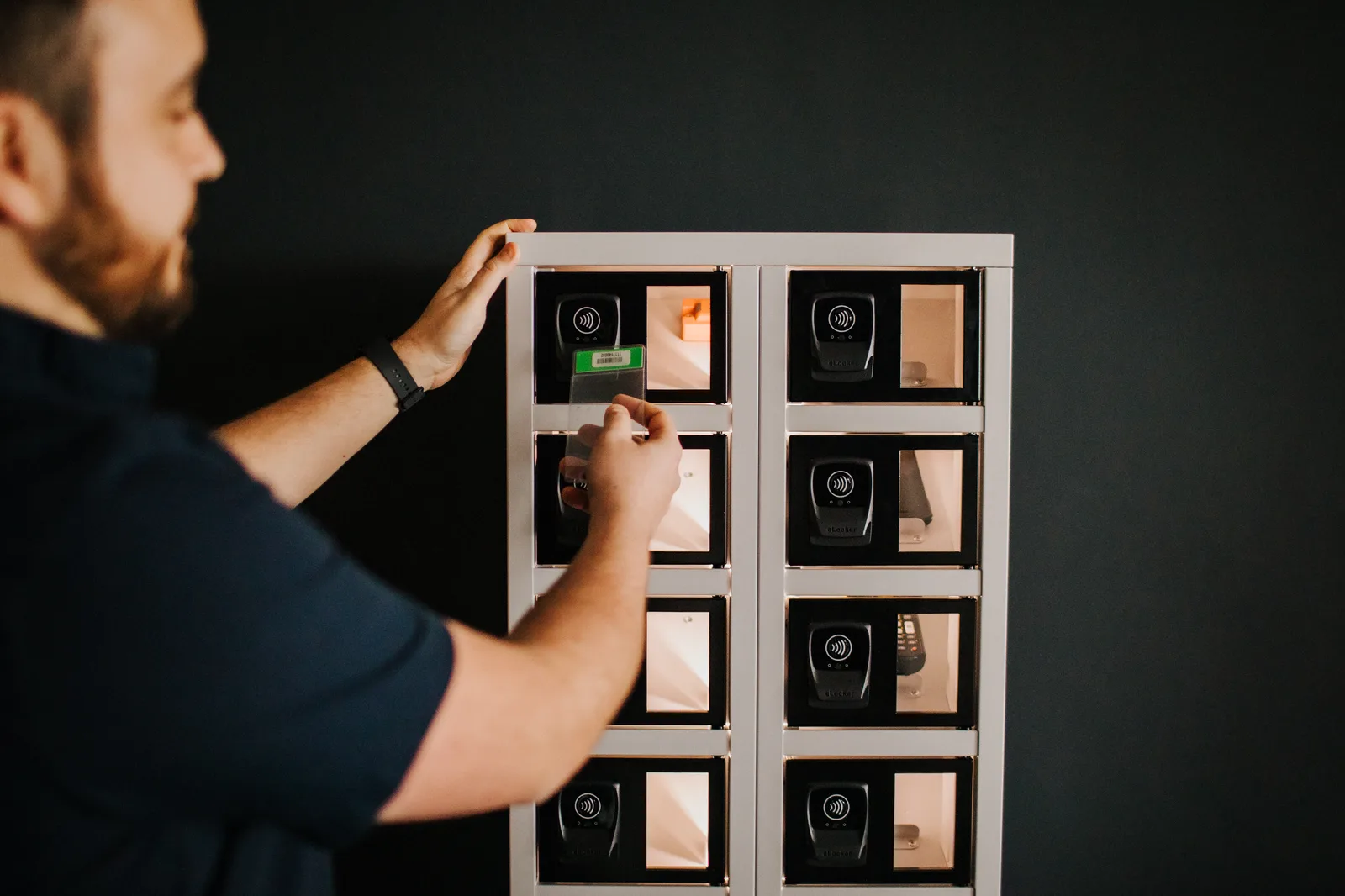 Badge to openExisting site access card, no phones needed on the floor
  Collected & loggedThe right device, logged to the right person, automatically
 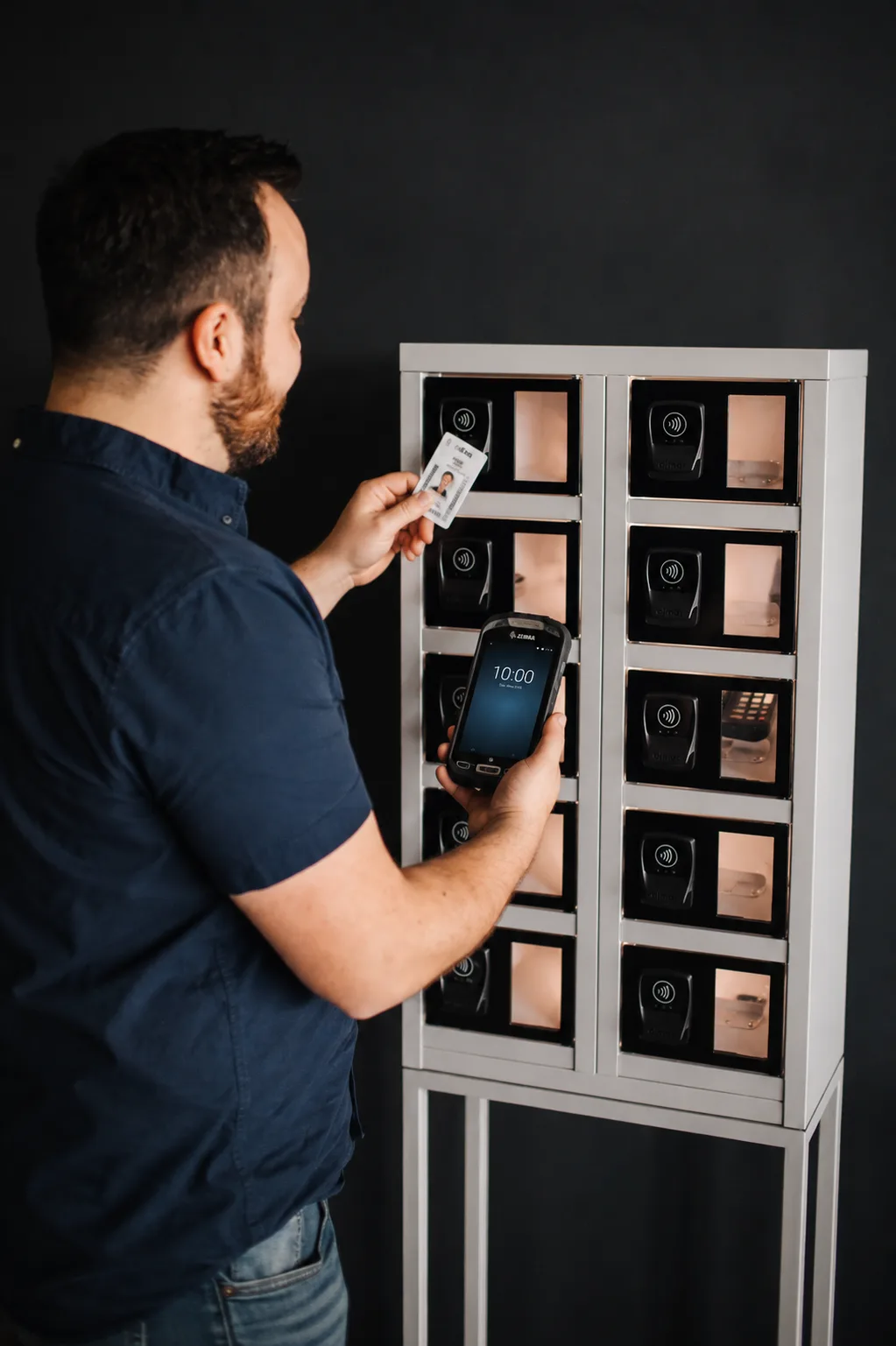 Two-factor returnBadge plus device scan confirms what came back, and from whom
  Managers see everythingUsage, returns, overdue kit and patterns, across every site
 Asset control touches operations, continuous improvement, leadership, finance, IT and, in 3PL environments, customer confidence. eLocker gives each team a reason to say yes.
You’re trying to prove a measurable improvement and carry it from idea to implementation. The painful part is rarely the idea, it’s getting the case through internal or customer approval.
“My last business case didn’t get through sign-off. This one comes with the evidence built in.”
You back improvements that produce credible value and defend the site’s economics. In a 3PL, your customer sees the same numbers you do, so the case has to hold up twice.
“If we invest, I need it to reduce cost, improve performance and survive customer scrutiny.”
You feel this problem first: late starts, missing kit and the cage queue eating the first fifteen minutes of every shift. eLocker takes handout off your plate entirely.
“I just need the team moving, with the right kit, from minute one.”
Your job is making sure the site picks a solution that fits and doesn’t create friction, disruption or governance problems on the way in.
“Will this work on our site without making changeover more complex?”
You come in late and you ask the hard questions: value for money, supplier risk and whether the commercial logic actually holds.
“Show me the commercial logic, not the brochure.”
Adoption lives or dies here. The process has to be quicker and simpler than the cage, or it won’t stick, and we design for that.
“As long as it’s quicker than the cage, I’m in.”
Configured around different warehouse models, asset types and shift patterns. Pick a setting to see how it fits.
Improve asset control and demonstrate continuous improvement to customer stakeholders.
Keep shared devices available, traceable and ready across high-volume shifts.
Control tools, devices and equipment where downtime affects output.
Reduce queues, return friction and availability issues across 24-hour operations and seasonal peaks.
Multiple workers collect and return devices at the same time.
Works with site access methods and user permissions where required.
Place lockers where they fit the reality of the site, not where the cabling is.
Link users to specific assets so responsibility is always clear.
Make sure assets come back through the right process, every time.
See which assets are in use, overdue, missing or creating repeat issues.
Connect with operational workflows and systems where needed.
Choose the level of control, reporting and support that fits your operation.
Devices charge between shifts so equipment is always ready for the next worker.
The value is the workflow, access control, accountability, reporting and support around the locker.
Configured around shifts, asset types, site layouts and user groups.
The data to track usage, returns, exceptions and savings is built in, not bolted on.
Self-service collection removes the queue at the cage, every shift.
A tailored solution from a specialised, service-focused team.
We keep identifying where asset control can improve after installation.
Before you commit to anything, we run a structured audit that shows you two numbers: what asset loss, damage and slow changeovers cost you today, and what they would cost with eLocker.
The four stages we take you through
First, we capture what asset chaos actually costs you today.
Then we model the same operation with eLocker, grounded in your numbers.
We configure the workflow around your site and run it live.
After go-live, we prove the forecast against real shifts.
A warehouse pilot is measured against the costs and delays it is designed to reduce. Typical measures include:
The same site, measured both ways, so the change is undeniable to the people signing it off. We agree the measures with you before the pilot starts, then report against that baseline, not against estimates.
Missing devices per month, before and after named accountability. Every collection and return is logged against a person, so unreturned kit is flagged the same day rather than discovered at stocktake.
Repair rates fall when every handover has an owner. Recurring faults can be traced to a device or a user, so problems are fixed at source instead of being written off.
Minutes per changeover, multiplied across shifts and teams. Workers collect at the same time instead of queuing at a hatch, so the saving compounds across every shift, every day.
Hours per week back from issuing, tracking and chasing. The audit trail answers who has what, so supervisors stop reconciling sheets and return to running the floor.
How fast each shift takes to self-service collection. Badge-in uses the access card workers already carry, so there is no app to learn and little training to schedule.
Fewer missing or flat devices means fewer interruptions and workarounds. Lockers charge kit between shifts, so equipment is ready when the next worker badges in.
Replacement and repair spend tracked against the baseline. The same reporting works across multiple sites, so a result proven at one can be compared and rolled out to the rest.
Operational discipline your customers can see in the QBR. Asset usage and returns become reportable numbers, evidence you can put in front of the client rather than assurances.
Secure lockers that issue shared equipment to a named worker. A worker badges in, takes a device and brings it back, and the system records who had it and when it was returned, with no supervisor needed at the cage.
A cage needs a supervisor to issue and chase every device, and the record is only as good as the sign-out sheet. Asset lockers let workers collect at the same time, log each device to the person automatically and flag late or missing returns.
Handheld devices, scanners, radios, printers, tools, batteries and other shared equipment.
The system links the user, asset and locker, creating a record of who collected what and when it was returned.
Yes. Multiple workers can collect and return devices at once, removing shift-change queues.
Yes. eLocker is designed to reduce or remove manual issuing, tracking and collection.
Where the configuration supports it, devices are stored and charged ready for the next shift.
Usage, return status, missing devices, late returns, exceptions, shift-change impact, device availability and admin reduction.
Yes. Many warehouse projects start with one site or focused workflow before wider rollout.
Yes. eLocker is well suited to 3PL sites where asset control, savings and customer confidence matter.
Manual asset handout creates cost, delay and poor visibility. Start with your current process. Measure the opportunity. Then decide how to scale.

“Happy to talk through how asset management could work across your sites and what it could save you. Send a few details and I’ll come back with the information we need to build your solution and your ROI.”