Collections and returns, one bank, one journey
The same approach across retail, warehouse and workplace: we measure, model and prove the economics on one of your sites before any rollout.
See how we do it
See every workflow side by side and find the right fit.
Compare solutionsEnterprise-grade security and the integrations to slot eLocker into the systems you already run.
Security & integrations“What is a smart locker?” is a plain-English primer on how automated collections and returns actually work.
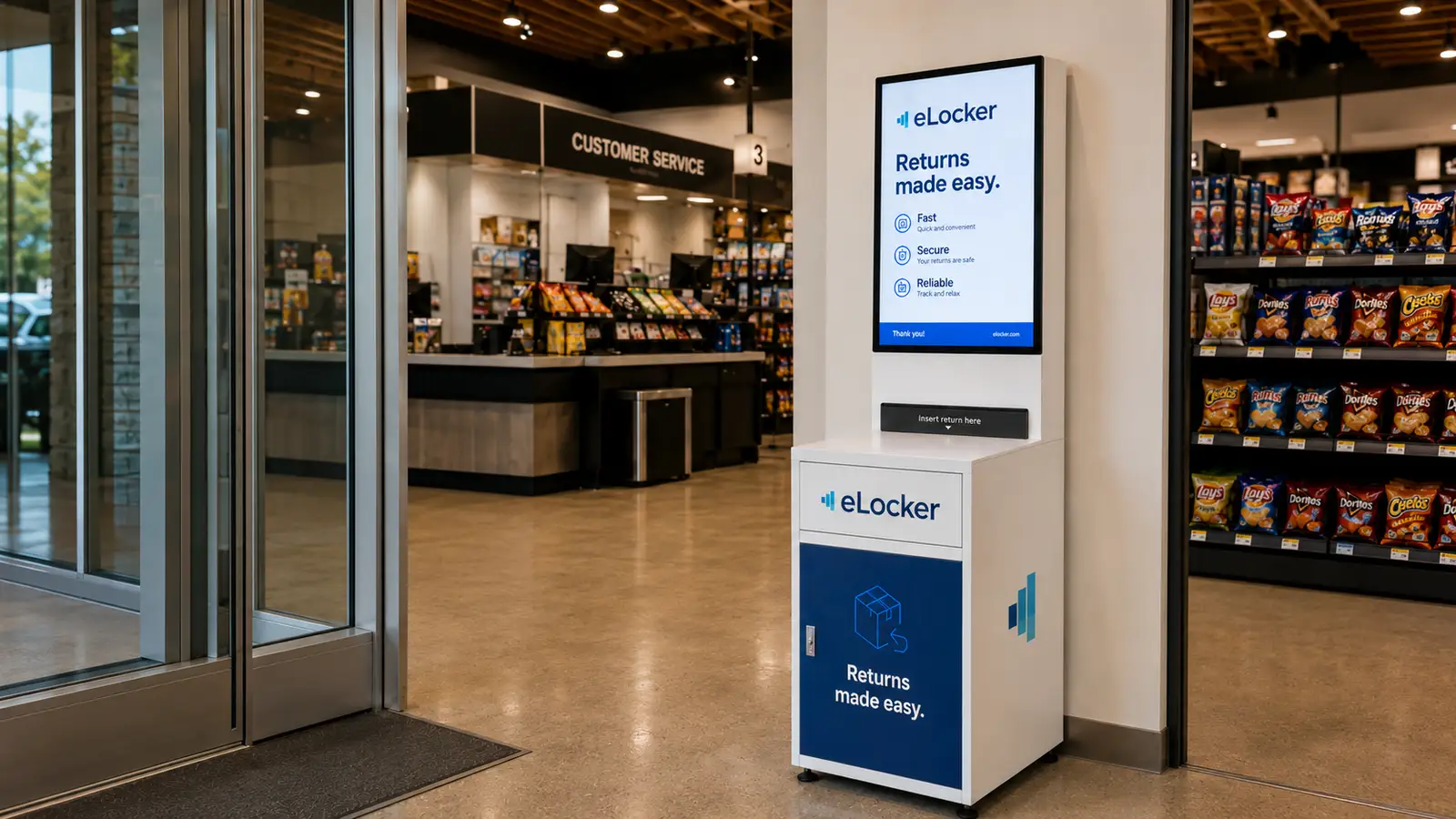
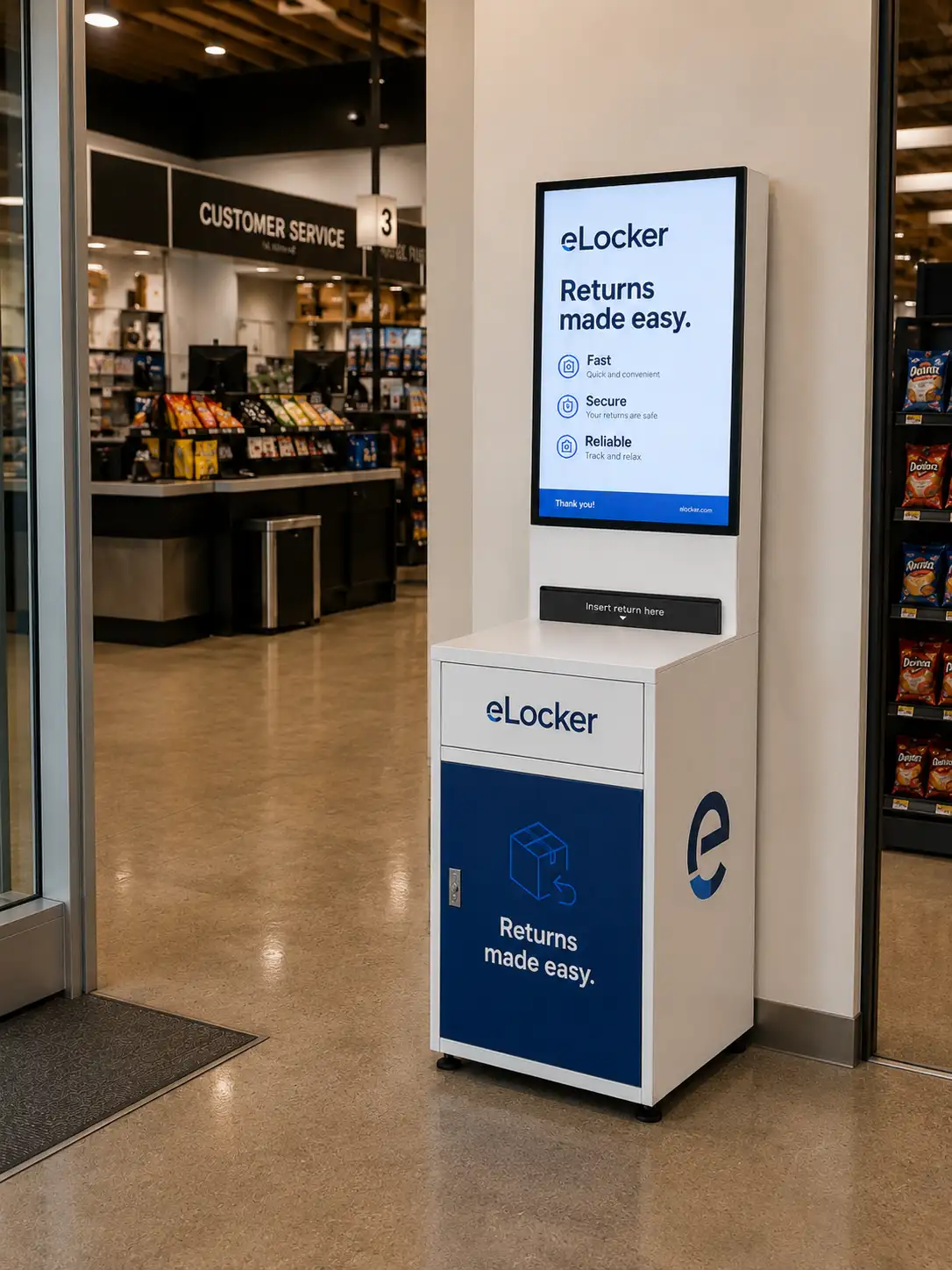
Read the guideThe eLocker returns dropbox lets customers return items in seconds, on the same mobile journey as collections. Every return is logged the moment it lands, and your team processes them in batches instead of one queue at a time.
Ecommerce growth means returns growth. Most stores absorb them at the same service desk that handles collections and queries, so returns peaks become queue peaks, and colleagues process them one customer at a time.
Returns spike after every peak, and each one occupies a colleague and a queue spot.
Inspecting, refunding and sorting at the desk while the customer waits is the slowest possible way to do it.
Paper-led returns make volumes, reasons and shrink hard to see until the end of the week.
A desk return costs about the same colleague time as a manual collection: the same queue, checks and back-and-forth, the same maths.
The returns dropbox makes returns self-service for customers and batch-work for your team.
The same smart locker estate and the same mobile journey, now taking items back in. Customers start the return on their phone, drop the item, and walk away. Everything else happens on your team’s schedule.
Customers begin the return in the same mobile journey they collected with. There is no app to install.
The dropbox opens, the item goes in, the door closes. Logged instantly, customer gone in seconds.
Every return is recorded the moment it lands: item, time, customer and reason.
Your team empties and processes returns when it suits the shift, not when the queue demands.
One occupies a colleague and a queue spot. One does not involve a colleague at all.
Customers drop and go in seconds. Your team handles returns as one tidy batch instead of a queue of interruptions.
Post-Christmas and post-payday returns waves no longer translate into desk queues.
Logged-on-drop returns mean refunds start sooner, which is what customers actually care about.
Returns become a scheduled batch job, freeing desk colleagues for selling and service.
Item-level logging shows return reasons, repeat offenders and gaps before they become losses.
Returns wait inside the dropbox, not stacked behind the desk or on the shop floor.
Same bank, same journey, both directions. The estate earns its space twice.
A dedicated returns dropbox that sits on the shop floor and takes the whole job off the desk. Customers drop and go in seconds. Your team handles the rest as a batch.
Each item is locked away the moment the door closes, tied to the customer and order.
One-time codes and item-level logging mean nobody opens a compartment they should not.
Scan, drop, gone. The customer does not queue at the counter, fill in a form or wait for a colleague to be free.
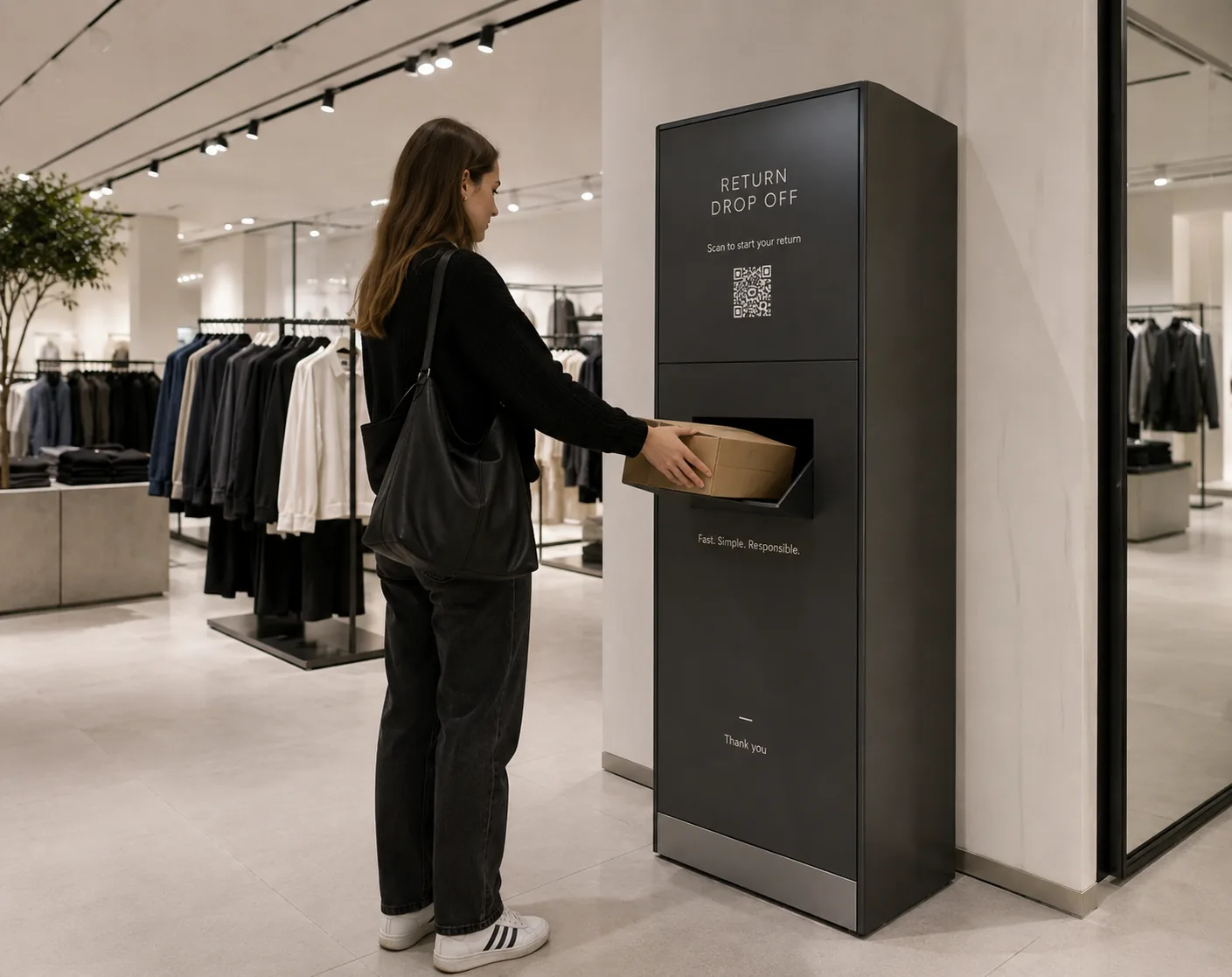
A drop-off takes seconds, against four minutes for the same return at the service desk.
A quick, self-service return is one less queue to score down, so the visit ends on a high note.
The return runs in your branded mobile journey, keeping the conversation going after the drop.
From "start a return" to the door closing, the whole journey runs in the customer’s mobile browser.
Before you commit to anything, we run a structured audit that shows you what desk returns cost you today, and what they would cost through a dropbox.
The four stages we take you through
First, we capture what returns actually cost you today.
Then we model the same volume through a dropbox.
We configure the dropbox around your store and volumes.
After go-live, we prove the forecast against real returns.
No. The return starts from their order confirmation on their phone, and the dropbox opens with a one-time code.
Every drop is tied to a customer, order and timestamped photo-ready log, so mismatches surface immediately at batch processing.
Yes. Collections and returns run side by side on the same estate and the same mobile journey.
Your policy decides. Many retailers trigger the refund flow on drop, because the item is logged and secured the moment the door closes.
Yes, and most retailers should. One pilot measures both directions of the same workflow.
Returns volume is only going up. Take it off the desk, log every item, and process on your schedule.

“Happy to talk through what self-service returns could save you and how they can work in your stores. Send a few details and I’ll come back with the information we need to build your solution and financial model.”