Retailers are being asked to solve two problems that seem to pull in opposite directions. Store labour is becoming more expensive. Customers, meanwhile, expect collection and return journeys to become faster, easier and more convenient.
That can make the response look obvious: tighten rotas, improve scheduling, cross-train teams and ask stores to become more productive. All of those things have a place. But they do not address the more fundamental question.
Should rising order volume require a corresponding rise in colleague time?
If click and collect grows by 20 per cent, should stores need roughly 20 per cent more manual handling? If returns spike after peak, should service desks simply absorb the additional workload? If customers expect faster collections, is the answer always to put another person behind the desk?
For many large omnichannel retailers, that operating model is becoming difficult to sustain.
The National Living Wage for workers aged 21 and over rose to £12.71 an hour in April 2026, a 4.1 per cent increase.
The British Retail Consortium says increases in employer National Insurance Contributions and the National Living Wage have added £6.5 billion to retail employment costs over two years.
Retailers cannot control every increase in the cost of employing people. They can control how much paid colleague time is consumed by work that can be streamlined and/or automated. .

When labour becomes more expensive, the answer cannot simply be to ask the same people to run the same processes faster. You have to question the process itself.
What should retailers do when store labour costs keep rising but customer expectations also increase?
The answer is to remove labour from routine transactions without removing service from the customer experience.
That means identifying repetitive, people-dependent processes that consume store hours without adding much human value, then redesigning them around self-service and automation. Colleague time can then be concentrated where a person makes a difference: selling, advice, solving exceptions and helping customers who genuinely need assistance.
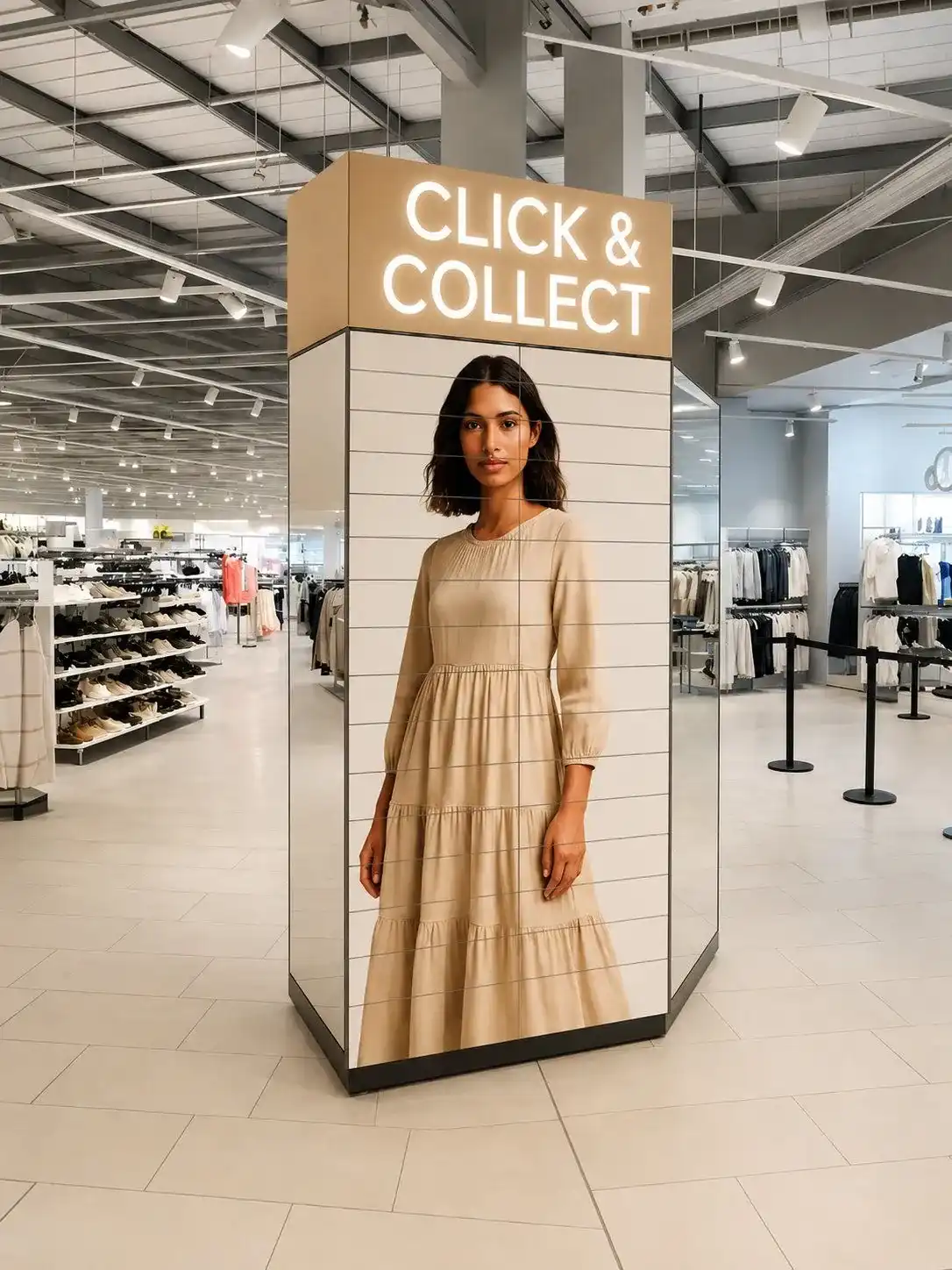
Click and collect is a good example. In a traditional collection journey, a customer arrives, finds the collection point, waits for a colleague, verifies the order, then waits again while the colleague retrieves it from storage.
None of those individual steps looks particularly expensive. Repeated hundreds of times a day, across a large estate, they become a different proposition.
The customer has already selected and paid for the product. In most cases, what they want now is not a human interaction for its own sake. They want certainty that the order is ready, clear instructions and fast access to it.
That is why the challenge is bigger than labour scheduling. It is about redesigning the economics of the handover.
Start with cost per collection, not the total wage bill
The first step is visibility.
Manual collections often disappear inside a retailer's wider store labour budget. A few minutes spent retrieving an order can feel inconsequential. At estate scale, this certainly adds up.
Measure what actually happens. How long does a collection take from the moment a customer asks for their order to the completed handover? How much walking or searching is involved? What happens when several customers arrive together? How does the process change during peak?
Then translate that activity into a cost per collection.
This produces a much more useful management question than simply asking whether store payroll is too high: As collection volume grows, what happens to the cost of serving each additional order?
Do not make the customer absorb the saving
There is a poor version of retail productivity improvement: reduce the labour available while leaving the underlying process largely unchanged.
Customers then absorb the efficiency savings through extra waiting, more effort or a less consistent experience. That is not a sustainable trade.
Collections and returns are part of the customer journey. A shopper does not distinguish between an excellent ecommerce experience and the operational process used to hand over the parcel. They experience one retailer.
A collection that requires a ten-minute wait can weaken the convenience that click and collect was supposed to create in the first place.
The better objective is therefore to remove both colleague effort and customer friction.
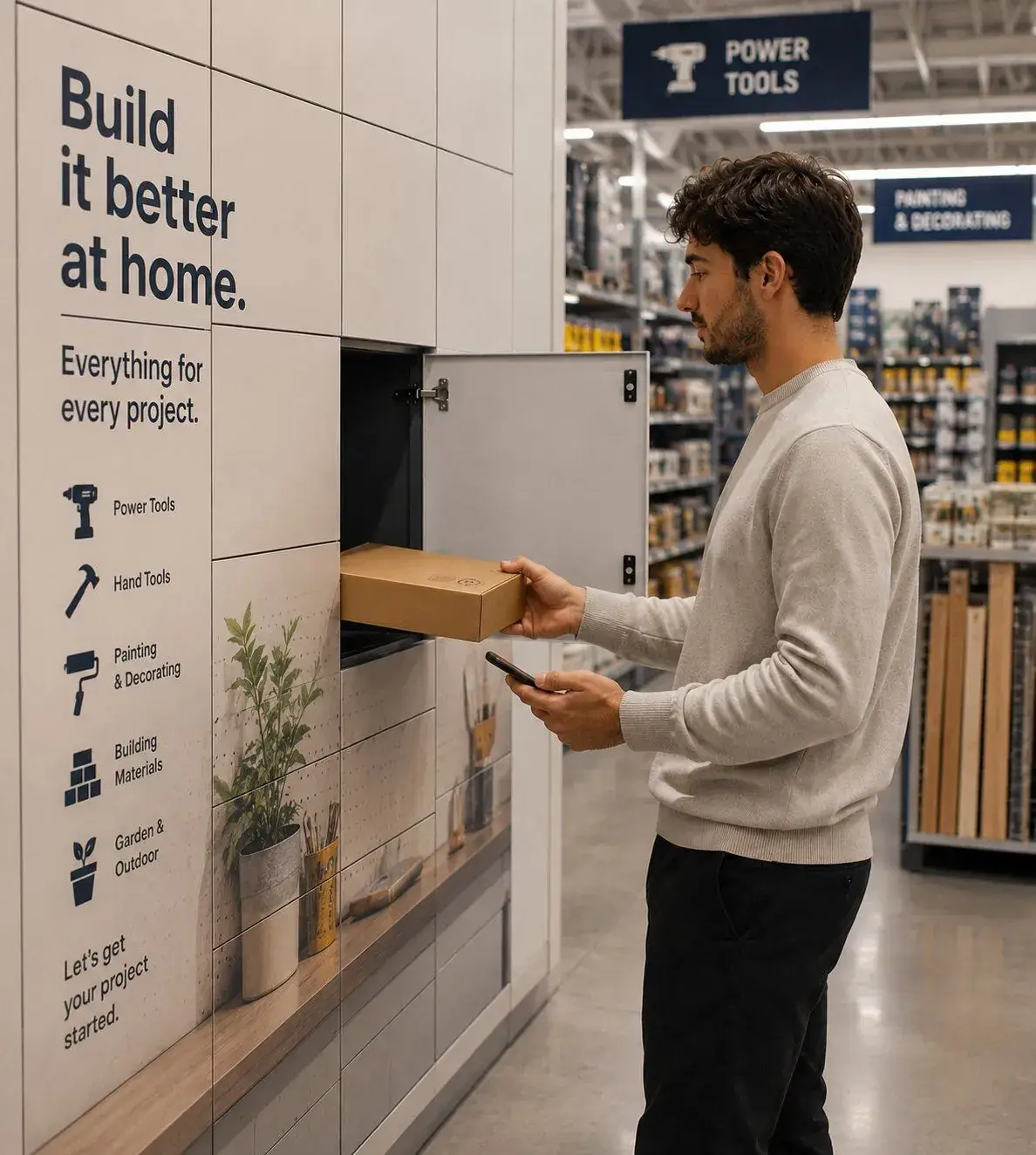
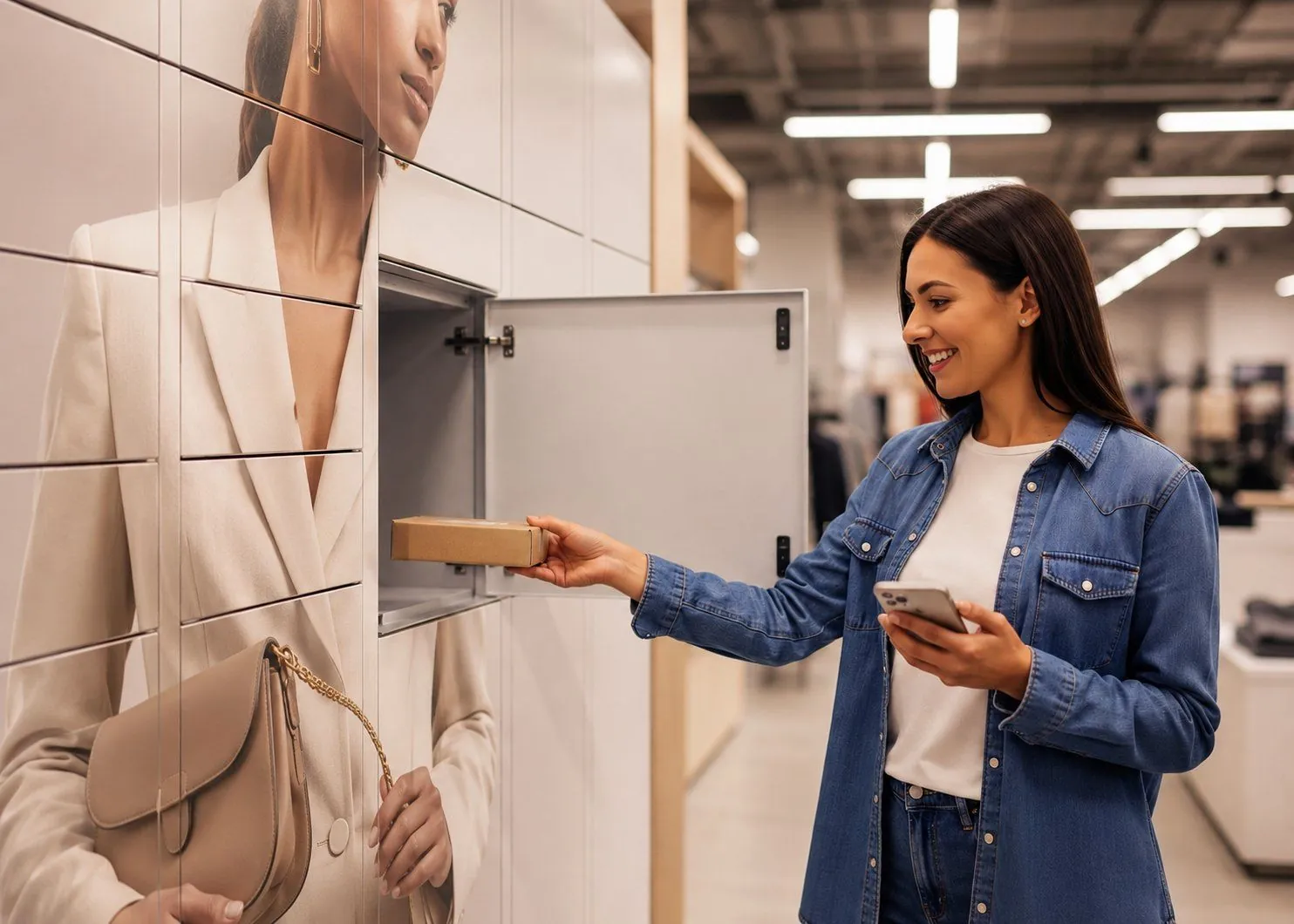
For collection, that could mean a customer receiving a notification, arriving in store, authenticating themselves and retrieving their order through a self-service workflow without waiting for a colleague.
For returns, it can mean allowing the customer to deposit an item securely without waiting for an employee to process every transaction individually. The store team can then deal with the operational work in a more controlled way.
Automation has value when it changes the workflow, not merely when it adds technology to it.
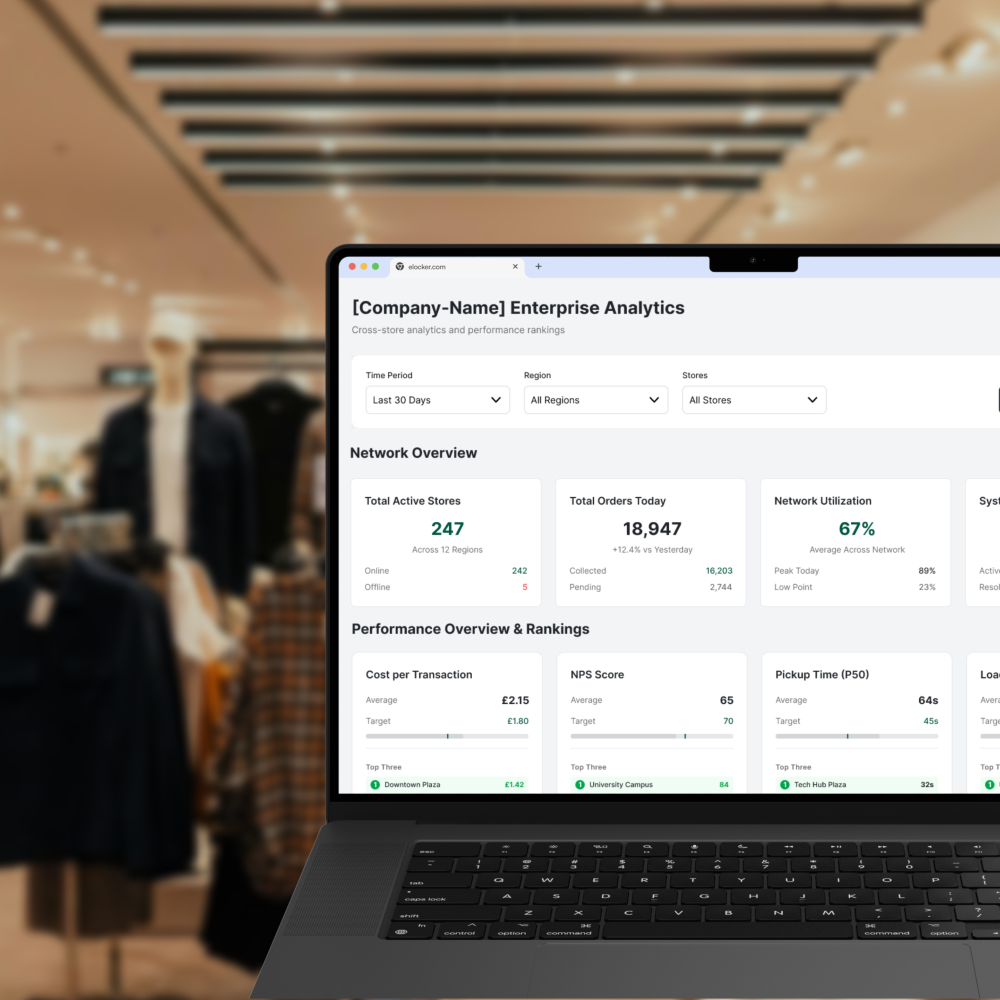
Peak tells you whether the operating model really scales
Many inefficient processes look acceptable when stores have spare capacity around them. Peak removes that spare capacity.
Orders accumulate. Storage gets tighter. Collections and returns compete for the same colleagues. Customers arrive in clusters. Temporary staff are less familiar with local workarounds. Store managers do whatever is necessary to keep trading moving.
This is when the real weakness of a manual process becomes visible.
Consider a fashion retailer where colleagues regularly leave the shop floor to retrieve ecommerce orders from a back room. At moderate volume, the interruption may feel manageable. At peak, the same workflow means more walking, more queues and more colleagues being drawn away from customers who are still shopping.
Or take a DIY or general merchandise retailer whose service desk handles collections, returns and enquiries. As ecommerce volume grows, each additional collection competes for the same colleague capacity.
Eventually, the issue is no longer simply whether the store has enough staff. It is whether the workflow is using those people intelligently.
That is why peak planning should ask more than: How many people do we actually need?
It should also ask: What are we paying those people to spend their time doing?
Temporary labour can help an inefficient process survive peak. It does not make the process scalable.
Protect the human interaction that creates value
Retail automation is sometimes framed too crudely as a choice between people and technology. It is a more useful conversation when framed around where people create value.
There is a meaningful difference between a colleague helping somebody choose the right product and the same colleague walking into a stockroom to retrieve a prepaid parcel. There is a difference between resolving a complex customer issue and checking a collection code.
One uses judgement, expertise and human interaction. The other is largely a repeatable transaction.
The objective should not be to create a less human store. It should be to use human attention more intelligently.
This is particularly important for customer experience teams worried that self-service could make a brand feel impersonal. The relevant test is not whether an employee participates in every journey. It is whether the customer gets the right level of service.
For many customers, retrieving a prepaid order in seconds without queueing is better service than waiting several minutes for a friendly manual handover.
Convenience is part of the brand experience.
Labour pressure has turned workflow design into a commercial issue
This is why the conversation is moving beyond store operations.
In a February 2026 British Retail Consortium survey, 84 per cent of retail CFOs and finance directors ranked labour and employment costs among their three biggest concerns for the year ahead. Sixty-eight per cent planned to drive higher productivity and 61 per cent expected investment in automation.
The implication is not that retailers should automate indiscriminately. It is that repetitive labour-intensive processes deserve greater scrutiny as the cost of employing people increases.
If a task happens hundreds of thousands of times a year, leadership should know its unit cost. If that cost rises directly with volume, it should know whether there is another operating model.
And if automation is being considered, the business should demand proof that the economics survive real-world operation.
Automate the workflow, not the wrong problem
Retail has seen enough technology pilots to know that automation is not automatically an improvement.
A self-service solution can save labour on paper and fail because customers do not use it. A pilot can succeed in one flagship and prove impossible to replicate elsewhere. A solution can reduce store workload but create a disproportionate burden for IT.
The starting point should therefore be the workflow.
Map how collections happen today. Identify where colleagues spend their time. Understand where queues, searching, walking and exceptions occur. Look at storage capacity and what happens when volume rises.
Only then decide what should be automated.
How click and collect lockers work
The distinction is important because retailers are not really buying locker hardware. They are changing how orders move from the business to the customer.
The technology is only useful if that new operating model is faster, cheaper and simpler.
A good pilot should answer the questions that could stop rollout
For large retailers, the business case rarely belongs to one person.
Operations needs confidence that the model works in live stores. Finance needs credible economics. Customer experience needs evidence that the journey improves rather than deteriorates. IT needs to understand integration, security and support requirements.
That means the purpose of a pilot should not simply be to prove that the technology functions. It should reduce uncertainty for the wider business.
Measure colleague minutes per collection. Cost per collection. Customer wait time. Adoption. Exceptions. Capacity. Customer feedback.
And do not test only under ideal conditions.
A pilot designed solely to succeed may tell you very little about whether the model can roll out. A stronger pilot tests the assumptions that matter most: busy stores, higher volumes, different formats and peak-like operating pressure.
The retailer ultimately needs to know whether the savings are defensible. The operations team needs to know whether stores will thank them for the change rather than resent it.
Those are far more valuable outcomes than a successful demonstration.
The bigger prize is breaking the link between volume and labour
The strategic opportunity is larger than reducing a few minutes from a collection. It is changing what happens when the retailer grows.
A manual process often has a simple relationship with volume. More collections mean more retrievals. More retrievals mean more colleague time.
Eventually, the retailer has to add labour, accept deteriorating service or restrict the volume an individual store can handle.
Automation creates the possibility of a different relationship.
More customers can complete routine handovers themselves, allowing stores to absorb additional ecommerce volume without requiring an equivalent increase in manual transactions.
That is operating leverage.
It also changes the role stores can play within the omnichannel model. Rather than ecommerce growth continually adding servicing cost inside the estate, the estate becomes better able to support that growth.
And because click and collect brings customers into the retailer's own environment, there is another strategic consideration. Every collection handed to a third-party network may be convenient, but it also moves that customer visit away from the retailer's estate.
For retailers that already have a significant store footprint, making their own collection experience faster and more economical can therefore protect more than labour productivity. It helps protect ownership of the customer journey.
Redesign the work, not just the rota
Retailers cannot choose between rising labour costs and rising customer expectations. They have to manage both.
The answer is not simply fewer people. Nor is it automation everywhere.
It is a more deliberate operating model in which colleagues spend less time on repetitive handovers and more time on work where a person genuinely improves the outcome.
For collections and returns, that starts with understanding the current economics. Measure the cost per transaction. Look at what happens at peak. Identify which stages genuinely require human intervention.
Then test whether self-service and automation can remove enough manual work to change the economics while making the journey easier for customers.
The goal is not to squeeze another few seconds out of a bad process. It is to ask whether that process still needs to exist in its current form.
The retailers that solve this well will not simply run leaner stores. They will have stores that can handle more omnichannel volume without asking either colleagues or customers to carry the cost of an operating model that was never designed to scale.
If you are reviewing the cost of click and collect across your estate, eLocker can help map the current workflow, establish your real cost per collection and test a lower-touch model against measurable operational and customer outcomes.