


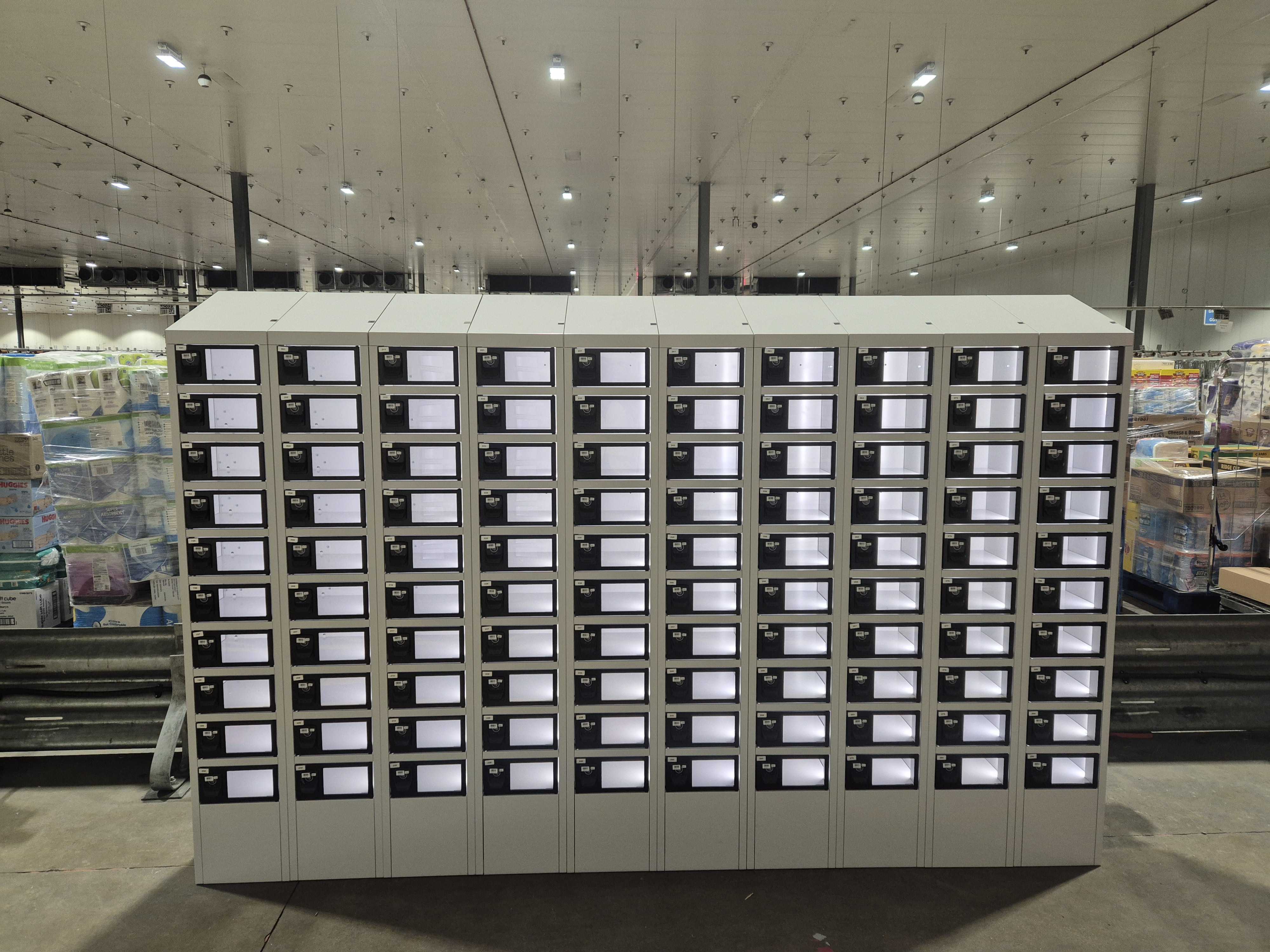
Peak season puts warehouse asset management under pressure. Derri Lyons, Senior Solutions Consultant at eLocker, explores why scanners and other shared devices go missing, how manual issue-and-return processes affect shift productivity, and why strengthening accountability before volumes increase can improve both device control and operational readiness.
Peak season has a habit of exposing operational weaknesses that remain relatively easy to tolerate during quieter periods. Processes that work adequately with a stable workforce and predictable volumes can behave very differently when more people, more equipment and greater throughput are introduced into the same environment.
Shared warehouse devices are a good example. Handheld scanners, PDAs, radios and other mobile equipment are fundamental to the day-to-day operation of many warehouses and distribution centres, yet the process used to get those devices into and out of operators' hands can remain surprisingly manual. Equipment may be stored in a cupboard, issued by a supervisor or recorded on a paper or spreadsheet-based sign-in system. Where the workforce is experienced and device numbers are relatively stable, the limitations of that approach may not appear particularly significant.
Peak changes the equation. Additional agency operators arrive, device pools expand, shifts become busier and performance expectations increase. Managers have less time to deal with exceptions at precisely the point when more exceptions are likely to occur. A warehouse that normally has around 70 shared devices in circulation, for example, may find itself managing 150 during peak. The underlying issue-and-return process may be largely unchanged, but it is suddenly being asked to support twice the equipment and a much larger group of users.
The result is that peak does not necessarily create a warehouse device-management problem. More often, it reveals one that was already there.
Why warehouse devices go missing
The obvious assumption when an expensive handheld device disappears is that it has been stolen. Theft does occur, and with some industrial devices costing in the region of £1,500 to £2,000 there is clearly a financial incentive for deliberate removal. In practice, however, the reasons equipment disappears are often much more mundane.
Handheld PDA devices and scanners are particularly vulnerable because they move continuously around the warehouse with the people using them. An operative can put a device down while handling a pallet and simply forget to pick it back up. Once the pallet moves, the device moves with it. I have seen scanners leave the warehouse in exactly this way, travelling onwards through the supply chain and potentially reaching another facility, a retail store or even an end customer's home.
There is also an interesting behavioural dimension to shared equipment. Warehouse operatives sometimes develop a preference for a particular scanner or PDA, perhaps because its battery performs better, because the device feels more reliable or simply because they have become accustomed to using it. Rather than risk receiving a different one on the next shift, the device may be hidden in racking, left in a personal locker or occasionally taken home so that it can be reclaimed the following day.
None of these scenarios is really a storage problem. They are symptoms of an accountability problem. If the operation cannot easily establish which individual took which device, when they took it and whether it was subsequently returned, equipment can disappear into the operation without immediately creating an exception that somebody needs to resolve.
The weakness may remain largely invisible until an audit takes place or the device pool becomes sufficiently depleted that people begin struggling to find the equipment they need. By then, establishing what happened to a particular device can be extremely difficult.
Why peak season magnifies the problem
Peak introduces several conditions that make informal asset-control processes harder to sustain. One of the most significant is the rapid increase in temporary and agency labour.
Many warehouses have long-serving employees who understand the operation instinctively. Some may have worked on the same site for 20 years or more, know the equipment-management routine and have established relationships with supervisors and colleagues. Peak can introduce dozens of new operators into that environment within a relatively short period.
This is not an argument that temporary employees are inherently less responsible with equipment. The operational issue is that they have had less time to become familiar with the organisation, its processes and expectations. They are being introduced into an unfamiliar environment at precisely the point when the operation itself is under greater pressure.
Performance expectations also tend to increase. Managers are accountable for delivering higher throughput and those expectations inevitably flow through to operatives. At the same time, the site may substantially increase the number of handheld devices available to support the expanded workforce. A device pool that is relatively easy to understand during normal operations can become considerably more difficult to control when its size doubles and many of its users are new to the site.
This is why peak should be regarded as a stress test for the device-management process. If accountability depends heavily on familiarity, memory and manual supervision, increasing the number of people and assets while reducing the amount of management attention available is likely to expose its limitations.
The hidden productivity cost of issuing equipment
The financial conversation around warehouse devices often starts with the replacement cost of lost or damaged equipment. That matters, particularly when individual devices can cost four figures, but it can distract attention from a less visible cost that occurs every day: the time spent getting equipment into people's hands.
A warehouse that wants greater accountability than an open equipment cupboard may introduce a manual sign-in and sign-out process. An operative approaches a desk, identifies themselves, the device is recorded against them and a supervisor or manager completes the handover. The same process is repeated when the device is returned.
Individually, these interactions can appear trivial. A particularly efficient handover might take only 15 seconds. Others can take closer to two minutes, particularly because normal human interaction becomes part of the process. People ask questions, speak to colleagues or have a brief conversation with the manager. None of that behaviour is unusual, but when dozens of people arrive at the same point at the beginning of a shift, a series of small interactions becomes a queue.
I have observed shift changes where the device issue process alone has taken up to half an hour. That is significant because the cost is not limited to the person sitting behind the desk. It includes the productive time of every operative waiting to receive the equipment required to begin work.
Peak magnifies the effect because more people need devices at the same time. A process that works sequentially — one manager, one operative, one device at a time — has an inherent capacity constraint. Adding more workers to the operation does not remove that constraint; it simply sends more people through it.
This is where the discussion moves beyond asset management. Device handover becomes a shift-readiness and labour-productivity issue.
A missing device creates a much bigger operational problem
The impact becomes even clearer when an operative reaches the front of that process and the device they need is not available.
If there is no spare scanner ready to use, the problem immediately begins to consume other people's time. A manager may be pulled away from their normal responsibilities to locate another device or investigate where the missing equipment went. In a large warehouse, finding something that has been left in racking, on a pallet or somewhere else on the floor can be extremely difficult. In some cases, there simply is not enough time to search for it properly.
The operative is then left waiting or has to be assigned another task until suitable equipment becomes available. That affects productivity and can subsequently affect individual or team KPIs, despite the fact that the worker experiencing the delay may have had nothing whatsoever to do with the original loss.
The replacement value of the missing scanner is therefore only one component of the cost. The operation may also absorb the time spent looking for it, the supervisor's interruption, the worker's lost productive time and the downstream effect of work not being completed as planned.
This is why I think warehouses should be cautious about measuring device loss purely in terms of annual replacement expenditure. A scanner that costs £1,500 is an obvious financial loss when it disappears permanently. Ten people losing several minutes because devices are unavailable creates a different type of cost, but one that is repeated throughout the year and is much less likely to appear neatly on a budget line.
The operational question should therefore be broader than “How many devices did we lose?” It should include “How much productive time are we losing because our equipment is not consistently available?”
The limitations of periodic auditing
Another weakness becomes apparent when we consider what happens if somebody finishes a shift and simply does not return a device.
Where there is no formal sign-in or sign-out process, the answer is often that nothing happens immediately. There may be no event within the process that tells a manager a particular device should have been returned but was not.
Most warehouses will conduct some form of equipment audit, although the frequency varies significantly. Daily reconciliation exists but is relatively unusual. Audits may instead take place monthly, quarterly or, in some environments, annually. IT teams can then find themselves identifying missing or damaged assets and reporting the position back to the general manager or operations team.
The difficulty is that this is retrospective control. An annual audit can tell the organisation that a device is no longer there, but it may be almost impossible to establish who last used it or what happened months earlier. Even a monthly audit leaves a substantial period in which equipment can move around without an unresolved return being identified.
A more useful distinction is therefore between periodic asset reconciliation and transaction-level accountability.
The first asks whether the equipment estate still balances at a particular point in time. The second establishes responsibility whenever an asset changes hands. Instead of discovering later that ten devices are missing, the operation can identify that a particular device has not been returned following a particular transaction.
That shift is important because it allows the organisation to become proactive rather than reactive. Exceptions can be dealt with when they occur, while the information required to resolve them is still current.
Device availability is also a charging problem
Physical location is only part of the availability equation. A scanner can be sitting exactly where it should be and still be of little operational use if its battery is flat.
Warehouses manage this in different ways depending on the equipment being used. Some devices use removable manufacturer-specific batteries that can be charged separately, while others sit in dedicated charging cradles. Most operations will maintain spare batteries somewhere on site so that an operative can replace a depleted battery without taking an entire device out of service.
Even then, poor battery readiness creates friction. If an operative is working at the opposite end of a large warehouse when the battery runs out, they may have to walk back to wherever the charged spares are kept, replace it and then return to their work area. If access to batteries is managed through a supervisor or sign-out process, another person becomes involved in the interruption.
If no charged battery or replacement device is available, the worker cannot continue the task and may have to be reassigned until the situation is resolved.
This is why charging needs to be considered as part of the wider device-management workflow rather than as an afterthought. In-locker charging can be appropriate for some environments, but it is not automatically the right answer for every warehouse. If the operation does not have enough surplus devices to leave a significant number charging while others are in use, maintaining an appropriate pool of charged replacement batteries may be more practical.
What matters is the outcome. A well-controlled warehouse asset process should not simply tell managers where equipment is; it should help ensure that equipment is ready for productive use when the next person needs it.
Moving from manual handover to controlled self-service
The case for automation becomes more interesting when it is considered against this wider operational backdrop.
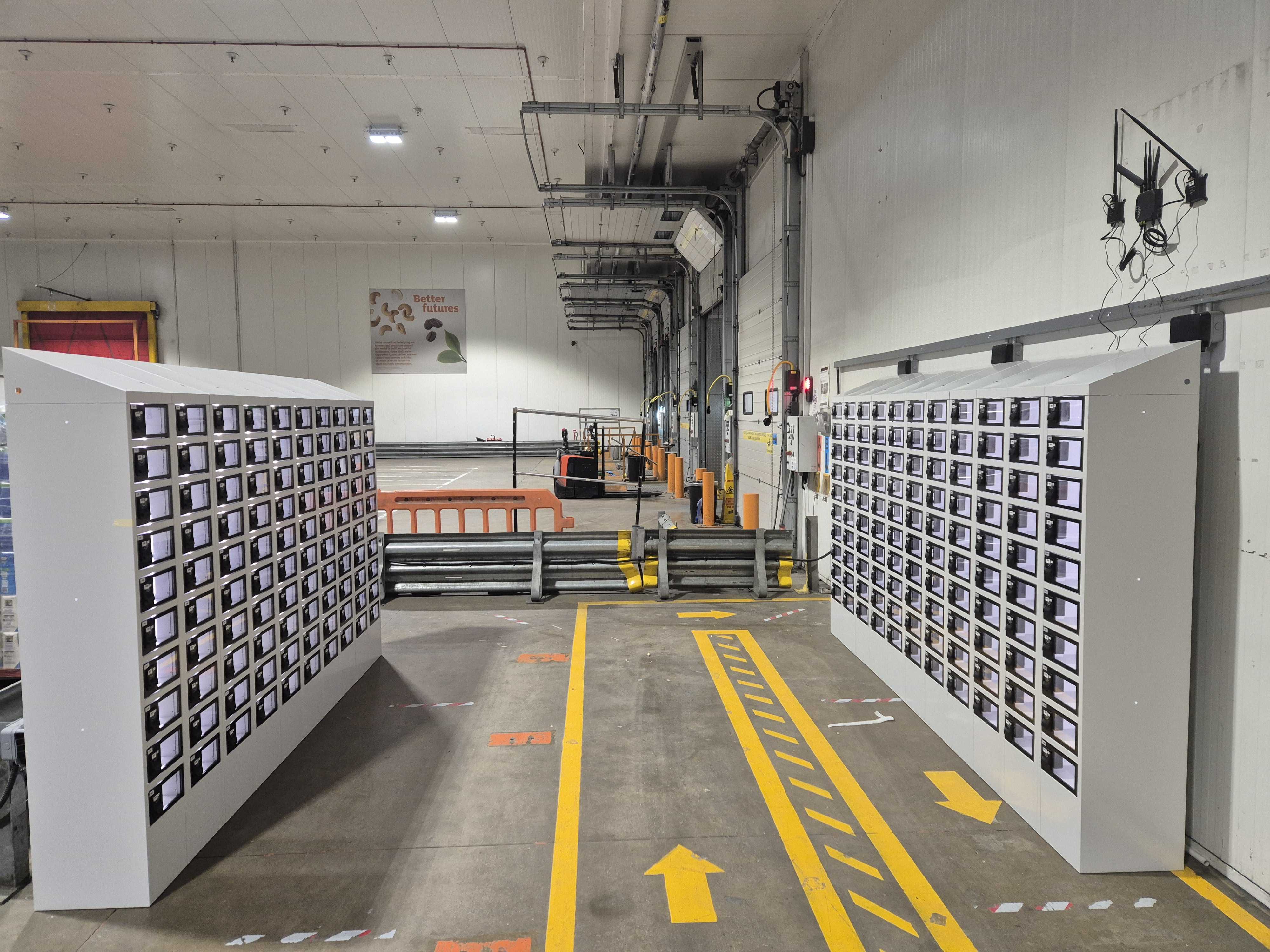
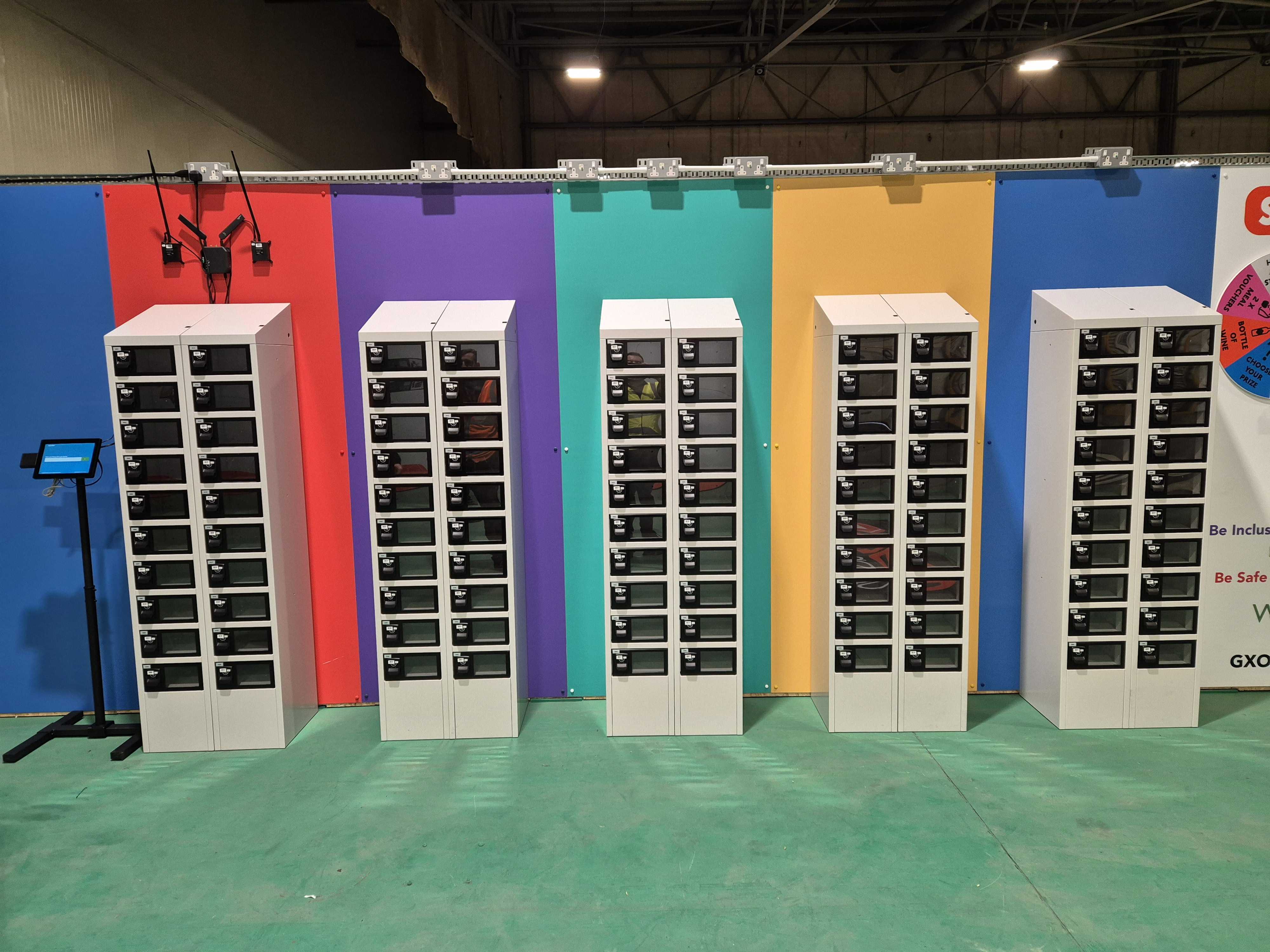
A smart locker does not solve warehouse device management simply because it provides secure storage. Its more important role is that it can change the way the handover itself is controlled.
Instead of an operative queuing at a desk while a manager records which scanner they are taking, the individual can authenticate themselves and collect an authorised device directly. The transaction establishes the relationship between the user and the asset without requiring a manager to facilitate every successful handover. When the equipment is returned, the corresponding transaction closes that loop.
This changes the role of operational management. Rather than spending time administering routine transactions, supervisors can concentrate on the exceptions: devices that have not been returned, equipment that is unavailable or other situations that genuinely require intervention.
There is an important distinction here between removing human involvement and removing unnecessary human dependency. Warehouse managers still need oversight, and exceptions still need to be managed. What automation can remove is the requirement for a manager to be physically involved every time an otherwise routine exchange takes place.
At shift change, that matters because the process is no longer necessarily constrained by one sequential handover point. Multiple operatives can collect or return equipment independently, reducing the potential for the device store itself to become a bottleneck.
The same process also strengthens accountability. If the operation can associate a particular device with a particular user and maintain a record of its return, managers have much better information when something goes wrong. That visibility can also influence behaviour because employees know that equipment is individually attributable rather than disappearing into a shared pool.
The objective is therefore not simply to put devices behind electronically controlled doors. It is to create a lower-friction handover process with stronger accountability built into it.
The business case should start with the existing process
One of the dangers when discussing automation is the temptation to apply generic savings figures to every operation. Warehouse environments vary too much for that to be particularly useful.
eLocker has historically used an average saving of around two minutes per operative as a broad indicator of the time that can potentially be removed from a manual handover. In my experience, however, the actual opportunity varies considerably. I have seen environments where the improvement is closer to 30 seconds per person and others where it can approach five minutes.
That variation matters because it reflects the quality of the starting process. A warehouse that already manages equipment efficiently has less friction available to remove than one where every worker queues at a desk while a manager completes a manual sign-out.
For that reason, the more credible approach is to measure the process rather than assume the saving.
Time-and-motion analysis can establish how long the existing shift change takes, how much manager time is involved, how long operatives wait and where bottlenecks occur. The analysis can also compare different shifts, which is useful because performance is not necessarily consistent across a site. A night shift may manage device handovers efficiently while the morning shift performs very differently, potentially revealing differences in staffing, process discipline or operational behaviour.
Once a baseline exists, the same measures can be taken after a change to establish what has genuinely improved. Device loss and damage can be tracked alongside shift-change time, return compliance, manager involvement and equipment availability.
This creates a much stronger business case because it is based on the economics of the individual warehouse rather than a generic industry claim.
It also changes the conversation about ROI. The value is no longer confined to the number of devices that do not need replacing. It can incorporate the productive minutes returned to the operation, the management time no longer consumed by routine handovers and the effect of having more equipment available when shifts begin.
Device loss is a lagging indicator of a wider process problem
This is perhaps the most important point for warehouse leaders preparing for peak.
A missing device is highly visible because eventually somebody has to explain or replace it. The operational friction that precedes that loss is much easier to overlook.
The warehouse may already be absorbing queues at shift change, supervisor administration, searches for misplaced equipment, walks across the site for replacement batteries, operators waiting for devices and IT teams conducting retrospective audits. None of those events necessarily triggers a major incident, but together they indicate that the asset-management process is consuming more time and attention than it should.
Device loss can therefore be viewed as a lagging indicator. By the time the financial impact appears, the operation may have been living with the underlying process weakness for months.
That matters particularly before peak because the opportunity to improve the process is greatest before additional pressure arrives. Trying to redesign device issue and return once temporary operators have joined, device numbers have doubled and throughput targets are at their highest is much harder than addressing the weakness in advance.
What should warehouse operators review before peak?
A useful pre-peak review should look beyond the number of devices available and examine the complete journey those assets make through the operation. In practical terms, warehouse leaders should be able to answer the following questions:
- How many shared devices will we need when peak labour is fully deployed?
- How will additional and temporary operators be introduced to the issue-and-return process?
- Can we identify which individual currently has each device?
- What happens immediately when equipment is not returned?
- How long does device collection take at the beginning of each shift?
- How much supervisor or manager time is consumed by issue, return and exception management?
- Which shifts currently experience the greatest queues or delays?
- How frequently do we reconcile the device estate?
- How are batteries and charging managed, and what happens when equipment is not ready?
- How much productive time is lost when a device cannot be found or used?
- Do we measure device availability and return compliance, or simply the annual cost of loss and damage?
Not every warehouse will need to automate every part of this process. The purpose of the exercise is to establish whether the current method remains appropriate for the volume and complexity the operation is about to experience.
If the answers depend heavily on managers remembering what happened, operators following informal routines or an audit eventually identifying the problem, there is likely to be an accountability gap worth addressing.
Conclusion: Peak readiness should include device readiness
Warehouse peak planning is understandably dominated by the big operational variables: labour availability, inventory, carrier capacity, throughput and service levels. Shared devices can look relatively insignificant by comparison, but the workforce's ability to deliver those plans increasingly depends on having the right technology available at the right moment.
That is why device readiness deserves to be treated as part of operational readiness rather than simply an IT asset-management concern.
The objective is not merely to reduce the number of scanners that disappear each year. It is to create a process in which equipment can move between shifts and users with less waiting, less manual administration and clearer accountability. When a device does not come back, the operation should know about it while the information is still useful. When the next shift arrives, equipment should be available and ready to work rather than hidden in racking, sitting uncharged or waiting for somebody to find it.
Peak season makes all of this more important because it removes the spare capacity that allows weak processes to go unnoticed. More operators, more devices and greater throughput will place additional pressure on whatever asset-management process is already in place.
For warehouse leaders, the best time to discover whether that process is fit for purpose is therefore not when peak is at full volume. It is before the additional people and devices arrive.
That is ultimately what removing handover friction means in a warehouse environment: not simply automating the exchange of a scanner, but ensuring that the people responsible for moving goods can access the equipment they need without the handover itself becoming an obstacle to productivity.