


By Derri Lyons, Senior Solutions Consultant, eLocker
Seasonal peak does not create weak warehouse asset management. It exposes it.
For most of the year, a warehouse can absorb a surprising amount of operational friction. A few missing scanners. A queue at shift handover. A supervisor spending ten minutes finding devices. A damaged handheld with no clear owner. A spreadsheet that is almost up to date, but not quite.
On a normal day, these issues are frustrating. During peak, they become more expensive.
The reason is simple. Peak removes the spare capacity that hides weak process. Volumes rise. Labour is stretched. Temporary workers join the operation. Shift changeovers become more pressured. Suddenly, the warehouse cannot rely on memory, goodwill or informal workarounds.
That is when weak asset management becomes visible.
The clearest answer is this: seasonal peak exposes weak warehouse asset management when higher volume meets lower tolerance for delay. It shows up before peak during readiness planning, at shift changeover when people need devices quickly, during the operational surge when missing or damaged equipment slows flow, and after peak when leaders review what was lost, delayed or overspent.

Peak does not make asset control important. It makes the cost of poor asset control impossible to ignore.
For warehouse leaders, this matters because shared devices are no longer peripheral. Handheld scanners, printers, radios, tablets and other operational assets are often essential to getting people onto shift and keeping work moving. If those assets are not available, traceable and returned properly, the whole site carries the cost.
Peak exposes the gap between ownership and control
Many warehouses know what devices they have bought. Fewer know, in real time, where those devices are, who has them, whether they have been returned, and what condition they are in.
That is the difference between ownership and control.
Ownership says, “We have enough scanners on the asset register.”
Control says, “We know which scanners are available now, which are in use, which are missing, which are damaged and who last had them.”
The difference may not feel urgent when volume is steady. It becomes critical when the operation is under pressure.
A site might believe it has enough equipment, but if devices are sitting in the wrong place, uncharged, damaged, hidden in informal circulation or not returned at the end of a shift, the practical reality is different. On paper, the warehouse has the assets. On the floor, the shift still starts with people waiting.
This is where seasonal peak becomes unforgiving. The warehouse does not need theoretical availability. It needs usable, accountable, ready-to-go equipment at the exact point the shift begins.
The first warning sign appears before peak
Weak asset management is often exposed before the busiest trading period actually starts.
In the planning window, warehouse leaders begin asking practical questions. Do we have enough devices? Are they working? Are they charged? Can we issue them quickly? Do we know which units are being damaged? Can agency workers collect equipment without creating confusion? Can supervisors manage shift start without being dragged into device admin?
If the answers are unclear, the site has a readiness problem.
This is especially important for continuous improvement and operational excellence teams. They often know there is waste in the process, but they need to prove it. They need a business case that shows loss, damage, shift delay and management time in a way that can survive internal, customer or procurement scrutiny.
That is often where the project stalls. Everyone knows the current process is weak, but the evidence is not clean enough to justify action.
Peak preparation changes the conversation. What looked like a background inefficiency becomes a readiness risk. If the site cannot control devices before pressure rises, it is unlikely to control them when volume, labour complexity and shift intensity increase.
The best time to fix warehouse asset control is not in the middle of peak. It is before pressure exposes the weakness.
This is why summer and other quieter operational windows matter. Not because warehouses are quiet in any absolute sense, but because there is more room to install, train, test, adjust and embed a better process before the September and October pressure begins to build.
Shift changeover is where the cost becomes visible
If there is one moment where weak asset management becomes obvious, it is shift changeover.
Shift changeover is not admin. It is a productivity event.
Every person waiting for a device is a person not yet working. Every supervisor finding scanners, checking returns or resolving disputes is a supervisor pulled away from the floor. Every missing device adds delay, frustration and uncertainty at the exact point the operation needs momentum.
The cost often hides because the delay feels small.
Five minutes here. Ten minutes there. One person waiting. Then three. Then a queue. Then a team leader stepping in. Across a large, three-shift warehouse, those minutes quickly become meaningful. Multiply small delays by dozens of people, multiple shifts and hundreds of operating days, and the issue becomes a measurable productivity drain.
The warehouse may describe the problem as “device availability”, but the deeper issue is usually process control.
Who collected the device?
When was it taken?
Was it returned?
Was it damaged?
Is it available for the next shift?
If the site cannot answer those questions quickly, it is relying on assumption rather than control.

During peak, small asset problems create wider operational drag
At peak, weak asset management rarely appears as one clean problem. It spreads through the operation.
It shows up as slower starts. It shows up as operatives searching for equipment. It shows up as supervisors solving avoidable device issues instead of managing flow. It shows up as damaged units being passed between shifts without clear accountability. It shows up as IT or finance asking why replacement costs keep rising.
The danger is that warehouses can misread the symptom.
A site may think it has a labour issue when part of the problem is that labour is not being released onto shift efficiently. It may think it needs more devices when the real issue is that devices are poorly returned, poorly tracked or sitting unused in the wrong place. It may think accountability is a people problem when the process itself does not create a fair, visible record.
Peak makes these weaknesses harder to ignore because every delay has a multiplier effect.
A missing scanner is not just a missing scanner. It is the time spent looking for it, the worker waiting for it, the manager distracted by it, the replacement cost if it never returns, and the lack of evidence if nobody knows where the problem started.
That is why asset management should not be treated as a storage issue. In a high-volume warehouse, it is a flow issue, a productivity issue and a cost-control issue.
The post-peak review reveals the proof gap
Peak also exposes weak asset management after the event.
Once the pressure passes, leadership asks harder questions. What went wrong? Where did time go? Why did we spend more on replacements? Why were devices unavailable? Why did shift start take longer than expected? What needs to change before the next peak?
This is where many sites hit the proof gap.
They know devices went missing, but cannot show a clean chain of custody. They know damage increased, but cannot connect it to usage patterns. They know shift start was slow, but do not have reliable data on collection times. They know supervisors spent too much time sorting equipment issues, but cannot quantify the management effort.
For a 3PL, that proof gap can affect customer confidence. Customers want to see continuous improvement, not just explanations. They want evidence that the operation is becoming more disciplined, more efficient and more accountable.
For a retailer-owned warehouse, the same pressure comes through internal leadership, finance and operations. The question becomes: are we still absorbing avoidable waste because we have not created enough visibility to act?
This is why strong asset management is not only about preventing loss. It is about creating the data needed to prove improvement.
What good looks like in practice
Strong warehouse asset management is not complicated in principle. It means making collection and return controlled, visible and easy to follow.
A good process should give the site confidence in six areas.
It should show which devices are available, in use, missing or damaged. It should let operatives collect the right equipment quickly at shift start. It should record who took what and when. It should make returns clear and consistent. It should highlight damage or failed returns early. And it should give managers reporting they can use to improve the operation.
The best systems do this without adding friction.
That point matters. Warehouse operatives do not want another slow process at the start of shift. Shift managers do not want extra admin. General Managers do not want technology that looks impressive but fails on the floor.
The process has to be simple enough for people to use under pressure and disciplined enough to create accountability.
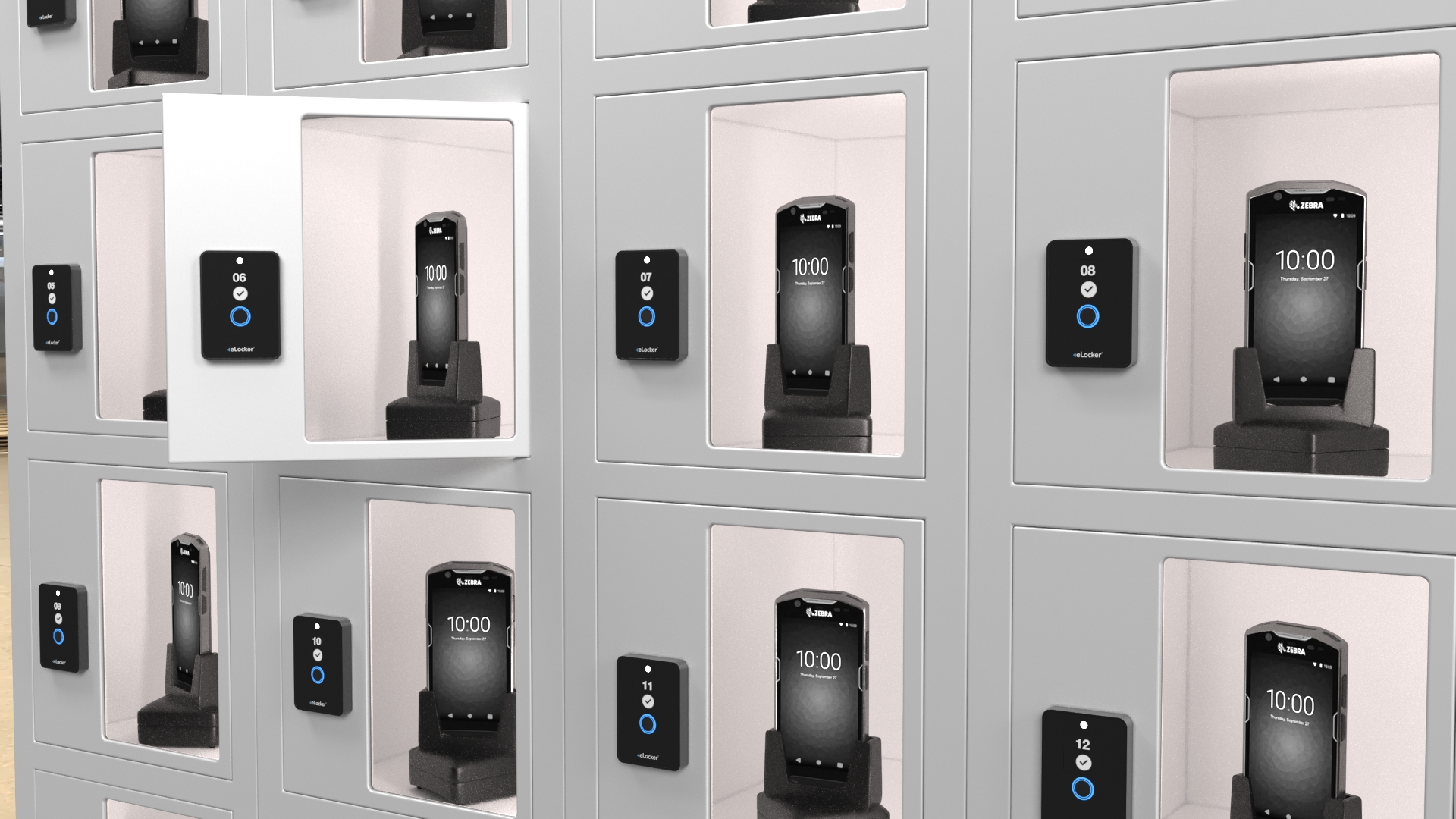
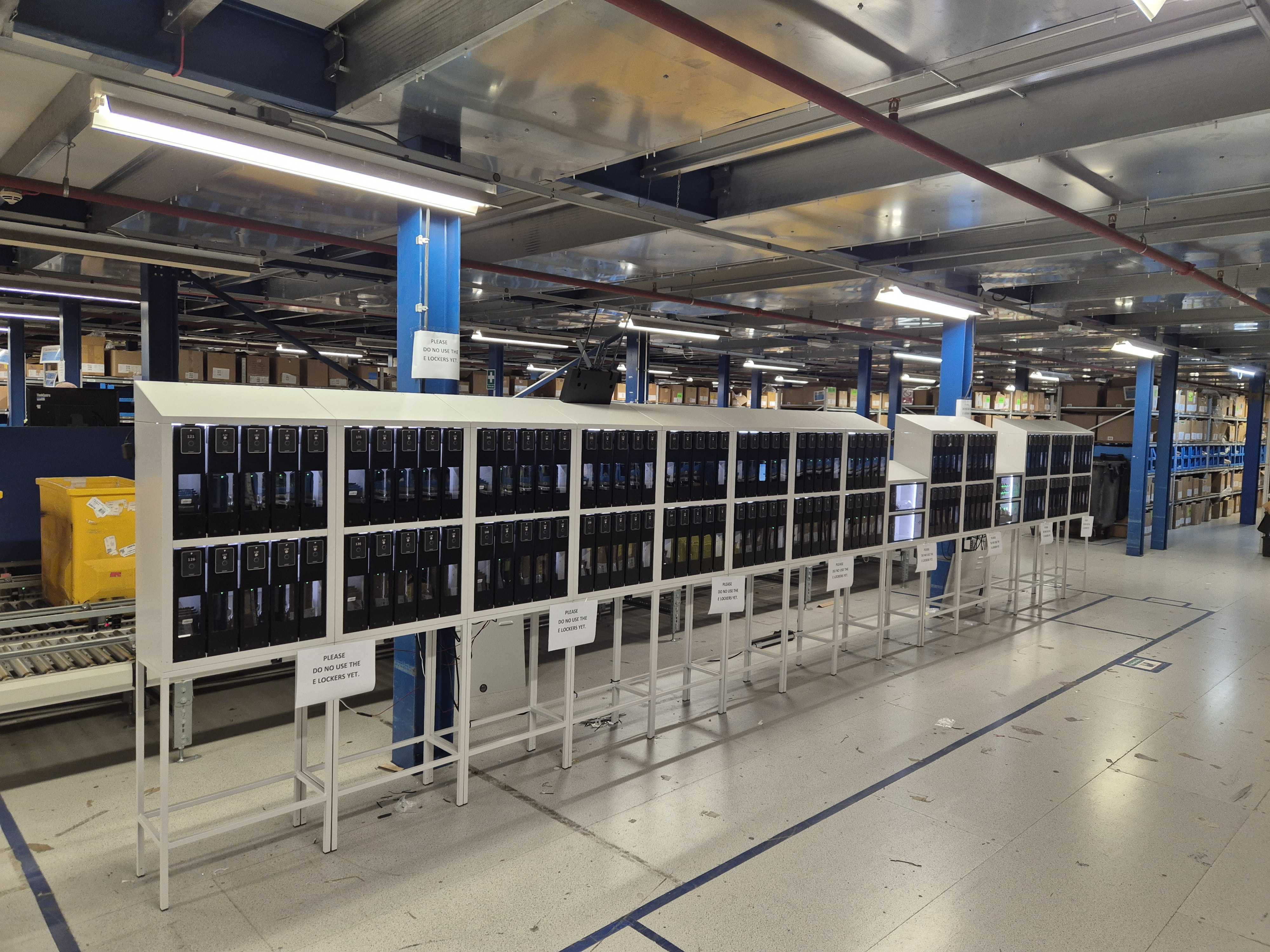
That is where automated collection and return workflows have a clear role. The value is not simply that assets are locked away. The value is that the movement of those assets becomes traceable, repeatable and measurable. The warehouse knows who collected what, when it came back and whether it is ready for the next person.
Adoption is the difference between installation and improvement
A warehouse does not improve because a system is installed. It improves when the new process becomes the normal way the site works.
That is why adoption matters.
If operatives see the process as slow or punitive, they will resist it. If supervisors treat it as optional, old habits will return. If managers do not use the data, the business case will weaken. If training is rushed, the site may never see the full value.
A strong implementation should therefore focus on behaviour as much as hardware.
The site needs a clear shift-start process. Supervisors need to understand how exceptions are handled. Operatives need to know that the system is there to make equipment access easier and accountability fairer. Leadership needs to reinforce the process consistently.
This is particularly important in environments with temporary labour, union sensitivity or long-standing informal ways of working. Accountability should not feel like blame. It should feel like clarity.
What the business case needs to prove
For a warehouse General Manager or Site Director, the case has to be commercial.
They are not buying “lockers”. They are backing an improvement that must reduce avoidable cost, improve shift readiness, strengthen accountability and stand up to customer or leadership scrutiny.
A credible business case should be built around the site’s own numbers.
How many shared devices are in circulation?
How many people need them per shift?
How many shifts run per day?
How much time is lost at collection and return?
What is the annual cost of loss, damage and replacement?
How much management time is spent resolving asset issues?
What would faster, more controlled shift changeover be worth?
This matters because generic ROI claims are rarely enough. Warehouse leaders need evidence they can defend.
But the strongest case will always come from the site itself. If shift changeover is slow, measure it. If devices are going missing, track the cost. If supervisors are spending time chasing equipment, quantify it. If peak exposed the weakness, use the evidence before it fades back into normal operating noise.
The real answer for warehouse leaders
So, when does seasonal peak expose weak warehouse asset management?
It exposes it when the warehouse needs every asset ready, every shift moving and every operative productive, but the process still depends on manual control.
It exposes it during planning, when the site cannot confidently say what equipment is usable and ready.
It exposes it at shift changeover, when people wait for devices instead of starting work.
It exposes it during peak, when missing or damaged assets create operational drag.
It exposes it after peak, when leaders need evidence but only have anecdotes.
It exposes it commercially, when customers, finance or site leadership ask whether avoidable waste is being properly controlled.
The lesson is not that every warehouse needs more devices. Many need better control of the devices they already have.
A better peak starts before the pressure rises
The warehouses that handle peak best are not the ones without problems. They are the ones with fewer hidden problems.
They know where critical assets are. They know who used them. They know whether they came back. They know where damage is occurring. They know whether shift handover is improving. They have data they can use, not just stories from the floor.
That visibility changes the operating rhythm.
Instead of supervisors chasing devices, the process records collection and return. Instead of unclear accountability, there is a fair audit trail. Instead of waiting for loss and damage to appear in finance reports, managers can see patterns earlier. Instead of treating shift changeover friction as unavoidable, the site can measure and reduce it.
Peak will always test warehouse operations. That will not change.
But weak asset management does not have to be one of the things it exposes.
The practical move is to use the quieter window before peak to put control in place, train the team, build the habit and start measuring the difference. By the time volume rises, the process should already be part of how the warehouse works.
Because when the pressure arrives, the question should not be, “Where are the devices?”
It should be, “Are we ready to move?”
If you are reviewing warehouse peak readiness, eLocker can help you assess where shared-device control is creating loss, delay or avoidable shift-change friction. Book a discovery call to explore whether automated asset collection and return workflows could strengthen readiness at your site