
A practical guide to how smart locker returns work, from customer return initiation and self-service deposit to confirmation, collection and the movement of returned goods back into the retailer’s operation.
Returns are an unavoidable part of modern retail.
As ecommerce volumes have grown, so too has the number of products moving back in the opposite direction. Customers increasingly expect returning an unwanted or unsuitable item to be almost as straightforward as buying it in the first place.
For retailers, however, the process is more complicated.
A customer return has to move from the customer back into the retailer’s control. It may need to be identified, transported, inspected, refunded, restocked, repaired or routed elsewhere. Until that happens, the product can represent both an operational task and inventory that cannot be resold.
The physical handover is one part of that journey.
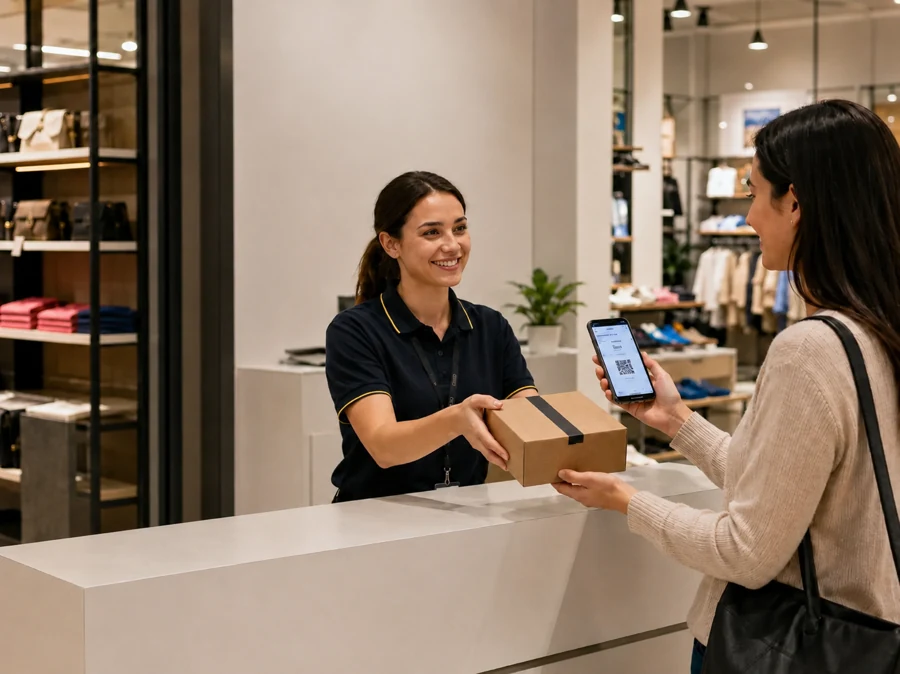
Traditionally, an in-store return requires the customer to find the appropriate desk, wait for a colleague and hand the item over. Alternatively, the customer may need to package the product, print or attach a label and take it to a carrier or third-party drop-off point.
Smart return lockers provide another option. They allow suitable returns to be deposited securely through a controlled self-service process, creating a defined point at which the item moves back into the retailer's operation.
The locker does not complete the entire returns process. What it can do is make the first physical stage of reverse logistics easier to control, record and automate.
What is a smart returns locker?
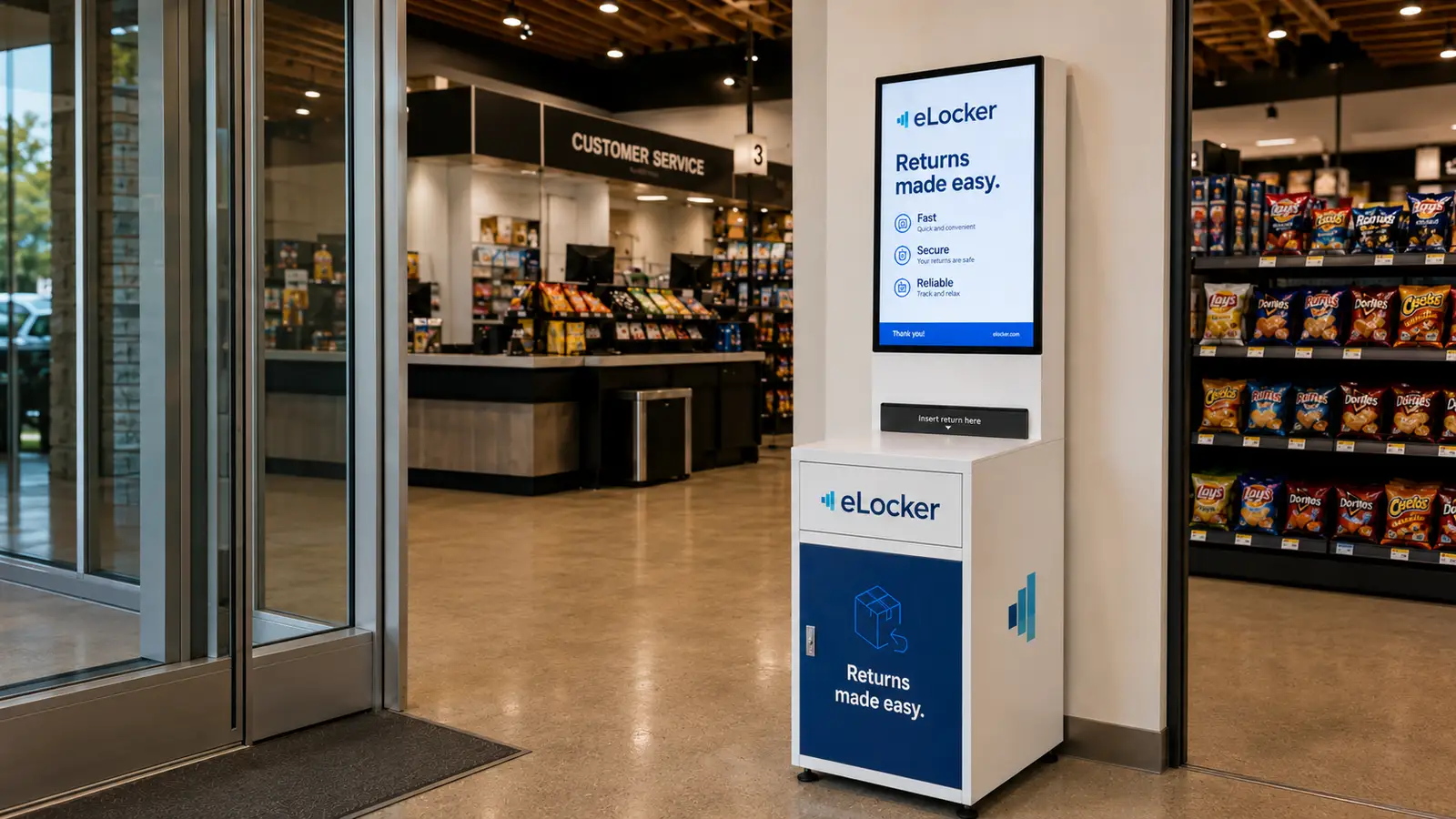
A smart returns locker is a secure, digitally controlled locker that allows an authorised customer to deposit an item as part of a return.
The principle is similar to a collection locker, but the direction of travel is reversed.
With Click & Collect, the retailer places an order into a compartment and the customer removes it. With a locker return, the customer deposits an item and the retailer subsequently removes it for processing.
| Click & Collect | Smart locker return |
| Retailer deposits the item | Customer deposits the item |
| Customer is authorised to collect | Customer is authorised to return |
| Item moves out of retailer control | Item moves back into retailer control |
| Collection completes the fulfilment journey | Deposit begins the reverse-logistics journey |
This last distinction is important.
When a customer collects an order, the physical transaction is largely complete. When a customer returns something, depositing the item is only the beginning of what needs to happen next.
The effectiveness of a returns locker therefore depends not just on how easily the customer can open a door, but on how well the deposit connects with the retailer's wider returns operation.
How do smart locker returns work?
The precise process depends on the retailer, product and returns policy, but a typical smart locker return follows a relatively simple customer journey.
The customer first initiates the return and identifies the item they want to send back. Once the return is authorised, they are given instructions for depositing it at an appropriate locker location.
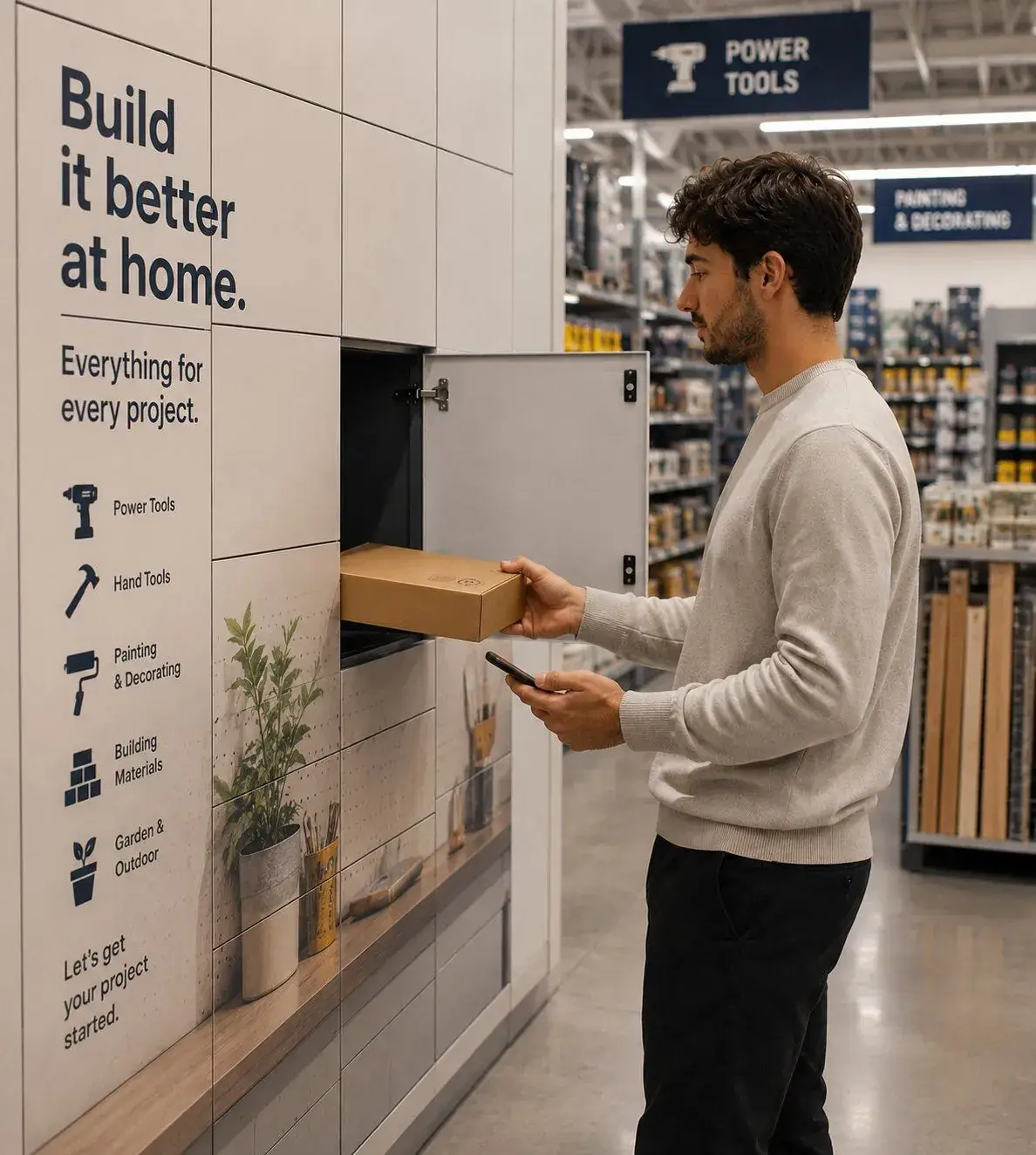
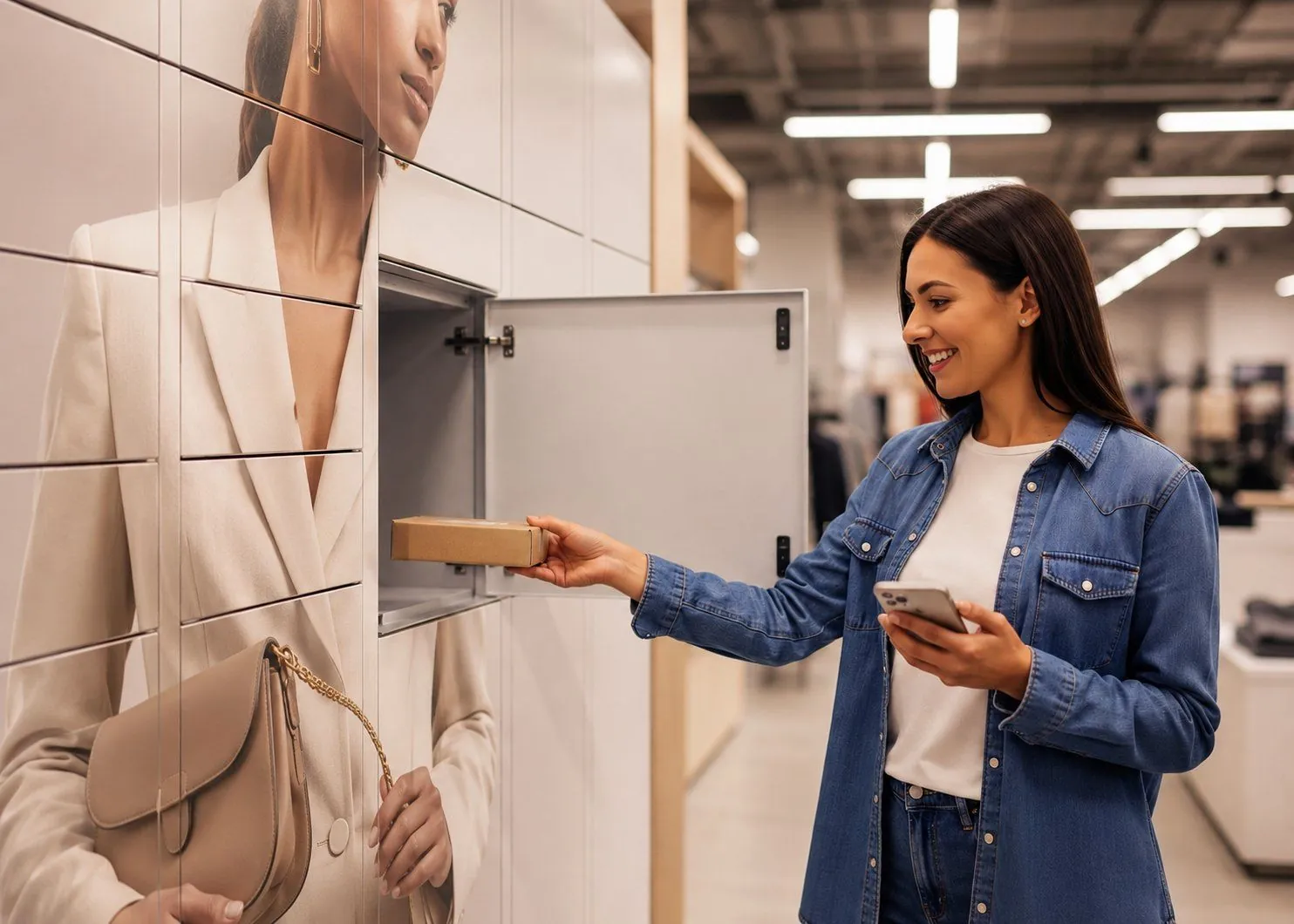
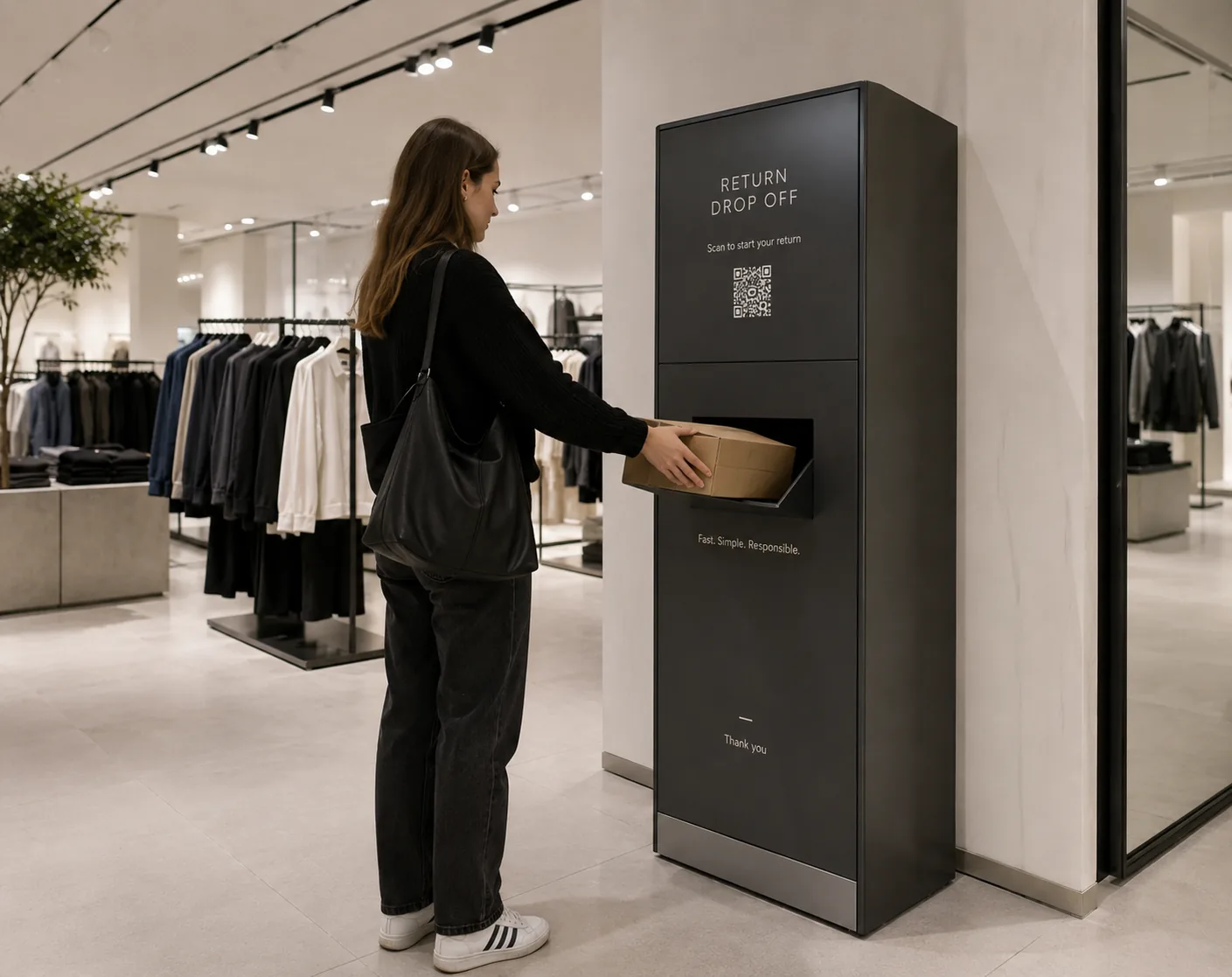
When they arrive, the customer authenticates and an available compartment is released. They deposit the item, close the door and the system records the transaction.
The item can then be collected from the locker and moved into the retailer's reverse-logistics process.
Broadly, the journey looks like this:
Return initiated → return authorised → customer visits locker → customer authenticates → item deposited → deposit confirmed → item collected → return processed
For the customer, the visible interaction may take only a few moments.
For the retailer, the important outcome is that the physical return has entered a controlled and traceable process.
Starting the return before the customer reaches the locker
A good self-service return begins before the customer arrives at the locker.
The retailer needs to know what is being returned and whether the item is eligible for the chosen returns route. Depending on the workflow, the customer may initiate the process through the retailer's website, app, order history or another digital returns journey.
This creates a relationship between the original purchase and the item that is about to be deposited. The customer can then receive instructions explaining where to return it and what they need to do when they arrive.
This is preferable to treating the locker as an anonymous drop box.
If the return has already been initiated digitally, the physical deposit becomes another event within a transaction the retailer already understands. That can make the subsequent process easier to manage because the retailer knows what it should expect before the item physically arrives.
Depositing the return
When the customer reaches the locker, they authenticate using the method configured for the returns journey. The system confirms the authorised transaction and makes an appropriate compartment available. The customer places the item inside and closes the door.
From the customer's perspective, this part of the process should require as little effort as possible. They should not need to understand the underlying locker technology or navigate unnecessary steps simply to hand an item back.
Depending on the retailer's workflow, the process may also reduce or remove some of the traditional friction associated with parcel returns, such as waiting at a service desk or coordinating the handover with a colleague.
Once the compartment has been secured, the system has a digital event showing that the customer completed the deposit. That timestamp can become an important point in the returns journey.
What happens after the locker door closes?
This is where smart locker returns differ most significantly from Click & Collect.
For the customer, closing the door may feel like the end of the return.
For the retailer, it is the beginning of the next stage.
The deposited item still needs to move through reverse logistics. Depending on the retailer and product, that might involve:
- removal from the locker;
- consolidation with other returns;
- transport to a store, warehouse or returns centre;
- identification and inspection;
- validation against the returns policy;
- refund processing;
- repair or refurbishment;
- restocking; or
- disposal or recycling.
The locker therefore acts as an entry point into reverse logistics, not as the reverse-logistics process itself.
This distinction matters when retailers design the workflow.
Making it easy for customers to deposit returns is valuable, but those items also need to leave the locker efficiently. If returned goods simply accumulate inside compartments, the retailer has moved the bottleneck rather than removed it.
When does the customer receive confirmation?
Customers want certainty when returning something.
Once an item has left their hands, they need confidence that the retailer knows it has been deposited.
A smart locker transaction can create an immediate digital record of the deposit. Depending on how the retailer configures the journey, that event can trigger a confirmation telling the customer that the item has entered the returns process.
However, deposit confirmation and refund approval are not necessarily the same thing.
A customer successfully placing an item into a locker proves that a deposit transaction took place. The retailer may still need to receive and inspect the product before determining whether it meets the conditions of the returns policy.
That distinction should be made clear within the customer journey.
Ambiguity about whether a refund has been approved, initiated or is still subject to inspection can create additional customer-service enquiries, precisely the kind of friction the automated process is intended to reduce.
How do returns lockers improve the customer experience?
Returns have a disproportionate influence on how customers perceive a retailer.
The purchase may have been effortless, but a difficult return can quickly undermine that experience.
Customers generally want the returns process to be clear, convenient and predictable. They want to understand what they need to do, where they need to go and what will happen after they hand the item back.
Self-service lockers can reduce some common sources of friction by removing dependency on a staffed handover.
Rather than waiting for an available colleague, suitable returns can be deposited through a defined digital journey. Where the locker location is accessible for longer than a traditional service desk, customers may also have greater flexibility over when they complete the return.
The objective should not simply be to make the process self-service. It should be to reduce the effort required to complete it.
If the customer has to navigate an unnecessarily complicated digital process before they can open the locker, the retailer has simply replaced one form of friction with another.
What changes for store operations?
The customer experience is only one side of the returns equation.
Every return arriving through a store creates work.
A colleague may need to receive the item, check the customer's details, record the transaction, determine what should happen next and move the product into the appropriate internal process.
At low volumes, those interactions may be manageable. At scale, they can consume significant store capacity.
Self-service return lockers allow the initial physical handover to take place without a colleague needing to manage every routine transaction.
That can reduce pressure on customer-service desks and allow colleagues to focus on returns that genuinely require assistance or judgement.
It can also separate the timing of the customer interaction from the retailer's internal handling.
Ten customers do not necessarily need ten immediate colleague interactions. Their returns can be deposited independently and subsequently removed from the locker in a more organised operational process.
This ability to decouple customer arrival from colleague availability is one of the more important operational benefits of self-service returns.
Creating a clearer chain of custody
Returns can become difficult to investigate when there is uncertainty over exactly when an item moved from the customer back into the retailer's control.
A customer may say they returned something. The retailer's system may show that the refund has not progressed. Store colleagues may have no immediate way to establish where the item went.
A digitally controlled locker creates a defined handover event.
Depending on the workflow, the transaction record can show information such as:
| Event | Potential record |
| Return authorised | Return/order reference |
| Locker accessed | Customer transaction and time |
| Item deposited | Compartment and deposit status |
| Item removed | Collection by retailer or logistics process |
| Return outstanding | Exception requiring investigation |
This does not eliminate every dispute.
The contents of a parcel may still require inspection and operational errors can still occur later in the journey.
What the locker provides is a clearer record of one critical moment: when the customer completed the physical deposit.
That can strengthen the chain of custody and make subsequent investigations easier.
How returns lockers support reverse logistics
The quality of a returns process is determined partly by how quickly goods can move back towards their next useful state.
Some returned products can be resold almost immediately. Others need inspection, refurbishment, repair, repackaging or another route.
Until the item reaches the appropriate part of the operation, its value can effectively be trapped inside the returns process.
This makes locker servicing important.
Retailers need to consider how frequently returns will be removed, who will collect them, where they go next and how that movement connects with existing reverse-logistics routes.
High-volume locations may need frequent collection. Lower-volume sites may allow items to be consolidated before being moved.
The objective should be to make the locker part of the existing logistics network rather than create a parallel process that somebody then has to manage manually.
Can smart returns lockers reduce cost-to-serve?
Potentially, particularly where retailers process significant volumes of routine returns through staffed locations.
A conventional in-store return can involve customer-service time, transaction administration and physical handling at the exact moment the customer arrives.
A locker changes that interaction.
The customer performs the initial deposit independently, while the retailer can manage the onward handling separately.
The potential operational value can come from areas including:
- fewer routine customer handovers;
- reduced pressure on service desks;
- less colleague time coordinating simple returns;
- greater capacity during peak periods;
- improved transaction records;
- more structured consolidation of returned goods; and
- reduced time investigating disputed handovers.
Not every return is suitable for automation.
Some products require immediate inspection. Some customers need assistance. Some return reasons demand a conversation.
The commercial opportunity is therefore not to remove people from every return. It is to identify the predictable, repetitive transactions where human involvement adds little value and make those journeys more efficient.
Can returns and collections use the same smart lockers?
Yes, depending on the locker system and operating model.
The same physical infrastructure can potentially support both customer collections and returns because the fundamental capability is controlled access to individual compartments.
What changes is the workflow.
For a collection, the retailer deposits and the customer removes.
For a return, the customer deposits and the retailer removes.
This creates an interesting opportunity for retailers because the locker estate does not necessarily have to perform only one function.
Capacity can potentially support different transaction types according to demand.
However, retailers need to consider how collections and returns interact operationally. A compartment occupied by a return cannot simultaneously hold an order awaiting collection. Poorly managed returns could therefore consume capacity required for customer collections.
The software, servicing model and capacity planning become as important as the physical locker configuration.
What happens when something goes wrong?
Returns generate exceptions just as collections do.
A customer may initiate a return but never deposit the item. A compartment may remain occupied longer than expected. An item may be deposited incorrectly. A transaction may not match what the retailer subsequently receives.
A smart locker system can help make those exceptions visible.
Rather than requiring somebody to manually supervise every successful deposit, the system can identify transactions that have not followed the expected process.
That might include:
- authorised returns that were never deposited;
- locker access without a completed transaction;
- compartments awaiting clearance;
- items not progressing into the next stage;
- access or authentication failures; or
- other operational exceptions.
Human intervention is still required where judgement is necessary.
The value of automation lies in allowing teams to concentrate on the exceptions rather than administering every routine return in the same way.
Do customers need an app to make a locker return?
Not necessarily.
Depending on the system, customers may be able to initiate and complete the return through a browser-based mobile journey, QR code, PIN or another digital authentication method.
Avoiding a mandatory app can be particularly useful for returns because the interaction may be infrequent.
A customer who makes one return to a retailer may have little appetite for downloading and registering for an application purely to open a locker.
Whatever authentication method is chosen, it should reflect the wider objective of the returns journey: reduce customer effort.
Do smart return lockers need to integrate with retail systems?
Not necessarily, although integration can automate more of the journey. At a basic level, a smart locker can provide a secure and recorded self-service deposit point.
At a more connected level, the return initiation, locker transaction and subsequent status changes can become part of the retailer's wider ecommerce, order-management or returns-management workflow.
For example:
Return initiated → locker return authorised → item deposited → deposit confirmed → item recovered → inspection completed → return status updated
The greater the connection between those stages, the less manual coordination may be required.
However, retailers should avoid treating integration as an objective in itself.
The right question is whether connecting another system removes a meaningful manual step, improves visibility or materially improves the customer experience.
What should retailers consider before introducing returns lockers?
A returns locker project should begin with the existing returns journey rather than the hardware.
Retailers need to understand which returns are suitable for self-service, where the current process creates friction and what happens to an item after the customer hands it back.
Questions worth considering include:
- Which types of return are suitable for locker deposit?
- How will the customer initiate the return?
- How will they authenticate at the locker?
- Does the item need packaging or a label?
- When is the return considered received?
- When can a refund be initiated?
- Does the product require inspection?
- How frequently will lockers be cleared?
- Where do returned items go next?
- How will exceptions be handled?
- What transaction data needs to be retained?
- Does the process need to integrate with existing retail systems?
- How will collections and returns share locker capacity?
- How will success be measured?
These questions expose an important truth about automated returns. The customer depositing the item is only one part of the process. The complete workflow needs to work for the customer, the store and the reverse-logistics operation.
How should retailers measure a smart returns process?
The most useful measures compare the new workflow with the process it replaces.
For the customer, that could include completion time, waiting time, satisfaction and the percentage of returns requiring assistance.
For store operations, useful measures may include colleague handling time, returns processed per hour, service-desk demand and exception rates.
For the wider business, the focus may extend to how quickly returned goods move through the operation and become available for their next destination.
A practical measurement framework could therefore include:
- average customer return time;
- colleague time per return;
- percentage of returns completed through self-service;
- percentage requiring intervention;
- locker occupancy;
- time between deposit and locker clearance;
- disputed-return rates;
- time from deposit to inspection;
- time from return to refund; and
- time taken to return saleable stock to availability.
This prevents the project being judged simply on whether customers use the lockers.
Adoption matters, but the commercial question is whether the new process makes returns easier to complete and more efficient to manage.
Frequently asked questions about smart locker returns
What is a smart returns locker?
A smart returns locker is a secure, digitally controlled locker that allows an authorised customer to deposit an item as part of a retailer's returns process.
How do smart locker returns work?
The customer initiates a return and receives authorisation to use the locker. At the location, they authenticate, deposit the item and close the compartment. The transaction is recorded and the item is subsequently removed for processing.
Can a customer receive confirmation when they return an item?
Yes. The locker transaction can create a digital record showing that the deposit took place, which can be used to trigger a customer confirmation depending on the retailer's workflow.
Does depositing an item mean the refund is approved?
Not necessarily. The locker can confirm that a deposit transaction occurred, but the retailer may still need to receive and inspect the item before approving or completing the refund.
Do customers need an app?
Not necessarily. Smart returns can potentially use browser-based mobile journeys, QR codes, PINs or other forms of digital authentication.
Can the same lockers handle collections and returns?
Yes. Suitable smart locker systems can support both workflows, although capacity and operational processes need to account for goods moving in both directions.
Do customers need to print a returns label?
That depends on the retailer's return workflow and how the returned item is identified. A smart locker does not inherently require a particular labelling process.
What happens to the item after it is deposited?
The retailer or its logistics provider removes it from the locker and moves it into the appropriate reverse-logistics process. That could include inspection, refund processing, restocking, repair, refurbishment or another disposition.
Are automated returns suitable for every product?
No. Some products, transactions or return reasons may require immediate inspection or colleague assistance. Retailers need to determine which return types are suitable for self-service.
Can returns lockers integrate with existing retail systems?
Yes. Depending on the platform, locker transactions can form part of wider ecommerce, order-management, returns-management and reverse-logistics workflows.
The return does not end at the locker
Smart returns lockers can make one of the most visible parts of the returns journey considerably simpler.
The customer can initiate the return, visit a convenient location, deposit the item securely and receive confirmation without waiting for a colleague to manage the physical handover.
For the retailer, however, the real opportunity is broader.
The locker creates a controlled point where an item moves from the customer back into the business. That transaction can be recorded, exceptions can be identified and returned goods can be consolidated before moving into the next stage of reverse logistics.
Done well, this can reduce pressure on store teams while making the process easier for customers.
But the measure of success should not simply be how quickly a locker door opens.
A successful returns process needs to move the item from customer to deposit, from deposit to processing and ultimately towards its next useful destination with as little unnecessary friction as possible.