


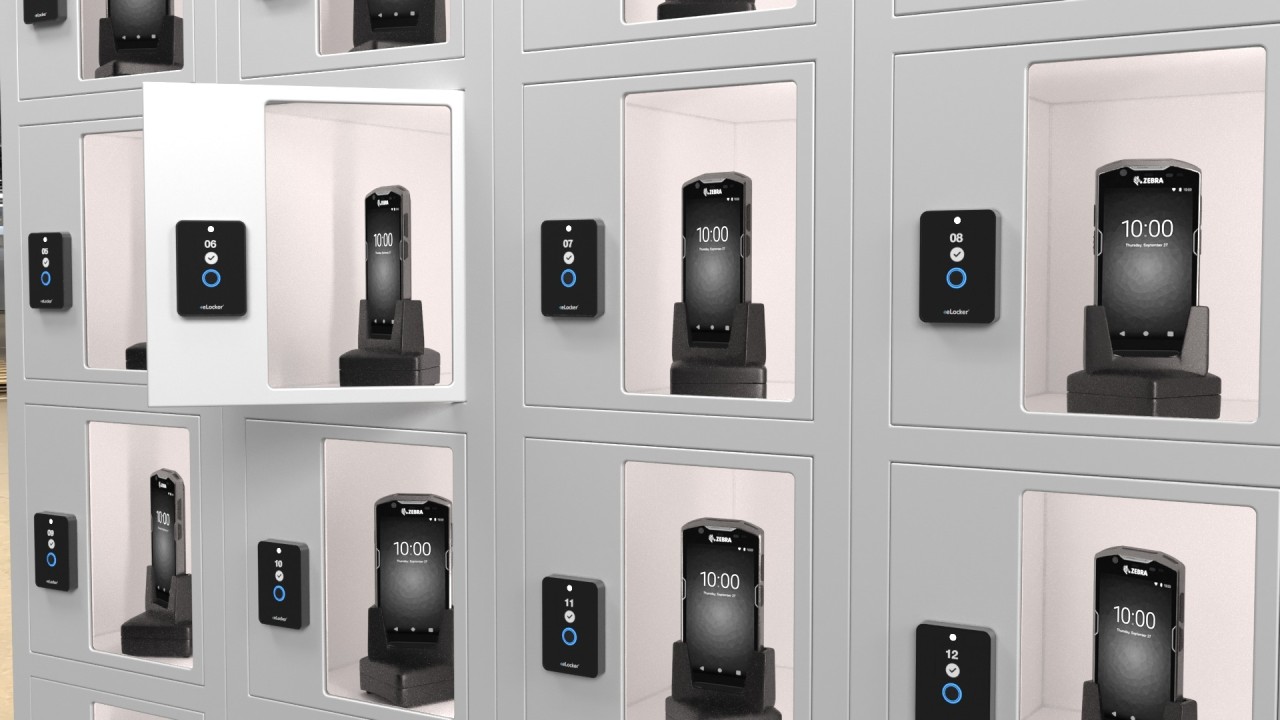
A warehouse can live with inefficient asset control for a surprisingly long time.
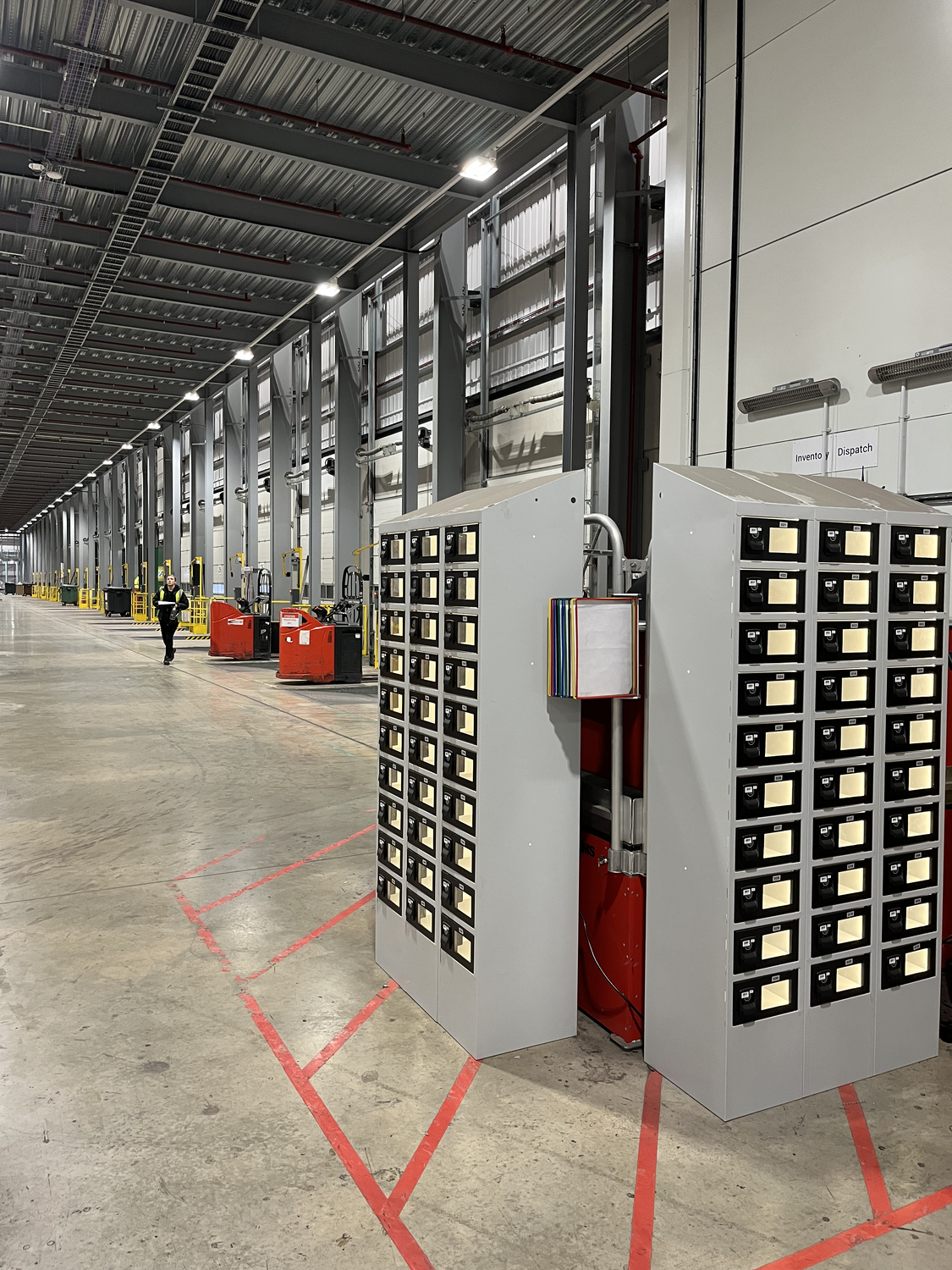
Handheld devices are passed between shifts. Equipment is stored in charging cabinets, cupboards or cages. Supervisors step in when something goes missing. Operatives wait while a scanner is found, replaced or charged. IT absorbs the cost of damaged and unaccounted-for equipment.
Each incident can appear manageable on its own. Across hundreds of operatives, three shifts a day and a full year of operation, the cumulative effect is harder to dismiss.
The challenge is rarely recognising that waste exists. It is proving that solving it will create enough measurable value to justify investment across a wider warehouse network.
That is the question facing General Managers, Operations Directors and Continuous Improvement Managers. They can see the operational friction, but they also know that a multi-site decision cannot be supported by instinct alone. Finance will want credible savings. Site leadership will want evidence that the process works in live operations. IT will want to understand the implementation and support requirements. In a 3PL environment, the customer may also expect proof that the initiative strengthens performance and delivers meaningful continuous improvement.
The most reliable way forward is to build the business case around one representative site.
That does not mean running an isolated technology trial. It means working closely with eLocker to understand the current process, establish a trusted baseline and identify what stronger asset control could change. Once the system is live, the same measures can be used to assess the result properly.
The first site should give the organisation evidence from its own operation. It should show what value has been created, how it has been created and whether the same model can work elsewhere.
The real barrier to rollout is not the technology
Warehouse asset management is often presented as a technology decision. In practice, the decision is more commercial and operational than technical.
A General Manager is not principally concerned with whether a locker opens correctly or whether a dashboard records a transaction. They want to know whether better control of shared equipment will improve site economics, reduce avoidable waste and support more reliable performance.
A Continuous Improvement Manager may already know that devices go missing, operatives lose time at shift change and supervisors spend too long resolving equipment problems. Their challenge is turning those observations into a case that can withstand scrutiny from finance, site leadership or the customer.
Both roles are trying to close the same gap: the distance between knowing there is a problem and being able to defend the investment required to solve it.
That gap exists because the cost of weak asset control is fragmented.
Part of it sits in replacement and repair budgets. Part of it appears as lost labour time at shift change. Part of it is hidden in supervisor intervention, manual record-keeping and IT administration. Some of it never appears as a direct cost at all. It shows up as reduced productive capacity, slower shift starts and a less predictable operation.
This is why generic return-on-investment claims are rarely enough. The value needs to be assessed using the warehouse’s own assets, people, shifts and operating conditions.
Learn more about the technology on our website
Proving value starts before installation
A credible site-level business case begins with the current operation.
Before anything changes, the warehouse needs a reasonable understanding of how assets are collected, used, returned and controlled. This should not become a lengthy consultancy exercise, but it must go beyond anecdotal evidence.
The starting point is to identify where weak asset control is creating measurable cost or friction. That may include replacement and repair expenditure, unaccounted-for devices, time spent collecting equipment, delays caused by unavailable assets and the management effort required to investigate problems.
Shift change is often the most revealing place to begin.
Consider a site where 120 operatives start work across three daily shifts. If each person loses four minutes locating, collecting or exchanging equipment, the warehouse gives up 24 labour hours every day.
That does not mean 24 hours of payroll can automatically be removed. A sound business case distinguishes between different types of value.
Some savings may be hard and visible, such as fewer replacement devices, lower repair costs or reduced overtime. Some may return productive capacity, allowing employees to begin operational work sooner. Other benefits may improve control and reduce risk, such as knowing who collected an asset, when it was returned and where repeated damage is occurring.
The Office for National Statistics measures labour productivity through indicators including output per hour and output per worker. At warehouse level, the principle is straightforward: recovered time becomes commercially valuable when it contributes to greater output, lower cost or more predictable performance.

The strongest business cases are not the ones with the largest headline saving. They are the ones that show exactly where value is being lost today and how the warehouse will recover it.
Build the business case around a representative site
The first site matters because it becomes the reference point for every later decision.
It should not be chosen simply because it is the easiest warehouse in which to install the system. An unusually orderly site with a small, stable workforce may produce a smooth result, but it may not answer the questions that matter across the wider network.
Equally, a warehouse already dealing with severe operational disruption, leadership instability or major systems problems may introduce too many variables.
The strongest starting point is usually a site where the asset-control problem is significant enough to measure, operations are stable enough to compare performance over time and local leadership is committed to improving the process.
The site should also reflect the conditions likely to be encountered elsewhere.
If the wider network includes different shift patterns, device types, layouts or customer arrangements, those differences need to be considered when the business case is built. The first site cannot represent every warehouse perfectly, but it should not create a misleading impression of how simple wider deployment will be.
This is particularly important in 3PL operations. The result may need to support a customer conversation, demonstrate continuous improvement or contribute to a gainshare case. The evidence must therefore be clear enough to stand up to external scrutiny, not just internal enthusiasm.
Agree what success means before go-live
The business case should define what a meaningful result would look like before the system is installed.
Without agreed measures, it is easy to rely on general impressions after go-live. The operation may feel more orderly, but leadership still needs to know whether the change has produced enough value to justify further investment.
The right measures depend on the site.
A General Manager may focus on avoided asset cost, reduced labour waste and expected payback. A Continuous Improvement Manager may focus on collection time, return compliance, device availability and the amount of supervisor intervention required. Shift Managers may be most concerned with whether operatives receive working equipment quickly and whether the shift starts without unnecessary disruption.
IT teams may look for fewer investigations, fewer replacement requests and clearer asset histories. Regional Operations Directors will want to understand whether the process can be implemented consistently across other locations.
These different interests should be distilled into a small number of decision-making measures.
The purpose is not to measure every available data point. It is to establish whether the new process creates measurable value, works under normal operating conditions and provides a credible basis for expansion.
Adoption is part of the financial result
Warehouse technology only creates value when people use it correctly.
If operatives bypass the process, share access details or return devices incorrectly, the expected improvements in accountability will not materialise. If supervisors repeatedly step outside the workflow to keep the shift moving, the organisation may have installed a system without genuinely changing the process.
Adoption should therefore be treated as part of the business case, not as a separate communication exercise.
Operatives need to understand how to identify themselves, collect the correct asset and report a faulty or unsuitable device. Returns need to be equally straightforward. Shift Managers need a clear method for resolving exceptions without creating queues or reverting to manual distribution.
The language used around accountability also matters.
In some warehouse environments, named allocation may initially be interpreted as unnecessary monitoring. The purpose should be explained in practical terms. Valuable shared equipment needs a clear chain of custody so that devices remain available, recurring damage can be understood and individuals are not blamed for issues they did not cause.
The first shifts will reveal where the process needs adjustment. That is not a weakness in the approach. It is how the site develops a working model that can later be repeated with greater confidence.
What matters is that the warehouse measures adoption as carefully as it measures transactions. A system that produces clean data but creates floor-level resistance will not deliver the expected return.
Measure the operation when it is under pressure
A process should not be judged only when transactions are evenly spaced and everyone follows the expected route.
Warehouse leaders need to know what happens at the busiest point of shift change.
The real test comes when the outgoing shift is returning devices as the incoming shift arrives. A scanner is damaged. An operative cannot access the expected compartment. One device has not been returned. Another is present but has not charged correctly. A temporary worker has not been set up in the system.
These are not unlikely edge cases. They are part of normal warehouse operations.
The site needs to show that these situations can be handled without creating more disruption than the existing process. Local teams should know who owns the response, what information is available and how quickly the operative can get to work.
This is where implementation confidence is built.
It does not come from claiming that exceptions will disappear. It comes from showing that the process makes them more visible, more manageable and less dependent on individual knowledge.
The physical location of the system should also support orderly movement. The Health and Safety Executive identifies workplace transport and manual handling among the important risks in warehousing. Asset collection is only one small part of the operation, but its location and design should reduce congestion rather than create another pressure point at shift change.
Use live data to validate the original business case
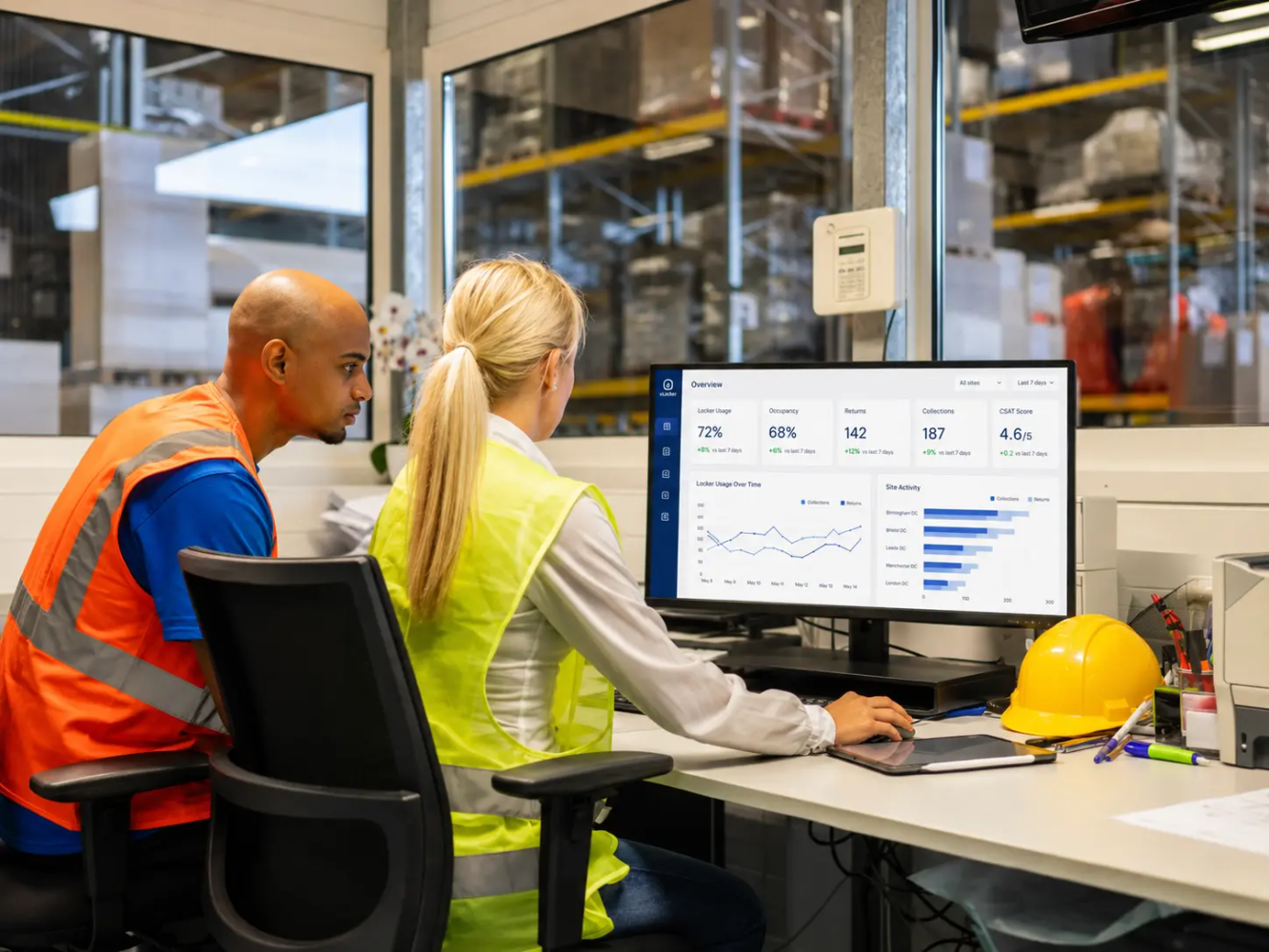
Once the system is operating normally, the site can compare actual performance with the baseline used in the original business case.
This is where the theoretical case becomes site-level evidence.
The warehouse can assess whether collection times have reduced, whether more devices are returned correctly, whether loss and damage are declining and whether Shift Managers or IT teams are spending less time resolving preventable issues.
The comparison needs to be fair.
The first few days after go-live may involve more support and closer supervision than normal. Measuring only this period may understate the eventual benefit. It may also overstate adoption if project teams are physically present to guide every interaction.
The evaluation period should be long enough for the process to become routine. It should include different shifts, busy periods and normal operational exceptions.
Changes in workforce size, device numbers or throughput should also be considered. If headcount has changed materially, total collection time may be less useful than time per operative. If more devices have entered circulation, loss per device may provide a clearer comparison than the total number of incidents.
The goal is not to create a perfect academic study. It is to produce a result that experienced operations and finance leaders will regard as balanced and credible.
That means recording weaknesses as well as benefits. If one shift adopted more slowly, it should be acknowledged. If a device type created unexpected problems, it should be included. If a projected saving depends on a further operational change, that dependency should be clear.
Evidence becomes more persuasive when it does not pretend the process was flawless.
A site-level result needs to explain why it worked
Positive numbers from one warehouse do not automatically justify a multi-site rollout.
The organisation also needs to understand why the result was achieved.
Was faster shift readiness primarily driven by the technology, or did it depend on one Shift Manager supervising every collection? Did the site have an ideal location that other warehouses may not have? Did implementation require more IT support than would be practical across the network?
These questions are not reasons to undermine the result. They are how the business identifies what must be repeated elsewhere.
The work completed at the first site should therefore create a clear implementation model. It should show how site readiness was assessed, how users were introduced to the process, how exceptions were handled and which responsibilities sat with local operations, central IT and eLocker.
The organisation should also know which elements can flex and which need to remain consistent.
The physical configuration may vary because each warehouse has different space constraints. The principle of traceable asset allocation may remain standard. User communication may need to reflect the local workforce, while reporting measures remain consistent enough for performance to be compared across sites.
This balance matters. A model that is too rigid may fail to reflect operational reality. A model that changes completely from one site to the next will make results harder to compare and manage.
The first site should lead to a decision
A site-level proof of value should not become an open-ended exercise.
The original business case should define the evidence required to make the next decision. Once the agreed period has passed, the organisation should be able to assess whether the result supports further deployment, whether part of the operating model needs refinement or whether the value is not strong enough to proceed.
That decision does not need to involve the entire estate at once.
A warehouse group may choose to move next into a small number of representative sites before wider deployment. One location may test a different layout. Another may have a larger temporary workforce. A third may operate under a different customer contract.
The important point is that expansion follows evidence rather than enthusiasm.
Each site should reduce a defined area of uncertainty and strengthen the operating model. What should be avoided is a sequence of disconnected tests with no agreed decision threshold. That consumes time, weakens momentum and allows the cost of the existing process to continue.
From site-level evidence to rollout confidence
Management are right to be cautious about introducing a new asset-management process across multiple warehouses.
They carry the financial risk if the savings do not appear. They carry the operational risk if the floor rejects the process. In a 3PL environment, they may also carry customer and contract risk if the improvement is poorly executed or its value cannot be demonstrated.
But caution does not require inaction.
A warehouse can build a credible case before wider rollout by working closely with eLocker to understand the current process, quantify the opportunity and agree how value will be measured at one site.
The original business case creates the benchmark. Live operational data then shows whether the projected improvements have materialised.
Done properly, the first site gives the General Manager a decision they can defend. It gives the Continuous Improvement Manager evidence that the opportunity can move from analysis to measurable operational change. It gives Shift Managers confidence that the process can make the working day easier rather than more complicated.
Most importantly, it replaces generic assumptions with evidence from the warehouse’s own operation.
That is what makes a multi-site decision credible.
Rollout confidence is created when the warehouse can compare the original business case with live site data and see clearly what changed, why it changed and whether the result can be repeated
If weak asset control is creating avoidable cost, lost time or poor visibility across your warehouse operation, eLocker can help you build a site-specific business case and define how value should be measured. Start by taking our warehouse asset management readiness survey to assess whether your site is ready for a more controlled, accountable approach.