
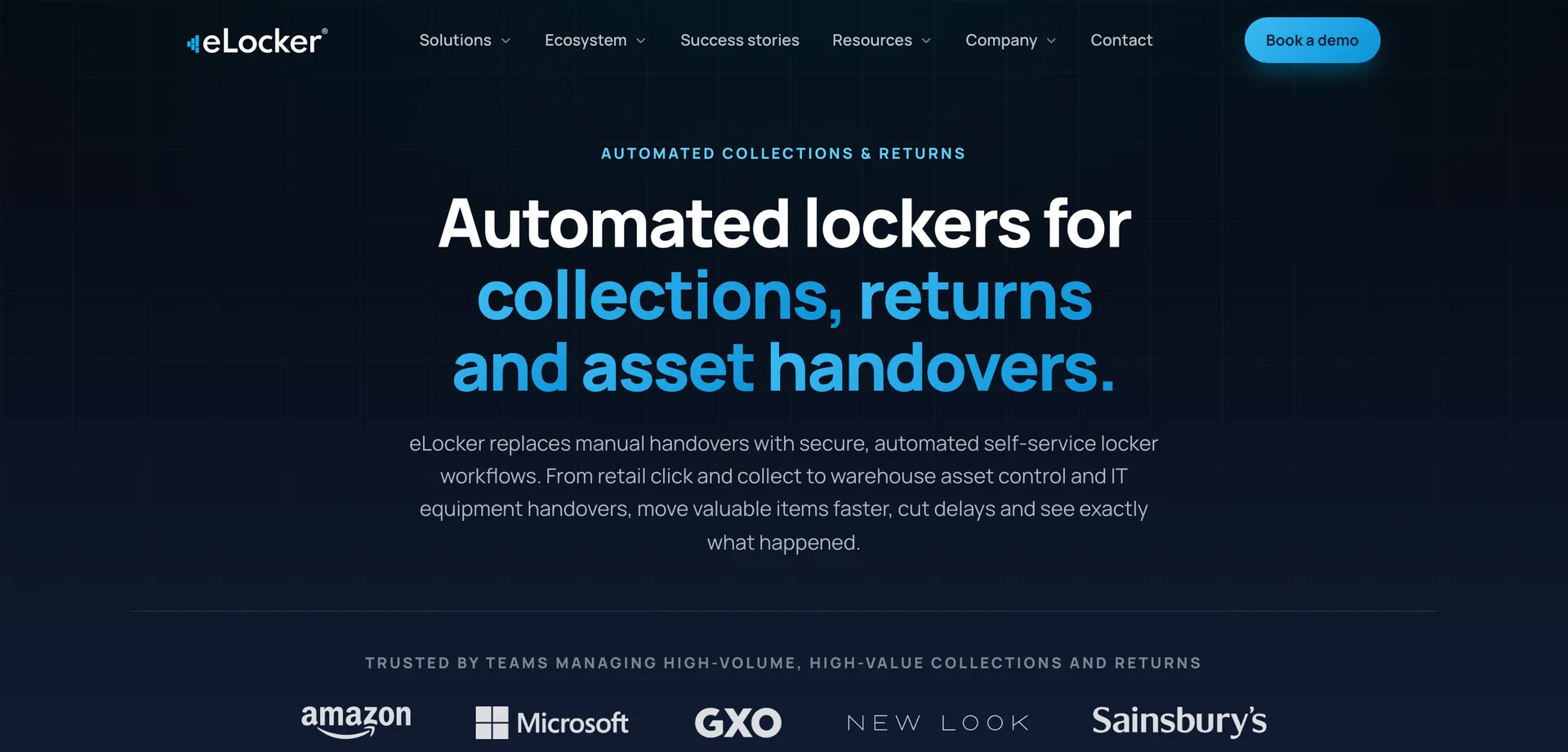
The new elocker.com went live in July. We built it with Claude, and it started as an experiment that got out of hand.
The plan was small. See how far an AI model could get with a couple of pages, decide whether it was worth doing properly, then hand it to an agency if it wasn't. We never reached that second step. The pages kept getting better, so we kept going, and the experiment turned into the whole site.
What we built, and what it runs on
Astro sits underneath. On top of it is a content management system we wrote ourselves, because what we needed was specific enough that a generic platform would have fought us on most of it.
It handles four kinds of content: blog articles, sector guides, customer success stories, and company news like this one. Each carries its own author, category, hero image, summary and social share card. Authors are a shared bank, so a byline, photo, role and LinkedIn link live in one place and update everywhere at once.
Then there are the parts we would have struggled to buy:
- Per-page search titles, meta descriptions and social cards, edited in the admin and applied to every page on the site, including the hand-built ones that aren't in the database at all.
- Image alt text stored once per image and written into every page that uses it.
- A sitemap and an llms.txt built from a single index, so publishing an article updates both and nobody maintains a list.
- The interactive diagnostics, which size up a collections or returns problem in about two minutes.
- Form fills captured to our own database as well as to HubSpot, so a dropped lead is still recoverable.
- An hourly check on every booking link, which tells us the moment someone's calendar disconnects.
None of that is exotic. It's the kind of thing you normally decide against, because the build cost outweighs the benefit for a company our size. That calculation is what changed.
Why most AI-built sites look the same
Ask a model to design a website from a blank page and you'll get something competent that looks like every other site it has ever seen. Centred hero, three feature cards, a gradient, a testimonial strip. It's the average of everything it was trained on, which is a fine place to start if you have nothing, and a bad place to stop if you're trying to look like yourselves.
Two things were settled before any of it went near Claude.
The first was who we sell to and what we say to them. We knew the category we wanted to own, the words our buyers actually use, and which numbers we're willing to stand behind. So we were never asking the model what to say. We were asking it to build something that said it.
The second was roughly half the design. Type, colour, spacing, the rhythm of the sections, the way a dark band gives way to a light one. Enough that there was a house style to extend.
Both of those took months, and neither was AI work. The build on top of them took a fraction of the time we expected. That's about the right ratio to plan for. The thinking is still the slow part, and it decides whether the fast part is worth having.
Where it still needed people
The model was quick to produce something plausible and slow to notice when plausible wasn't right. Most of what we caught fell into three areas.
Copy needed rewriting more often than code needed fixing. Left alone the prose drifts towards a register that reads like a press release, and a house voice turns out to be a long list of small refusals, not a style you can describe once and hand over.
Every real number needed checking against a real source. We publish figures about cost per order and colleague time, and a figure that sounds right is worse than no figure at all.
Anything touching a customer's data needed a person deciding what could be said, and in several cases the answer was nothing yet.
The features most worth having were also the ones nobody would have specified. The alt-text system and the link monitor both came out of noticing a small recurring annoyance and being able to fix it that afternoon.
Would we do it this way again?
Yes, with one condition. The groundwork has to exist first. A company that hasn't settled who it sells to, what it says, or what it looks like will get a website that reflects exactly that, faster than before and across more pages. The model supplies pace. Applied to an unresolved position, pace just gets you somewhere wrong sooner.
The other thing worth saying is that we own all of it. No platform licence, no template we can't change, no waiting on someone else's release cycle to alter a page. That was the point of writing the CMS ourselves, and it's the decision we'd defend hardest.
What we're doing with it next
More of it, in more places. Anywhere there's work that's repetitive and well understood, we're looking at what AI can take off the team. Some of that is internal. Some of it will end up in the product, where the interesting questions are about what a locker network can tell you that nobody currently has time to ask.
The website was the experiment. It won't be the last one.
If you'd rather see what we've built for collections and returns than what we've built for ourselves, start with the solutions or book a walkthrough.