
Walk past a bank of lockers outside a supermarket, inside an office or at the entrance to an apartment building and, from the outside, the proposition can appear relatively simple. An item is placed into a secure compartment, somebody is authorised to open it, and the item changes hands without a conventional face-to-face interaction.
That apparent simplicity has helped create a broad locker market in which terms such as parcel locker, automated parcel locker, smart locker and collection locker are sometimes used interchangeably.
Operationally, however, they can describe quite different systems.
A parcel carrier using lockers as part of a last-mile delivery network has different requirements from a property manager receiving deliveries for residents. Both are different again from a retailer allowing customers to collect online orders from its stores, or an IT department managing the issue and return of laptops.
The physical hardware may look similar, but the workflow taking place around it can be fundamentally different.
Rather than beginning with the question “Which locker do we need?”, it is often more useful to understand the handover that needs to take place, who controls it and what information needs to accompany the transaction.
What is a parcel locker?
A parcel locker is a bank of secure compartments used to receive, temporarily store, collect or return parcels without requiring a conventional face-to-face handover between the person delivering an item and its eventual recipient.
One of the most familiar applications is the carrier parcel locker. Instead of delivering a parcel to a customer’s home, a carrier places it into a secure compartment at a convenient location. The customer is notified that the parcel is ready and receives whatever credential is required to access the appropriate compartment. Once the customer authenticates successfully, the relevant door opens and the parcel can be collected.
The same infrastructure can often support returns. The consumer is authorised to access a compartment, deposits the parcel and the carrier subsequently retrieves it as part of its logistics network.
This model can improve last-mile delivery efficiency because it consolidates multiple transactions at a single location. Rather than a driver making a series of individual deliveries to different addresses, several parcels can potentially be deposited during one stop and collected later by their recipients.
However, carrier networks represent only one application of parcel lockers. Similar hardware can be found in residential developments, workplaces, university campuses, retail environments and other locations where organisations need a secure intermediate point between sender and recipient. The distinction between these applications becomes clearer when the workflow behind the locker is considered.
A carrier collection runs in four steps, and returns run the same route in reverse:
- The carrier deposits the parcel.
- The customer is notified and sent a credential.
- The customer authenticates at the locker.
- The door opens and the parcel is collected.
There is more than one type of parcel locker
The term parcel locker describes the physical concept reasonably well, but it does not necessarily explain who operates the system, why it exists or how the transaction is managed. A useful way of understanding the market is to look at the handover each type of system is designed to support.
Three of the five types are built around parcel delivery. The other two are smart lockers, built around an organisation’s own handovers.
1. Carrier parcel locker
Primary workflow: Last-mile parcel delivery and returns.
Typical operator: Parcel carrier or locker network.
Common locations: Supermarkets, forecourts, transport hubs and public locations.
2. Residential parcel locker
Primary workflow: Secure delivery to residents.
Typical operator: Property operator or parcel-management provider.
Common locations: Apartment buildings and residential developments.
3. Workplace parcel locker
Primary workflow: Receipt and collection of employee deliveries.
Typical operator: Employer or building operator.
Common locations: Offices and business campuses.
4. Retail collection locker
Primary workflow: Collection and return of the retailer’s own orders.
Typical operator: Retailer.
Common locations: Stores, retail parks and other customer locations.
Click and collect lockers and returns lockers are where eLocker works.
5. Asset smart locker
Primary workflow: Issue, exchange and return of business equipment.
Typical operator: Employer or organisation.
Common locations: Workplaces, warehouses and operational sites.
Warehouse asset lockers are where eLocker works.
These systems share a basic physical principle: an item is securely held between one party depositing it and another retrieving it. Beyond that, their requirements can diverge considerably.
A carrier parcel locker, for example, needs to function effectively as part of a distribution network. A residential system may need to accommodate deliveries from multiple carriers and notify individual residents. A retailer’s collection locker may instead need to interact with an ecommerce order and the store’s fulfilment process.
An asset locker used by an employer may not contain a parcel at all. It might hold a laptop, handheld scanner, radio or another piece of business equipment that needs to be assigned to a specific employee and potentially returned later.
This is why defining locker systems by their appearance alone can be misleading.
The hardware provides the secure handover point; the surrounding workflow determines what the system actually does.

The interesting part of a locker system is rarely the compartment itself. What matters is the workflow around it: who is handing something over, who is receiving it, what needs to be recorded and what should happen next.
What is parcel locker software?
The visible part of a parcel locker is the bank of physical compartments, doors and locks. Much of the functionality that makes an automated system useful, however, sits behind that hardware.
Parcel locker software manages the transactions taking place through the locker. This software layer is what allows a bank of secure compartments to operate as part of a wider delivery process rather than simply functioning as individual locked boxes.
Consider a straightforward parcel collection. The system needs to know that an item has arrived, where it has been placed and who should be permitted to retrieve it. The recipient needs to be notified, and the system needs a method of verifying that the person attempting collection is authorised. Once the door is opened and the parcel removed, the transaction may need to be marked as complete.
Although the physical interaction may last only a few seconds, several pieces of information can therefore sit behind it.
A parcel locker software platform might manage:
- Compartment availability and allocation
- Courier or user authentication
- Association between a parcel and a compartment
- Recipient notifications
- Collection credentials or access permissions
- Electronic door control
- Collection and return records
- Uncollected parcels and other exceptions
- Remote system monitoring
- Transaction reporting
- Integration with carrier, ecommerce or other operational systems
The same principle applies to smart lockers outside conventional parcel delivery. The difference is that the software may be orchestrating a different workflow.
- For a retailer, it might be managing the collection of an online order.
- For an IT department, it could control which employee is permitted to collect a particular laptop.
- In a warehouse, it might record the issue and return of a handheld scanner against an individual operative.
The underlying concept is similar, but the business logic is different.
What makes a parcel locker automated?
An automated parcel locker uses software and electronic access control to manage significant parts of the deposit and collection process without requiring an employee to administer every handover manually.
Automation can occur at several points in the transaction. A system might receive information that a parcel is ready, allocate an appropriate compartment, authorise access, notify the recipient and record the eventual collection. Depending on the application, that information may also be passed back into another system. The practical sequence could look something like this:
- Transaction created
- Compartment allocated
- Item deposited
- Recipient notified
- User authenticated
- Door released
- Collection recorded
Automation does not mean that people disappear from the process. Some work is still done by people:
- A carrier still has to transport parcels and load them into a locker.
- A retailer still needs to pick an online order and prepare it for collection.
- An IT technician still needs to configure a replacement laptop before an employee can use it.
What changes is the handover. The routine exchange takes place securely without the two parties being present at the same time. So the process becomes less dependent on diaries, staffing availability or opening hours.
This is one reason locker technology has applications well beyond parcel delivery. Many organisations have processes in which the work before and after a handover requires expertise, but the physical exchange itself is repetitive and administrative. Automating that exchange can allow people to concentrate on the parts of the process where their involvement adds greater value.
What is the difference between a parcel locker and a smart locker?
There is no universal dividing line between the two categories, because a parcel locker can itself incorporate smart technology. The more useful distinction concerns what the system is designed to manage.
A conventional parcel locker is typically centred on the movement of parcels between a delivery network and a recipient. Its software and processes therefore focus on parcel deposit, routing, notification, collection and return.
The term smart locker is broader. It can describe electronically controlled locker systems designed around a variety of workflows in which an organisation needs to manage secure access, automate a handover or maintain accountability for what has moved between people.
The two compare as follows:
- Primary purpose. Parcel lockers: parcel delivery, collection and return. Smart lockers: automation of a defined handover workflow.
- Typical item. Parcel lockers: parcel. Smart lockers: order, return, laptop, scanner, radio or other asset.
- Typical operator. Parcel lockers: carrier, property operator or parcel network. Smart lockers: retailer, employer, warehouse or other organisation.
- User relationship. Parcel lockers: typically sender/carrier to recipient. Smart lockers: customer, employee or other authorised user.
- Software focus. Parcel lockers: parcel routing and collection. Smart lockers: workflow, permissions, accountability and integration.
- Typical movement. Parcel lockers: delivery and return. Smart lockers: collection, return, issue, exchange and recovery.
- Potential integrations. Parcel lockers: carrier and delivery platforms. Smart lockers: ecommerce, ITAM, ITSM and other operational systems.
The categories can overlap. A retail Click & Collect locker might reasonably be described as both an automated parcel locker and a smart locker. The retailer is placing a packaged order into a compartment and a customer is collecting it.
The operational context is nevertheless different from an open carrier network because the retailer typically owns the customer relationship, order and fulfilment journey.
A parcel locker can be a smart locker, but a smart locker does not have to be a parcel locker.
That becomes particularly apparent when the item being transferred is not a parcel at all.
Where do parcel lockers make the most sense?
Parcel lockers are particularly well suited to situations where the underlying problem is last-mile delivery.
Carrier networks
Home delivery depends on the carrier successfully reaching a recipient or finding an acceptable alternative location for the parcel. Consolidating deliveries into lockers creates another option by separating the carrier’s delivery from the recipient’s availability. The carrier can complete its part of the transaction, while the customer collects later.
Residential developments
Rather than building staff receiving parcels manually or couriers needing to coordinate individual handovers with residents, a parcel-management system can provide an intermediate point for secure storage and subsequent collection.
Workplaces
Workplace parcel lockers can address a related problem where organisations permit personal deliveries but do not want reception or facilities teams spending significant amounts of time managing incoming parcels.
In each case, the parcel locker removes the requirement for sender and recipient to meet at exactly the same moment. However, not every handover problem is fundamentally a parcel-delivery problem.
When might a different smart-locker model be more appropriate?
That distinction matters when businesses begin evaluating systems for their own customers, employees or operational assets.
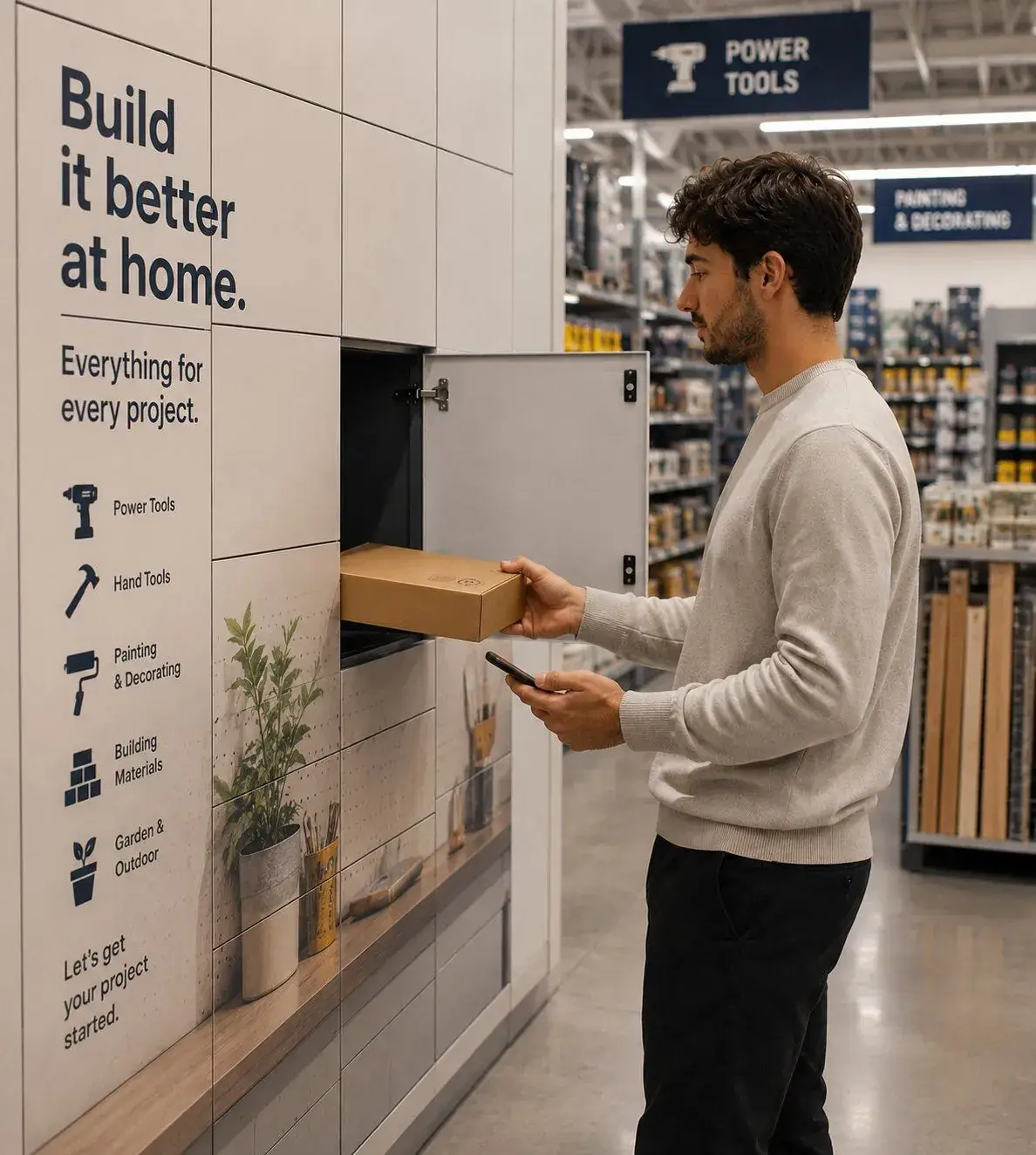
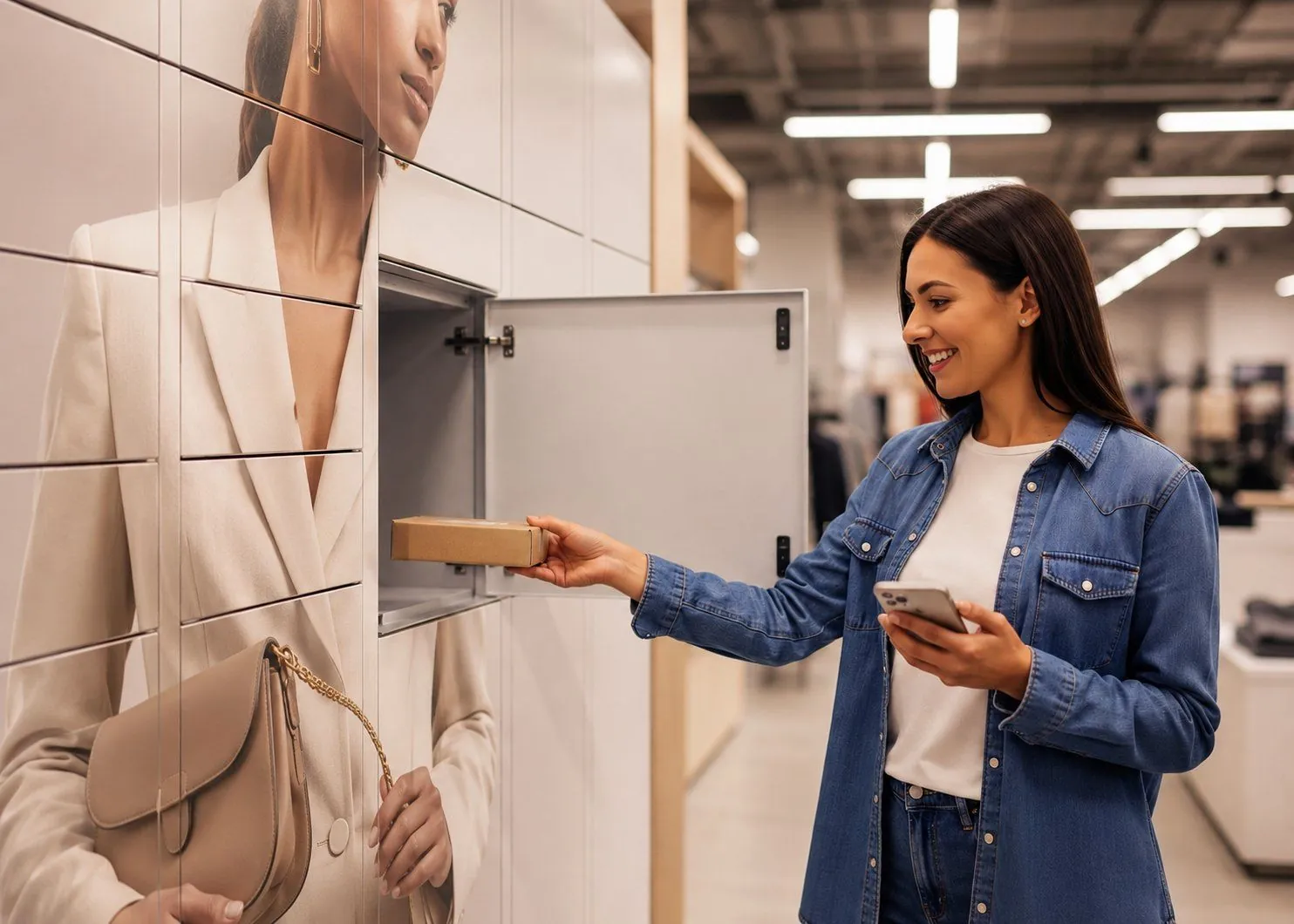
Click & Collect
From the customer’s perspective, the transaction may resemble a parcel collection. Operationally, the retailer may want the locker workflow connected to the customer’s order, store fulfilment process and collection experience, and to manage returns through the same infrastructure. See retail click and collect lockers.
Shared equipment
If a shared handheld scanner is issued to an operative at the beginning of a shift and returned afterwards, the object is not a parcel and there is no last-mile delivery. The requirement is to make equipment available while maintaining accountability for who has it. See warehouse asset lockers.
Laptop swaps
IT can prepare a replacement laptop, place it securely into a locker and authorise that employee to collect it. The faulty device may subsequently be returned through the same infrastructure. The requirement is not parcel management. It is asset handover and recovery.
These examples reveal why the distinction between parcel lockers and smart lockers is less about the steel enclosure than the process being automated.

We normally start with the handover rather than the locker. If you understand what is moving, who needs access, whether it needs to come back and what the organisation needs to record, the right technology becomes much easier to define.
Retail collections illustrate where the categories converge
Retail is particularly interesting because it sits close to the boundary between parcel lockers and broader smart-locker workflows. A Click & Collect order is often physically indistinguishable from a parcel. Yet the commercial process surrounding it is part of the retailer’s omnichannel customer journey.
A customer may have researched and purchased online, selected a store as the collection location and received a notification when the order became ready. When they arrive, the quality of the final handover becomes part of their experience of the retailer.
A conventional colleague-assisted process might require the customer to join a queue, report to a collection point and wait while a member of staff retrieves the order from a back-office location. A self-service collection locker changes the final part of that workflow. The retailer still receives or picks the order and places it into the locker, but the customer can complete the routine handover without requiring a colleague to retrieve it again. Returns can potentially reverse the process.
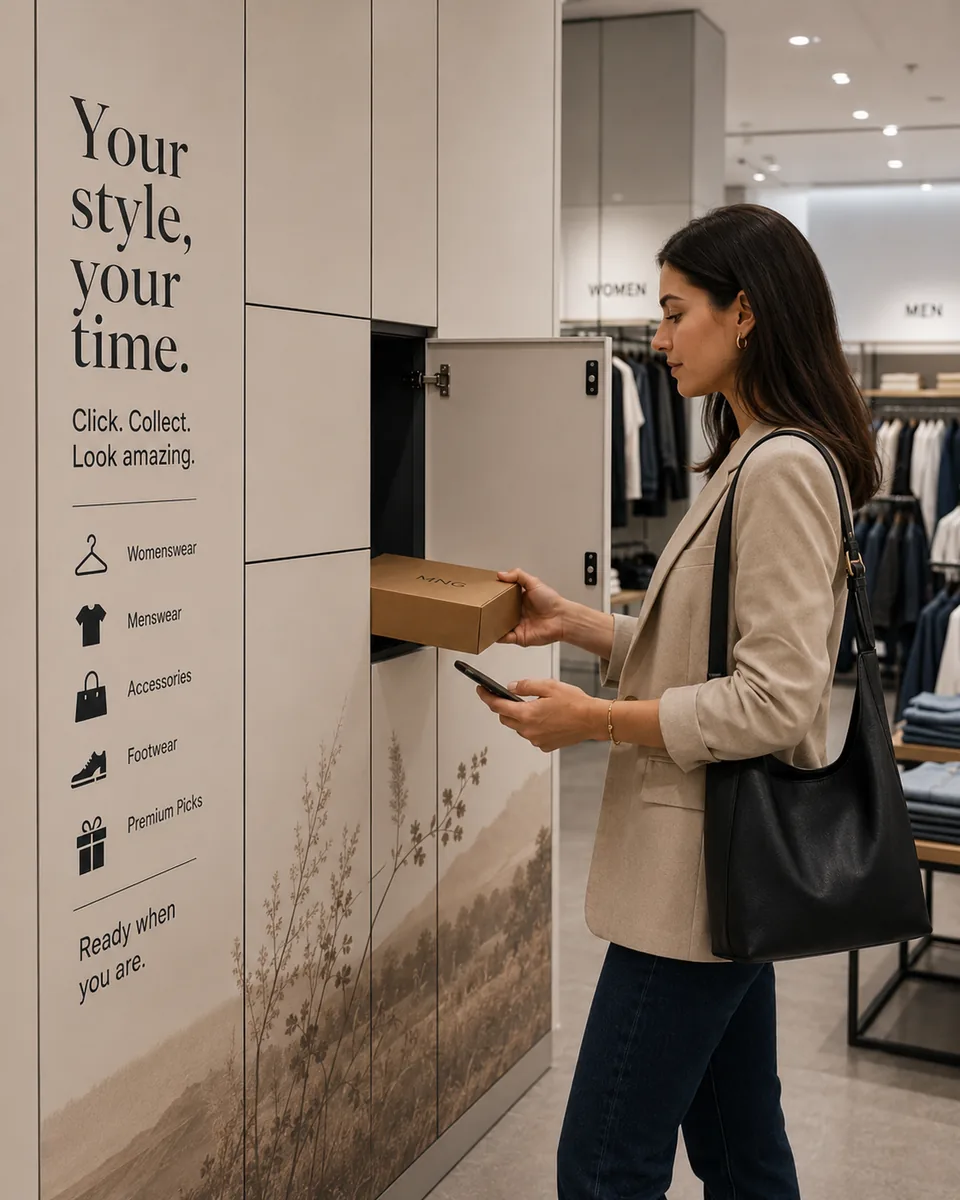
Side by side, the two journeys look like this:
- Colleague-assisted: join a queue, report to the collection point, wait, a colleague retrieves the order from the back office, handover.
- Self-service locker: notified the order is ready, arrive, authenticate, the door opens, collected.
This is a different objective from creating a public parcel network. The locker is being used as infrastructure within a retailer-owned customer journey. For organisations assessing the market, this distinction helps clarify why apparently similar locker products may have very different software, integrations and operating models.
How should businesses compare parcel locker companies and suppliers?
Searching for parcel locker companies or parcel locker suppliers can expose buyers to organisations serving several adjacent markets. The appropriate provider therefore depends less on which company offers the most extensive feature list and more on whether its system is designed for the workflow the buyer needs to operate. Several questions can make that evaluation more useful.
1. Start with the transaction
Define what will actually move through the locker. Is the organisation receiving third-party parcels, distributing its own customer orders or managing equipment belonging to the business? That first distinction can eliminate solutions designed for fundamentally different use cases.
2. Identify who owns the handover
A parcel carrier, residential property operator, retailer and employer each has a different relationship with the recipient. Understanding who controls the transaction helps determine what software, data and integrations are likely to matter.
3. Examine what the software actually manages
The word smart is not particularly useful unless the underlying functionality is clear.
Buyers should understand what happens from the moment an item is ready for deposit until the transaction is complete. Which stages are automated? Which still require manual administration? What information does the software record?
4. Consider authentication and permissions
The method used to access a compartment should suit the people using the system and the level of control required. The important question is not simply how the door opens, but how the system determines which person should be able to open which door and under what circumstances.
5. Understand integration requirements
Integration requirements can vary significantly between applications. A carrier parcel locker may need to communicate with logistics platforms. A retail system may need information from ecommerce or fulfilment systems. An IT asset workflow may need to interact with service-management or asset-management processes.
Buyers should therefore establish which systems genuinely need to exchange data rather than treating integration as a generic feature.
6. Plan for exceptions
The normal transaction is only part of the workflow. Parcels may remain uncollected. Customers may struggle to authenticate. A compartment might become unavailable. An employee may return the wrong asset.
A good evaluation should examine how the system handles these exceptions and how easily staff can intervene when human support is required.
7. Consider the physical environment
Locker configuration should reflect the items being stored and the location in which the system will operate. Compartment dimensions, indoor or outdoor installation, accessibility, power, connectivity and expected transaction volumes can all affect the appropriate design.
8. Think beyond the pilot
Finally, organisations planning broader deployment should consider how the system will be managed across multiple locations. Remote administration, reporting, permissions and estate-wide visibility can become considerably more important as the number of locker banks increases.
The best parcel locker supplier for one application may therefore be completely unsuitable for another, even if the hardware initially appears similar.
Choosing between parcel lockers and smart lockers starts with the handover
Locker technology has become visible partly because the physical concept is so easy to understand. Put an item somewhere secure, allow the intended recipient to retrieve it and remove the need for a conventional face-to-face exchange. The complexity sits behind that apparently simple interaction.
A carrier needs to know where a parcel should go and when it has been collected. A property operator may need to manage deliveries from multiple carriers to hundreds of residents. A retailer needs to connect collection with an ecommerce order and customer journey. An employer may need to know which employee has collected a valuable business asset and whether it has subsequently been returned.
Those requirements lead to different locker systems even when the physical enclosures look remarkably similar. For organisations evaluating parcel lockers or smart lockers, the most useful starting point is therefore not the hardware specification but a small number of operational questions:
- What is being handed over?
- Who is giving it to whom?
- Who owns and controls the transaction?
- Does the item need to come back?
- What information needs to be recorded?
- Which existing systems need to know that the transaction has taken place?
- What should happen when the normal process does not go to plan?
If the requirement is primarily last-mile parcel delivery, a parcel-locker network or parcel-management system may be the natural answer.
If the requirement is your own customer or employee handovers, and the organisation needs to automate its own handovers, manage returns or maintain accountability for business assets, a broader smart-locker system may be more appropriate.
The technology should follow the workflow rather than define it.
Frequently asked questions about parcel lockers
What is a parcel locker?
A parcel locker is a secure bank of compartments used for the delivery, temporary storage, collection or return of parcels. It allows the delivery and collection stages to happen at different times rather than requiring a face-to-face handover.
What is parcel locker software?
Parcel locker software manages the transactions taking place through a locker system. Depending on the application, it can control compartment allocation, authentication, notifications, door access, collection records, exceptions, reporting and integrations with other business systems.
What is an automated parcel locker?
An automated parcel locker uses software and electronic access control to manage parts of the parcel deposit and collection process automatically. It can allow recipients to collect items securely without requiring a member of staff to administer each individual handover.
What is the difference between a parcel locker and a smart locker?
Parcel lockers are generally designed around parcel delivery, collection and returns. Smart lockers can support a wider range of workflows, including retail orders, IT equipment and warehouse assets. A parcel locker can therefore be a smart locker, but not every smart locker is a parcel locker.
Can smart lockers be used for Click & Collect and returns?
Yes. Retailers can use smart lockers to allow customers to collect orders or deposit authorised returns. In this application, the locker forms part of the retailer’s own fulfilment and customer-experience workflow rather than operating as a public parcel-delivery network.
What should businesses look for in a parcel locker supplier?
Businesses should begin with the workflow they need to support and assess suppliers against software capability, authentication, integrations, exception handling, reporting, physical configuration and scalability. The appropriate supplier will depend on whether the requirement involves carrier parcels, retail orders or another type of handover.
Ready to automate collections and returns?
If your requirement is less about carrier parcel delivery and more about automating your organisation’s own customer or employee handovers, explore how smart lockers can support secure collections, returns and asset-management workflows.