The convenience of omnichannel retail is often decided by its least convenient physical interaction. In this article, Bijoux Mbayo – eLocker’s Senior Solutions Consultant for Retail – explores how collections and returns can create friction for customers and store teams, and how retailers can redesign the handover to improve experience, capacity and operational resilience.
Retailers have spent years removing friction from the digital shopping journey. Product discovery has become faster, checkout journeys have been simplified, stock visibility has improved, and customers receive increasingly precise information about when an order has been confirmed, dispatched or made ready for collection.
The physical part of the collection journey can still feel remarkably inconsistent.
A customer may complete an online purchase in a matter of minutes, receive regular updates and arrive at the store confident that everything is ready. The experience can then vary at the collection stage. They may not know where to go, whether they need to check in, which queue to join, or how long they will be waiting while a staff member locates the order and hands it over to them.
That gap matters because customers do not experience ecommerce and stores as separate operating functions. They experience a single “click and collect” journey.
As an avid online shopper, I personally see this as one of the most persistent weaknesses in Click & Collect. Retailers have become very good at optimising the “click”, but the quality of the “collect” can still vary considerably according to the store, staffing level, physical layout and how effectively the retailer communicates what the customer should do next.
For retailers looking to improve omnichannel customer experience, the final handover therefore deserves the same attention as the digital journey that precedes it.
The customer journey does not end when the order is ready
Click & Collect is often discussed as a fulfilment process, but the customer does not see it that way.
From their perspective, collection is part of the experience they purchased.
The journey typically begins well before arrival at the store. Customers need clarity about which collection options are available, whether their chosen location can fulfil the order and when it will be ready. Once the purchase is complete, they expect communication to remain clear as the order progresses through confirmation, preparation and eventual collection.
That expectation becomes particularly important once the customer has been told the order is ready. At that point, the retailer has made an implicit promise: the physical experience should now be straightforward.
If the customer arrives and cannot find the collection area, waits in the wrong queue or has no idea whether anyone knows they are there, the promise begins to unravel.
This is why retail handover friction is broader than waiting time alone. It includes uncertainty, poor wayfinding, unclear communications and dependency on another person being available at the exact moment the customer arrives.
A journey can therefore be technically successful while still feeling inconvenient.
The order was fulfilled correctly. The customer eventually received it. Yet if they spent valuable minutes wondering what was happening, the experience is unlikely to feel as seamless as the digital journey that led them there.
Different retail journeys create different expectations
There is no single definition of convenience across retail.
The fundamentals of collection may be similar, but customer expectations change considerably according to the type of purchase, store format and reason for visiting to collect their order.
Grocery is a good example. Customers may select a defined collection window and expect their order to be available at that time. The presence of chilled, frozen or other perishable products creates an additional operational requirement, but it also increases the customer's expectation of precision. A delay is not simply inconvenient; it can undermine confidence that the collection process is being managed properly.
Trade and DIY retail create a different mission. A customer collecting from a trade counter may be on the way to a job and has chosen Click & Collect precisely because it is supposed to save time. Some retailers in this market make very fast fulfilment promises, which means the collection experience becomes part of the brand proposition itself. If the retailer says an order will be ready within minutes, waiting at the handover point risks contradicting the reason the customer chose the service.
Fashion and general merchandise create another pattern. The collection may be less time-critical, but the customer is often moving between online and store experiences. An item collected today may be returned tomorrow because the fit, colour or style is wrong. The handover therefore needs to work in both directions.
The lesson is not that every retail format requires a completely different technology stack. It is that customer experience should be designed around the mission the customer is trying to complete.
A commuter collecting groceries, a tradesperson picking up materials and a fashion customer returning an unwanted item may all be interacting with the same broad category of service, but their expectations of speed, flexibility and assistance are different.
Collection capacity is part of omnichannel capacity
These differences become more pronounced when volumes rise.
During normal trading, a store may be able to absorb a relatively inefficient handover process because the number of customers arriving at any one time remains manageable. Peak trading changes the equation.
Black Friday, Christmas and promotional events increase order volumes while simultaneously placing greater pressure on store teams. Collection areas become busier, back-room storage fills with more orders, and colleagues have more parcels to locate.
Retailers typically respond in one of two ways. Some cap the number of Click & Collect orders a store can accept, effectively protecting the physical operation by limiting demand. Others allow demand through and expect the store to cope with the additional volume.
Neither option is without consequence.
Capping collections protects the customer experience but can constrain commercial opportunity. Allowing unlimited demand protects sales capacity but risks longer queues, slower handovers and increased pressure on colleagues.
This leads to an important strategic point: collection capacity is part of omnichannel capacity.
A retailer may be able to accept far more online orders than its stores can comfortably hand over. When that happens, the bottleneck has simply moved from the website to the physical estate.
The consequences are visible to the customer. It is not unusual for colleague-assisted collections to take several minutes, and under pressure customers may wait 10 or 15 minutes while orders are located and brought forward.
For a service positioned around convenience, that is a material experience gap.

Retailers have become incredibly good at creating demand digitally. The next challenge is making sure the physical collection process can absorb that demand without making the customer wait, or the store needing to add more labour every time volumes increase
The hidden operational cost of the final handover
The customer sees the queue. The store sees the work behind it.
A colleague-assisted collection involves more than simply handing over a parcel.
If the order has been fulfilled from store stock, colleagues need to pick and prepare it. If it has been delivered into the store, somebody needs to receive it and put it away. In both cases, there is already an unavoidable preparation stage before the customer arrives.
A fully colleague-assisted model then adds another layer. The customer reports to a till, service desk or dedicated collection point. Store staff need to be notified now they have arrived. A colleague has to locate the order, retrieve it from storage and return to complete the handover.
The physical design of the store can make that task more or less demanding. In a compact store, the order may be only a short distance away. In a large-format retail environment, the storage area may be hundreds of feet from the customer-facing collection point.
Each individual journey may only take a few minutes, but repeated across hundreds of transactions, the labour becomes significant.
This is why the commercial case for improving collection should not be reduced to queue reduction. It is also about how much colleague time is tied up in the final few metres of the fulfilment process.
The key distinction is that self-service does not remove colleagues from Click & Collect altogether. Orders still need to be received, picked, processed and staged.
What it can remove is the requirement for a colleague to become involved at the exact moment every routine handover takes place.
That creates a different operating model. Store teams continue to perform the work that genuinely requires them, while straightforward customer collections become less dependent on staff availability.
Self-service should remove dependency, not remove service
There is a danger in treating automation as an argument for removing people from the customer experience.
That is not the objective.
Some customers want human interaction. Others need assistance. There will always be exceptions where something has gone wrong, the order is incorrect, or the customer simply does not understand what to do next.
Retailers therefore need to distinguish between routine dependency and valuable human support.
If a customer knows exactly what they are collecting and wants to leave quickly, requiring them to queue so that a colleague can perform a simple handover adds little value. If the customer has received the wrong order, needs to discuss an exchange or cannot complete the collection, human intervention becomes much more valuable.
Smart lockers can support that distinction.
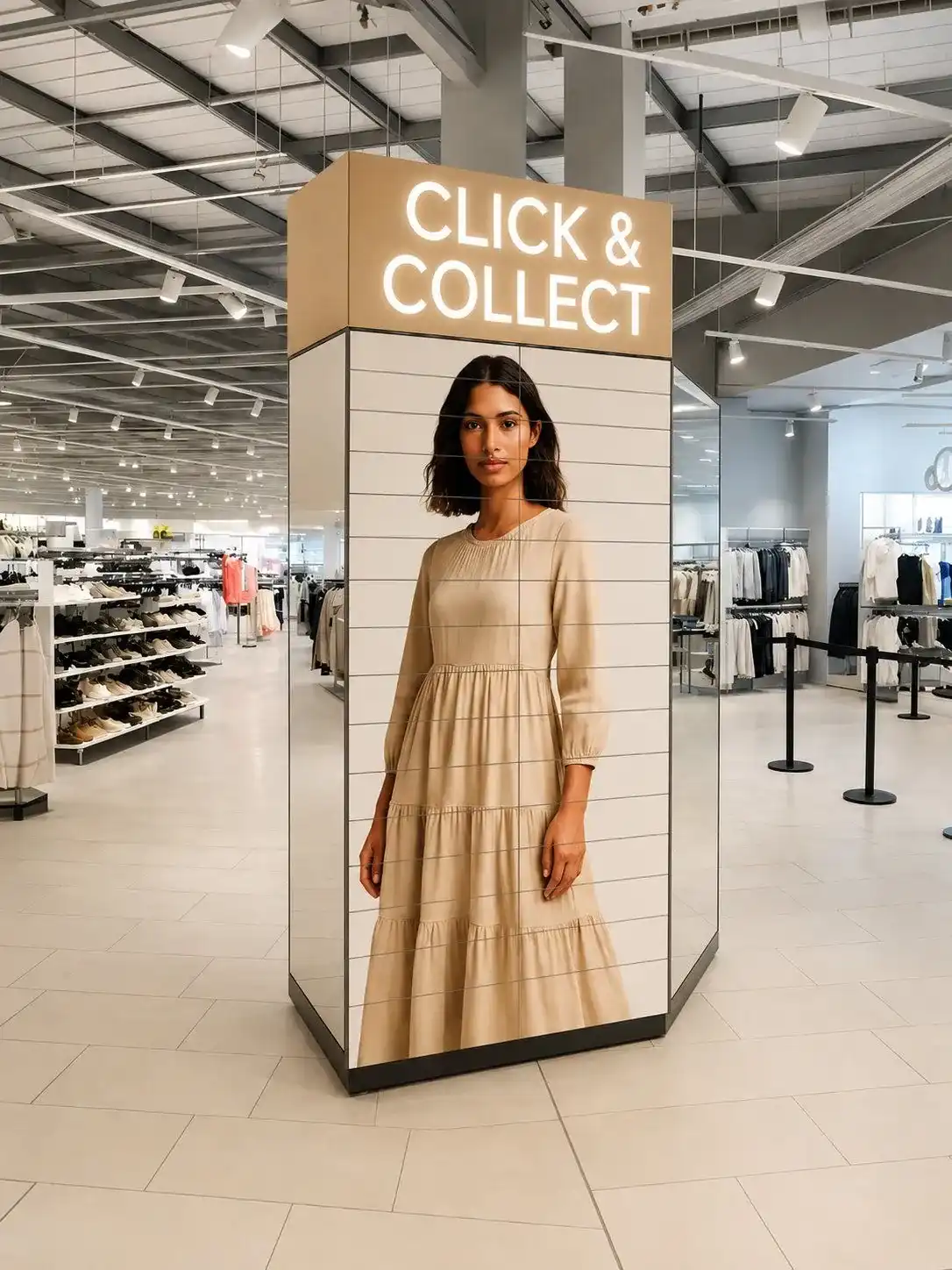
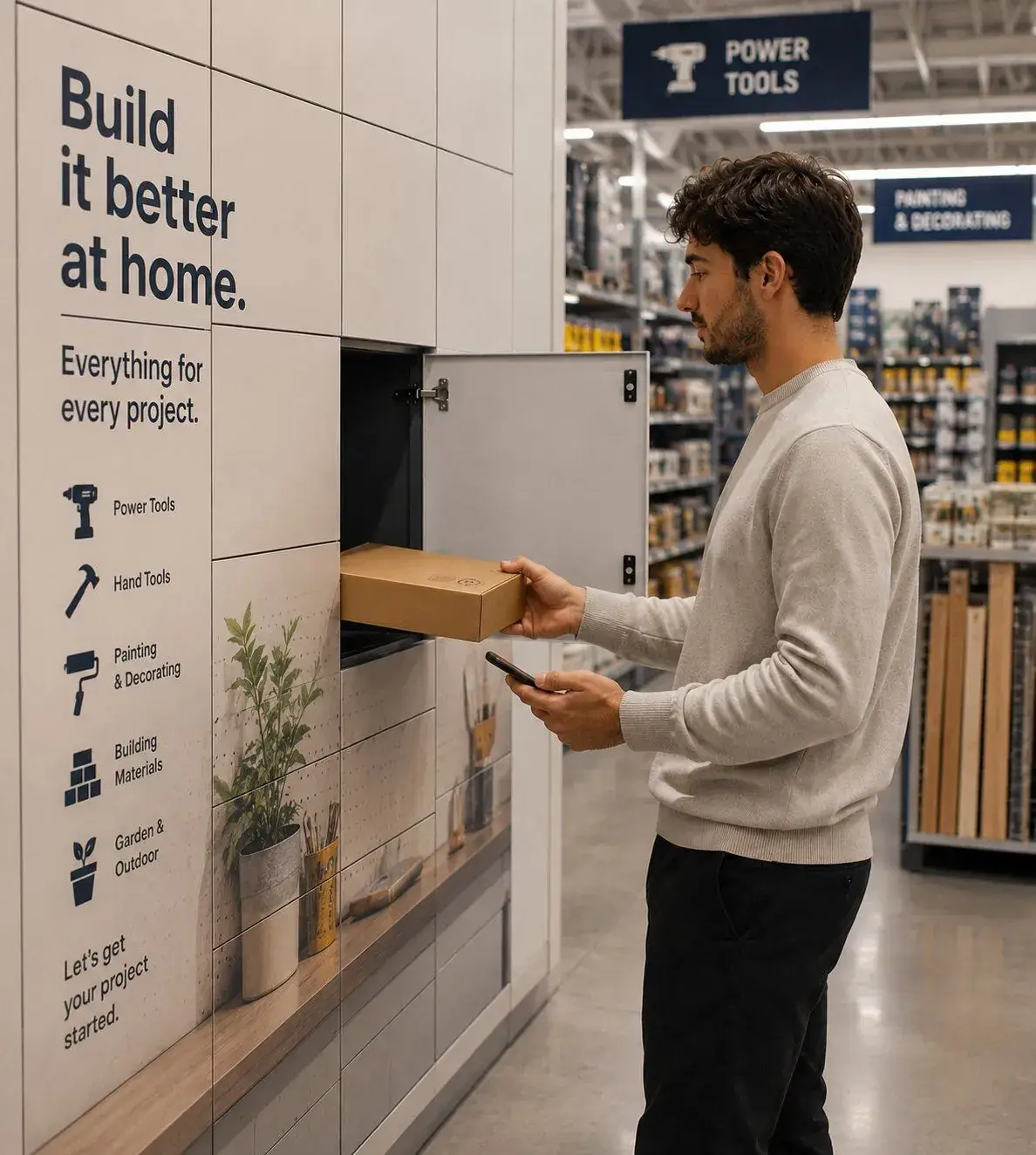
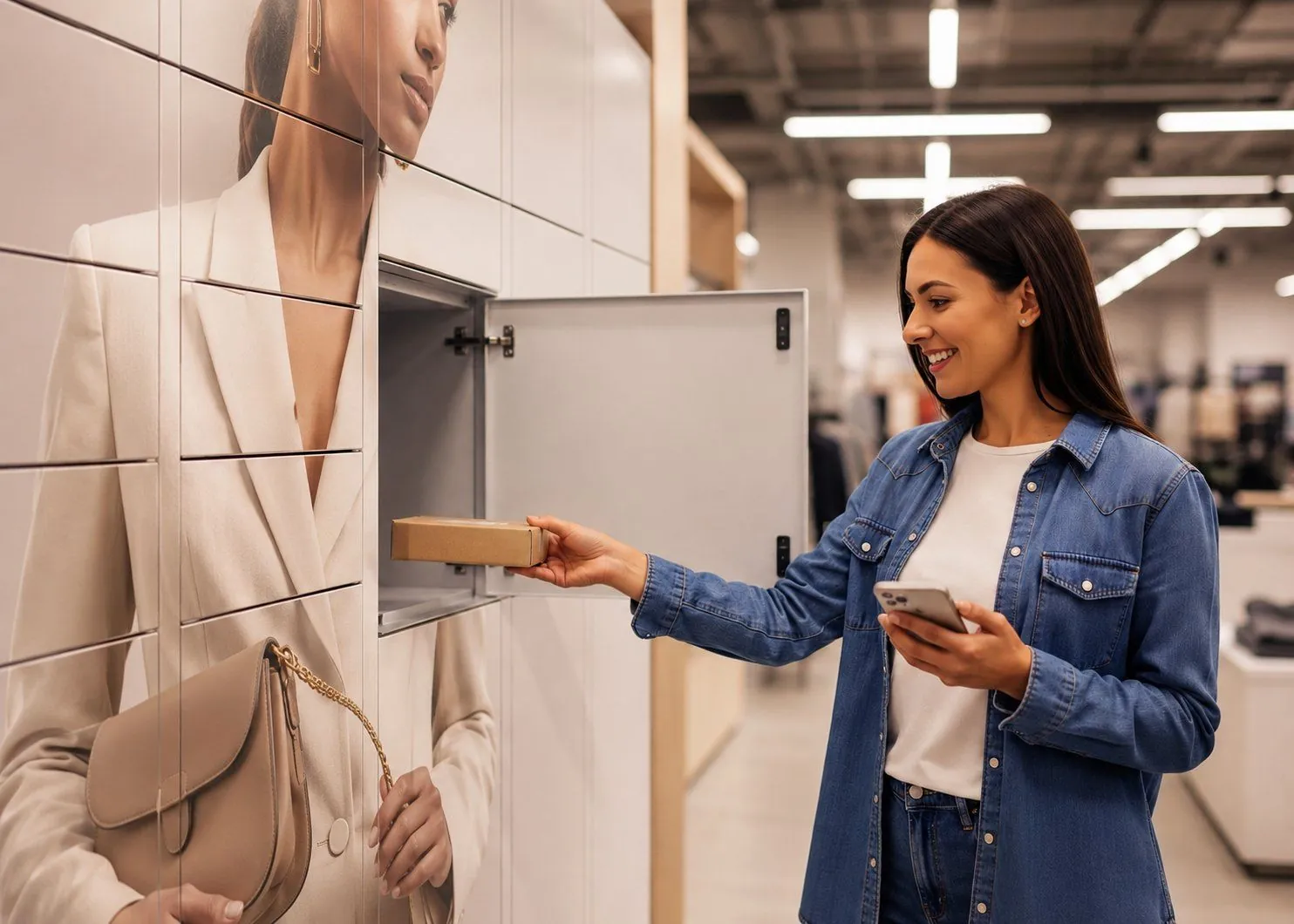
An order can be prepared and placed into a secure compartment before the customer arrives. Once notified, the customer can authenticate and complete the collection independently in a matter of seconds. The colleague is no longer required for every routine transaction, but remains available when the customer actually needs help.
This becomes an enhancement to the customer journey rather than simply a queue-removal exercise. The objective is to make the collection itself quick and clear, while giving stores more flexibility over where colleague time is used.
That hybrid model is important because good self-service is not the absence of service. It is the removal of unnecessary steps.
A self-service journey is only as good as its exception journey
Designing the normal journey is relatively easy. The more revealing test is what happens when the normal journey fails.
Retail customers encounter exceptions for all kinds of reasons. They may arrive and be unable to find the lockers. A compartment may not open as expected. A customer may need support outside normal staffed hours. An order may have been placed into the wrong compartment.
Here’s a simple but realistic example: two customers with the same surname “Smith” may lead to the wrong parcel being loaded if the colleague selects the incorrect order. The customer may open the locker, assume the parcel is theirs and only discover the mistake once they get home.
This illustrates why automation cannot be designed around the happy path alone.
The customer needs to know what to do when something goes wrong. Wayfinding needs to be clear. The collection communication needs to explain where the customer should go and how access works. There needs to be an appropriate support route if the technology or transaction fails.
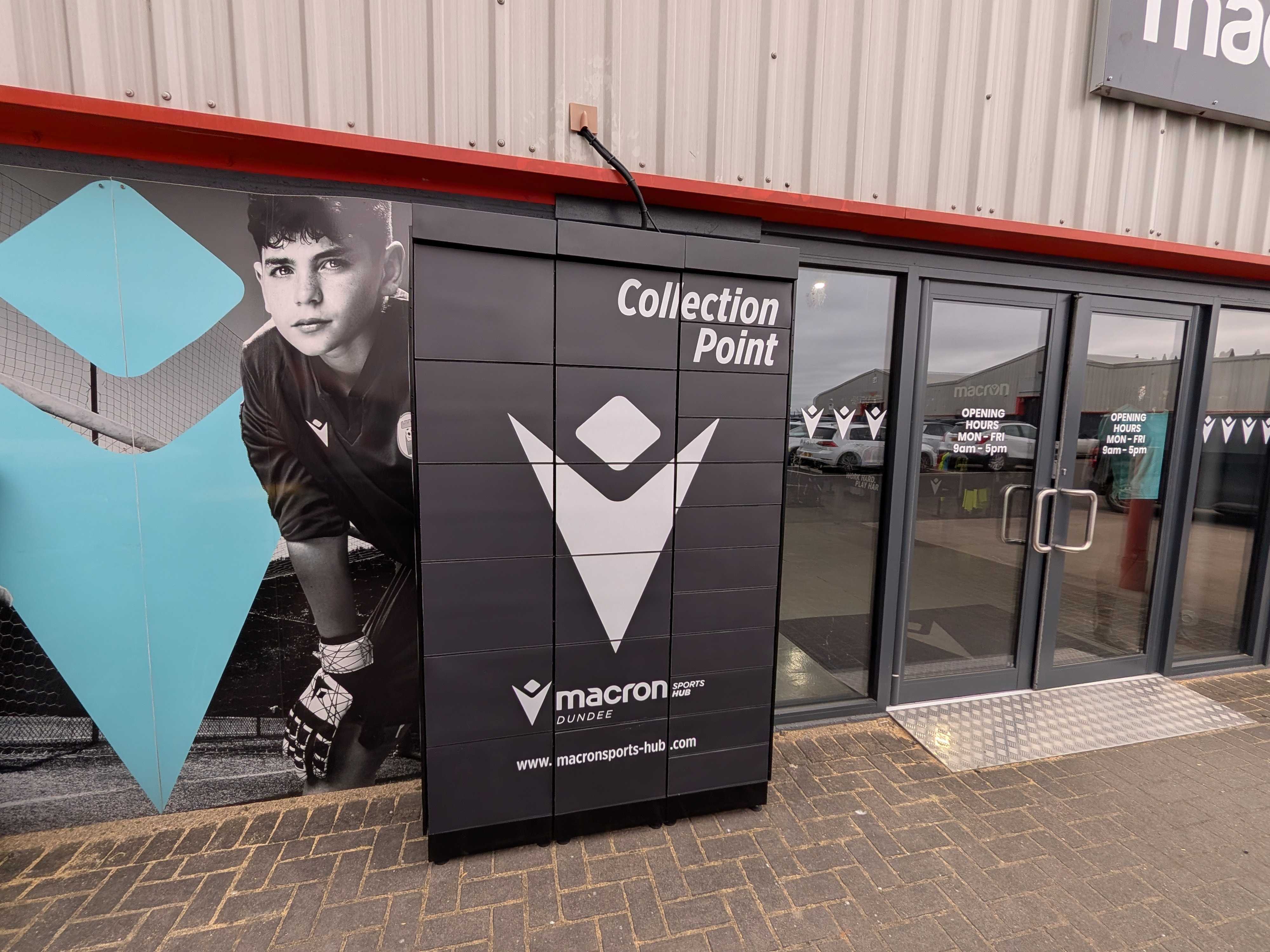
This becomes particularly important with outdoor or out-of-hours collections. Extending access beyond store opening hours may improve convenience, but it also changes how assistance needs to be provided if the customer encounters a problem.
The quality of self-service is therefore determined partly by the quality of its exception handling.
Retailers that remove the staffed handover without designing an effective support route risk replacing one form of friction with another.
The best self-service journey is not the one that assumes nothing will ever go wrong. It is the one where the normal transaction is almost invisible, but the customer still knows exactly what to do when they need help.
Returns need the same customer-experience discipline
Collections are only one direction of travel.
A genuinely omnichannel retailer also needs to consider how easily products move back from the customer into the business.
Returns can create many of the same friction points as collection. Customers may need to queue at a service desk, wait for a colleague, provide order information and complete a physical handover. If volumes are high, returns compete for the same store capacity used by other customer-service activities.
For the customer, the desired outcome is usually simple. They want to know where to go, what they need to do and what will happen once they have returned the item.
Automated smart lockers can support suitable return journeys by allowing the customer to initiate the process digitally and deposit an authorised item into a secure compartment. The retailer can then recover the item and continue the reverse-logistics process separately.
This does not mean every return should become self-service. Some items need inspection, some circumstances require conversation, and some customers will prefer a conventional assisted route.
Choice therefore matters. Depending on the retailer, a customer may be able to return through either a locker or a traditional returns desk.
That flexibility is important because the purpose is not to force everyone through one process. It is to give customers an efficient route when the transaction is straightforward while retaining human support when it adds value.
Faster collection can change the role of the store visit
There is also a broader commercial dimension.
A customer visiting a store to collect an online order is already physically present in the retailer's estate. If the collection itself takes 10 minutes, much of that visit is consumed by waiting.
If the handover takes seconds instead, the customer has a different choice about how to use that time.
They may leave immediately. But they may also browse.
Retailers frequently talk about the potential for Click & Collect to generate halo or incremental spend because the collection creates store footfall. This is an important consideration for retailers, as smart locker technology can significantly reduce item collection time, which can drive additional purchase behaviour.
That distinction is worth preserving.
Removing five minutes from a collection queue does not guarantee five minutes of additional shopping. What it does is give the customer those five minutes back.
The commercial opportunity is therefore plausible rather than automatic. Retailers should measure it rather than assume it.
This is another reason customer experience and operational efficiency should not be viewed separately. A quicker handover can reduce colleague workload while simultaneously changing the amount of discretionary time the customer has within the store.
Measuring whether the journey is genuinely better
One of the risks with retail technology is measuring implementation rather than outcome.
The fact that lockers have been installed, or that customers have completed transactions through them, does not by itself demonstrate that the experience has improved.
The more useful measures compare the new journey with the one it replaced.
| Measure | What it reveals |
| Arrival-to-collection time | How much friction exists at the physical handover |
| Colleague time per collection | The operational cost of the current model |
| Collections per hour | How much throughput the collection point can support |
| Peak vs normal collection time | Whether the process remains resilient as demand increases |
| Self-service adoption | Whether customers choose the new journey |
| Repeat usage | Whether customers voluntarily return to self-service |
| Exception rate | How often customers need assistance |
| Customer satisfaction / NPS | How the journey is perceived |
| Return processing time | How much friction exists in the reverse journey |
| Incremental spend | Whether faster collection affects wider store behaviour |
This is particularly important while new models are still being tested.
Rather than turning early data into a marketing claim, retailers should use pilots to establish the measures that matter and build evidence over time.
The real test is not whether customers can use a locker. It is whether the whole journey becomes easier to operate at scale. Faster for the customer, less dependent on colleagues, and more resilient when volumes rise.
Designing for different store formats
One of the strengths of smart locker technology is that it can be applied across different retail environments, but the physical and operational design should reflect the specific store rather than assume one model fits everywhere.
A grocery site may need temperature-controlled compartments and predictable collection slots. A trade environment may prioritise speed and larger item sizes. Fashion retailers may need to think about both collection and return journeys, while high-footfall stores need to pay particular attention to throughput and customer flow.
Location also matters. A locker hidden behind an unclear route simply moves friction elsewhere. Indoor versus outdoor placement changes access hours, security considerations and how customer support is provided.
This means the locker should be considered as part of the service design of the store, not simply as a piece of equipment added after the customer journey has already been defined.
The questions should begin with the customer mission. Where does the customer arrive? What are they trying to accomplish? What information do they need before they get there? What happens if they need help? How much physical capacity is required at peak?
Only then does it make sense to decide how automation should support the journey.
Conclusion: Omnichannel convenience is only as strong as the handover
Retail has become increasingly sophisticated at reducing digital friction, but customers do not stop evaluating and judging the experience when the checkout process is complete.
The moment an online transaction becomes physical can still determine whether the overall journey feels convenient.
End to end collections and returns therefore deserve to be treated as customer-experience moments rather than back-office fulfilment tasks. They affect how long customers wait, how confidently they understand the process, how much support they need and how efficiently stores can manage growing omnichannel volumes.
Smart lockers are one way of redesigning that handover. Their value lies not simply in replacing a counter with a bank of compartments, but in allowing routine transactions to become less dependent on colleague availability while preserving support where it genuinely improves the experience.
The commercial benefits follow from that operating change. Less colleague involvement in routine collections can increase capacity. Greater self-service can improve resilience during peak periods. Faster handovers can reduce customer waiting and potentially return discretionary time to the store visit.
The most important measure, however, remains the experience itself.
If the digital journey is effortless but the physical handover is slow, uncertain or difficult to navigate, omnichannel convenience has not really been achieved.
The retailers that solve that final interaction well will be the ones that make the transition between online and store feel not like two separate channels, but like one coherent customer journey.