
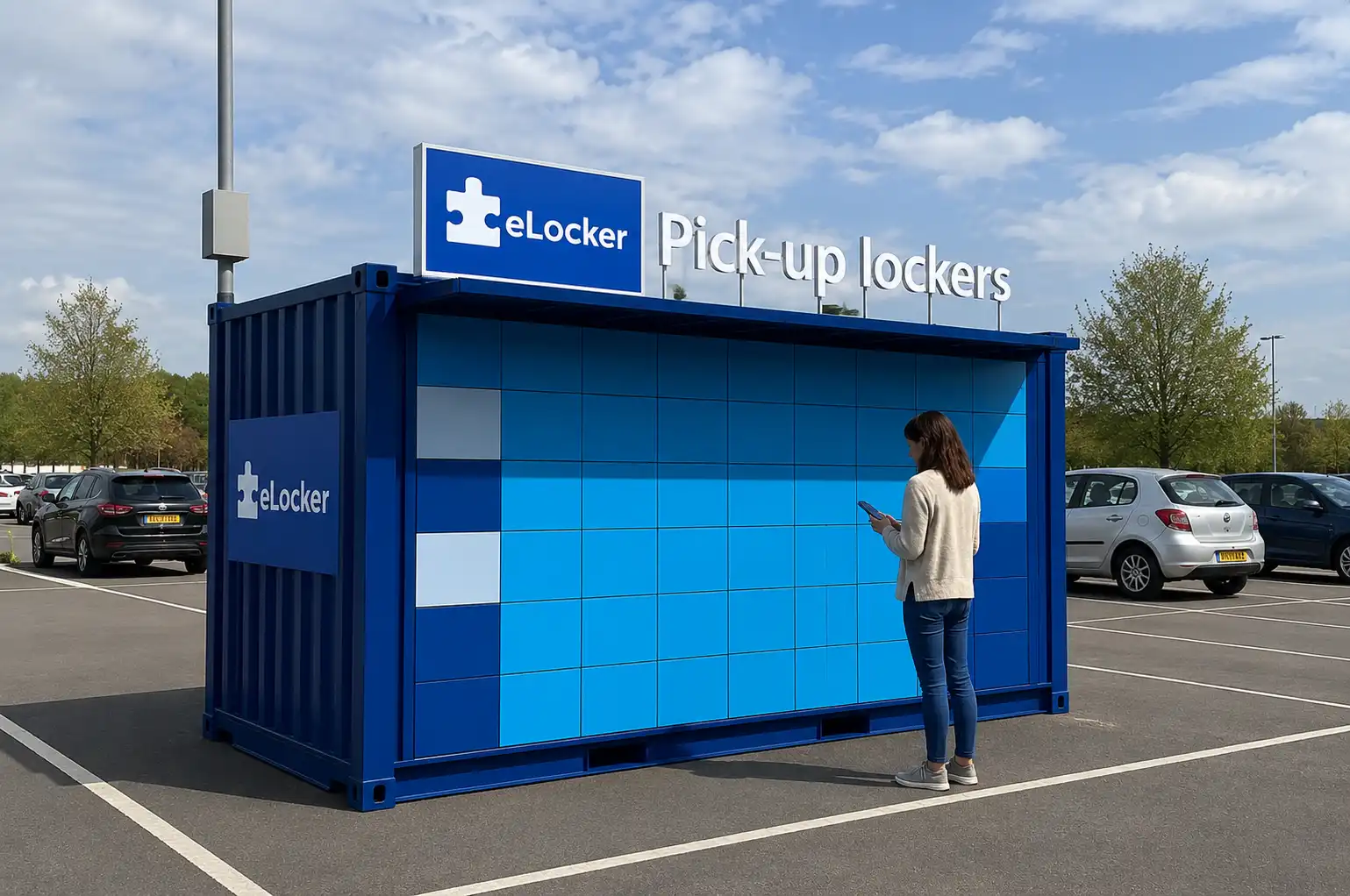
The question usually arrives the same way. Someone finds the right spot for an outdoor locker, the far end of a car park, a yard gate, a corner of a site where people actually pass, and then asks where the nearest socket is. Often the answer is nowhere useful. Trenching a mains cable across a car park is groundworks: it needs a contractor, it disturbs the surface, and on leased or shared land it can need the landlord's consent before anyone lifts a slab. At that point the electrical run can cost more than the locker. Solar removes that whole conversation, but only if the locker draws little enough to live on what a panel gathers. This article explains why most smart lockers cannot, why ours can, and where the limits sit.
Why most smart lockers cannot run on solar
Walk up to a typical parcel locker and the first thing you meet is a touchscreen. That screen is the expensive part of the power budget. It is effectively a small computer running a display, and it stays awake all day waiting for someone to touch it, often with a backlight fighting direct sunlight to stay readable. Around it sit the rest of the kiosk electronics: the controller driving the interface, sometimes a barcode scanner, sometimes a heater to keep the screen usable in winter. None of these draw a huge amount individually, but together they draw constantly, day and night, whether anyone uses the locker or not.
A solar installation has to be sized for that constant draw, and sized for December, not June. Feeding a screen-fronted unit through a run of short, overcast winter days takes a large panel array and a large battery bank, and by then the "simple" off-grid option has become its own engineering project. That is why solar parcel lockers are rare: the arithmetic is set against them before the panel is chosen.
No screen changes the arithmetic
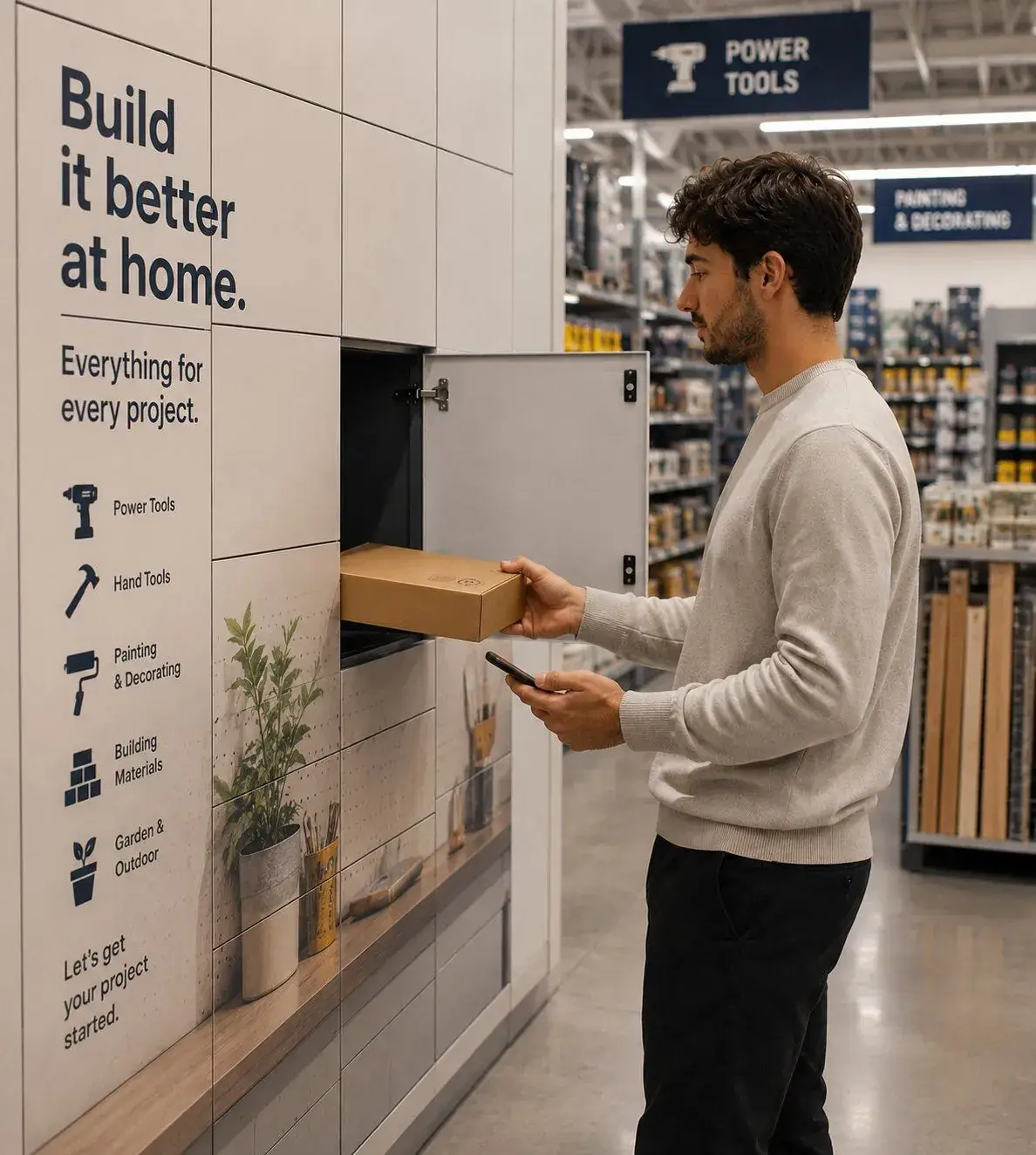
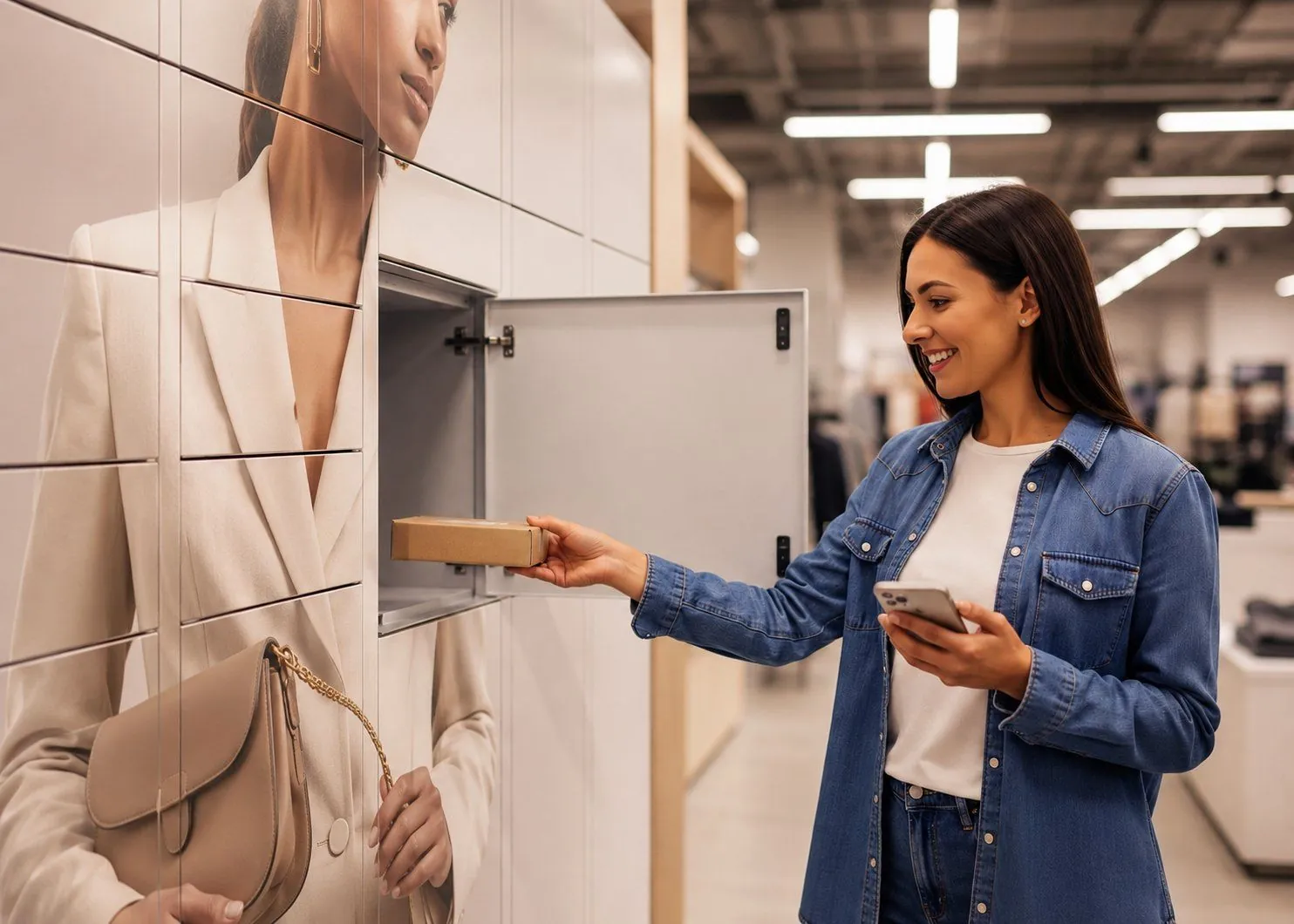
eLocker took the screen away on purpose, and not for power reasons first. The screen is where queues form: one person at a keypad holds up everyone behind them. So the journey runs on the user's own phone or badge instead. A customer gets a link or code on their phone; a worker badges their own compartment; the right door opens; the software logs who opened it and when. The locker itself is left with very little to do between openings: electronic locks that sit idle until asked to move, and a low-power wireless link to the software.
Locks that spend almost all their time doing nothing, and a radio designed to sip power, add up to a draw that is a small fraction of a screen-fronted unit's. This is the same property that lets us run whole warehouse banks on battery power with no cabling at all. Outdoors, it means the sums finally favour solar: a modestly sized panel and battery can gather and hold enough energy to run the unit through the year, including a British winter, provided the installation is sized honestly for the site.
How a solar-powered unit works
The installation is deliberately simple and has three parts:
- The panel sits on top of the unit or on a short mast beside it, angled and oriented for the site. It gathers energy whenever there is daylight, not just direct sun.
- The battery lives inside the cabinet and is the working power source. The panel's job is to keep it topped up; the battery's job is to carry the unit through nights and dull spells. It is sized to run the locker for a sensible number of days with no meaningful sunlight at all.
- The charge controller sits between the two, managing charging and protecting the battery, and reporting its state to the software.
Connectivity follows the same low-power logic. There is no Ethernet trench to a solar unit, so the bank talks to the software over a mobile or wireless link, the same pattern as our battery-powered warehouse banks. Every deposit and collection is still logged with who, when and which compartment, and the system monitors the battery the way it monitors a lock: if charge trends low, it flags it long before a door goes out of service. Off-grid does not mean out of sight.
“The screen was never doing anything the user's phone could not do better, and it was the reason outdoor lockers stayed chained to a mains socket. Take it away and the draw falls far enough that a panel and a battery will carry the unit through winter. Suddenly the question is not where the nearest socket is, it is where the locker is most useful.”Billy Whiffen, Operations Director at eLocker · LinkedIn
Where off-grid siting earns its keep
The point of solar is not the panel; it is the freedom to put the locker where the operation actually needs it. In practice that means:
- Car parks and forecourts, where the best collection spot is a long, expensive trench away from the building's supply.
- Yard gates and perimeter positions, so drivers and contractors collect and return kit without coming into the building at all.
- Construction and infrastructure sites, where there may be no permanent supply to connect to, and where the locker will move as the site does.
- Parks, trailheads and visitor attractions, where equipment hire or storage sits far from any building.
- Temporary and seasonal sites, festivals, events and pop-ups, where nobody is digging a cable run for a six-week deployment.
It also changes the cost of trying a location. A solar unit arrives, stands where it is useful, and moves if the operation moves, with no groundworks to write off. If the spot is wrong, you reposition the locker rather than abandon a trench.
The honest limits
Solar suits the locker itself, not everything a locker can be asked to do. Three limits are worth being clear about:
- Charging lockers still need mains. Running the locks and comms takes very little power; recharging phones, scanners or laptops inside the compartments takes a lot. If the job is charging devices while they are stored, plan a mains feed.
- Refrigerated units still need mains. Cooling is a continuous load no sensible panel will carry. Chilled and frozen lockers stay on the grid.
- The site has to see the sky. A panel in the shadow of a building, under a dense canopy or facing the wrong way will not gather what the sums assume. This is a siting question, and it is checked in the survey, not discovered in January.
Sized properly for the site and the season, none of this is a reason to avoid solar. It is a reason to scope it like any other part of the install rather than treat the panel as an accessory.
What to settle before you commit
Four questions cover most of it. Where exactly will the unit stand, and what does that spot see of the sky through winter? How many door events a day should the sums assume? How many days should the battery carry the unit with no meaningful sun? And is the position on your own land or someone else's, which decides who signs off the siting? An outdoor unit also brings the usual outdoor questions with it, so it is worth reading our notes on weather resistance and IP ratings and whether planning permission applies alongside this one.
How eLocker approaches it
We treat solar as one more way to power the same system, not a separate product. The workflow, the access control and the audit trail are identical to any other eLocker bank; only the supply changes. So we scope it the way we scope any install: survey the spot, size the panel and battery for the site's winter rather than its summer, and be straight with you if the location or the workload means mains is the better answer. If the foundations would help first, our explainer on what a smart locker is sets out the wider picture, and how smart lockers are powered covers the mains, Power over Ethernet and battery options this article builds on.