Keys get lost. Combinations get shared and forgotten. So as security expectations rise and the technology gets cheaper, more businesses are swapping both for RFID locker systems that open with a card or badge. It is a quiet shift, but a large one, and the market reflects it.
What an RFID lock is
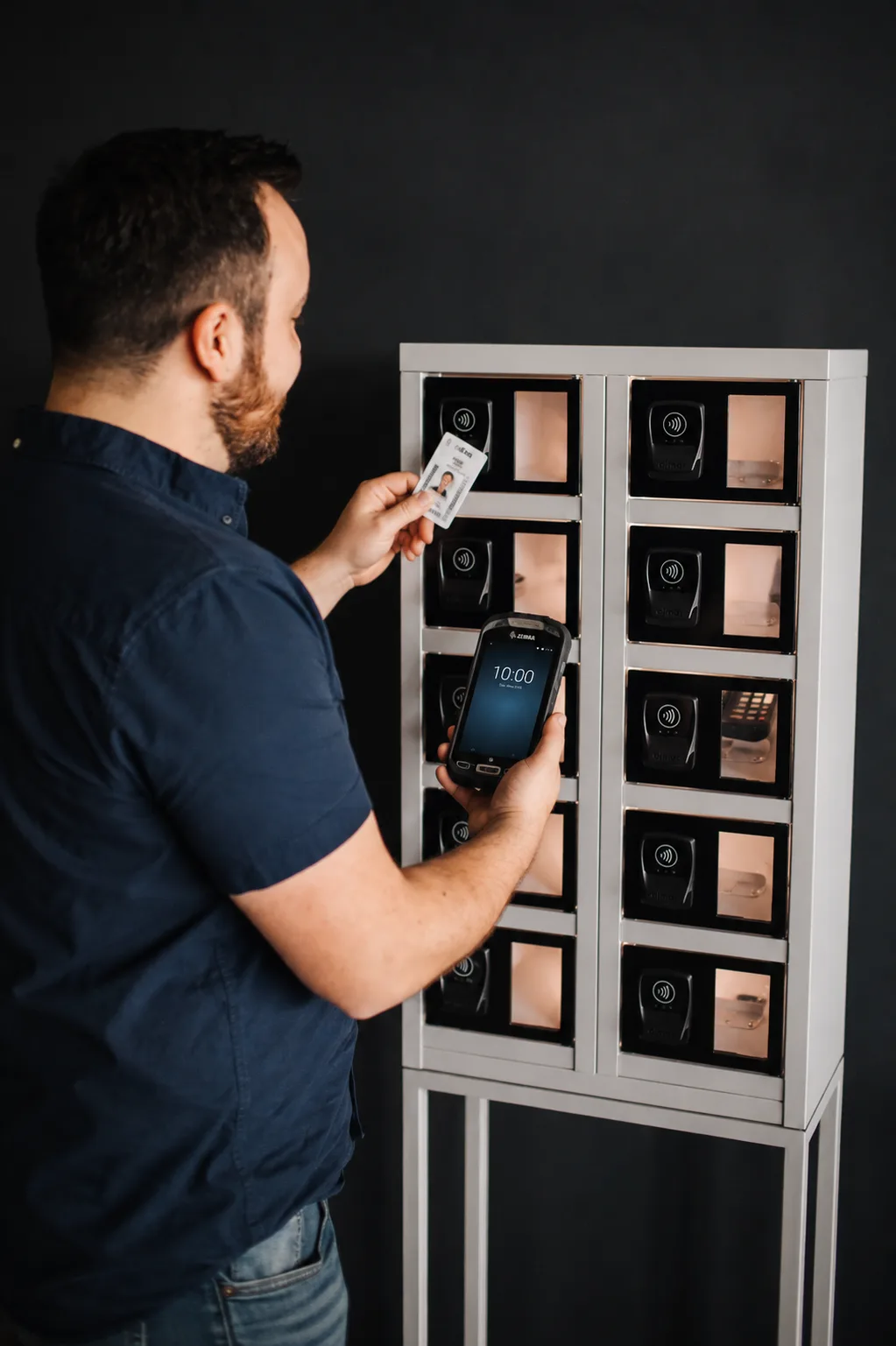
RFID stands for Radio-Frequency Identification. An RFID lock is a keyless lock that uses radio waves to recognise a user, with three parts working together: a reader, a tag or card, and the locking mechanism itself.
The principle is simple. The card or badge carries a unique identification code. The lock reads that code over a short distance and checks it against a list of people who are allowed in. No physical key changes hands.
How it works
In practice the sequence is short:
- The reader sits near the lock and emits radio waves that detect any RFID tag or card brought close to it.
- The tag or card holds a unique identification code, which the reader picks up and verifies against the list of authorised users.
- If the code matches, the locking mechanism releases and the locker opens.
The whole thing is contactless, so a person taps or holds their existing badge near the lock and the door opens. It is faster than finding the right key, and there is no combination to remember or pass around.
How RFID locker systems are managed
The lock is only half the story. eLocker pairs RFID locks with an online management system, so managers can see usage analytics and allocate or deallocate a lock in a few clicks from the browser, without walking the floor or cutting a new key. That software layer is what turns a wall of lockers into something you can actually run. It is the same approach across the wider eLocker ecosystem, whether the lockers hold staff belongings, devices or stock.
Advantages over traditional lockers
Compared with keys and combination locks, an RFID system tends to win on three fronts:
- Higher security. A lost or stolen key is a real risk. A lost card or fob is not, because it can be deauthorised in seconds and a new one issued.
- Simpler access for everyone. Tapping a card takes less effort than turning a key or dialling a combination, which matters for anyone with limited dexterity.
- Better oversight. Managers control access, monitor usage and check locker status from a browser, which cuts the admin that keys and sign-out sheets create.
Where they fit
RFID lockers have become common in hybrid offices, where people need a place to leave their things on the days they are in. The same locks and software also run device and stock workflows, from IT asset delivery to warehouse asset lockers. The technology is the same. What changes is what goes inside and who needs to reach it.